Tiger’s 1,000-Km Trek Across 4 States Reveals New Corridor In Red Zone

16 Nov 2026 11:39 PM IST16 Nov 2026 11:39 PM IST
The male tiger, named U93563 by the National Tiger Conservation Authority (NTCA), was suspected to have begun its dispersal journey from either Chandrapur or Gadchiroli district in Maharashtra in January 2025, a senior forest officer told this newspaper on Monday.
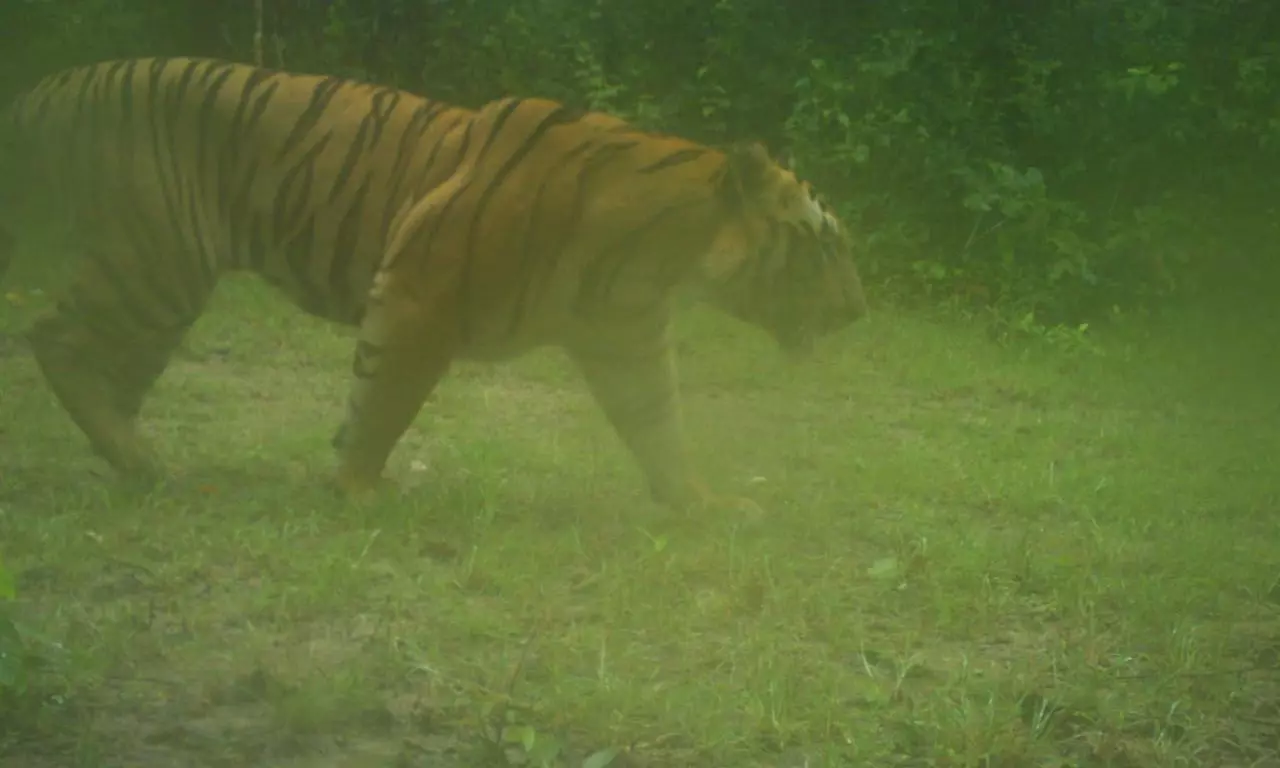
Photograph of the tiger, named U93563, that travelled 1,000 km across six districts in four days over 23 months— Image By Arrangement
RAIPUR: A male tiger's remarkable journey of nearly 1,000 km across forests in central and eastern India over almost two years has revealed a potential wildlife corridor that is not among the 54 tiger corridors identified by the National Tiger Conservation Authority (NTCA).
The tiger, identified as Udanti-U93563, is believed to have begun its journey from either Chandrapur or Gadchiroli district in Maharashtra in January 2025 before travelling through Chhattisgarh and reaching Odisha's Debrigarh Wildlife Sanctuary this month.
Deputy director of Udanti-Sitanadi Tiger Reserve (USTR) Varun Kumar Jain said the tiger was first captured on camera in the reserve in April 2025.
"The wild cat stayed in the USTR for around six months before dispersing to the Barnawapara Wildlife Sanctuary in the state," Mr Jain told this newspaper.
The tiger remained in Barnawapara for nearly a year before moving to Gomarda Wildlife Sanctuary, where it spent four days. It subsequently entered Debrigarh in Odisha's Bargarh district.
Mr Jain said the tiger's details were referred to the NTCA to determine its original habitat, but no matching record was found.
Forest officials suspect the animal originated in Maharashtra's Chandrapur or Gadchiroli district. Its possible route covers at least six districts across Maharashtra, Chhattisgarh and Odisha.
The NTCA is studying the tiger's movements to establish its dispersal route.
According to Mr Jain, the journey has revealed a potentially important wildlife corridor that had remained largely unexplored because several stretches were previously affected by Maoist activities.
"The new tiger corridor had remained under the shadow of Maoists earlier, and hence, it had gone unnoticed because of the inaccessibility of the region to the local administrations," a senior forest officer said.
Mr Jain described the route as a "loadshedding corridor", which allows animals to disperse from habitats facing pressure.
He said the relatively low density of human settlements along the route reduced the risk of human-wildlife conflict and facilitated animal movement.
Officials also see potential for the route to serve as an elephant corridor linking habitats in Odisha and Chhattisgarh.
Recent elephant movements from Odisha have seen about 40 elephants entering Barnawapara, 20 to 25 reaching USTR and another 20 moving into Gomarda.
A senior forest officer attributed the movement of tigers and elephants from their original habitats partly to mining activities and poaching.
( Source : Deccan Chronicle )

Next Story