The Maharaja Who Prefers the Company of His People
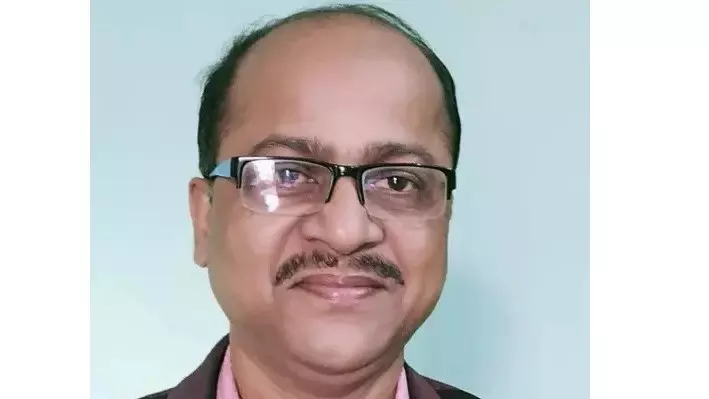
From the royal traditions of Patna State to public hearings in Odisha’s capital, Bhubaneswar, Deputy Chief Minister Kanak Vardhan Singh Deo’s life reflects a blend of heritage, accessibility and a personal touch that has endeared him to many in his constituency
Bhubaneswar: In an age when public representatives are often surrounded by protocol and security, Odisha Deputy Chief Minister Kanak Vardhan Singh Deo, popularly known as the Maharaja of Patna, is known among many in his constituency for a different approach to public life—one that places a premium on personal contact and accessibility.
Scion of the erstwhile royal family of Patna in Balangir district, Singh Deo carries a royal legacy but, according to people who have observed him closely, rarely allows it to become a barrier between himself and the common people. For him, the connection with his constituency goes beyond electoral politics, extending into the everyday concerns of people who seek his time and attention.
Whenever his busy schedule in Bhubaneswar permits, the Deputy Chief Minister returns to Patnagarh to hold public hearings. People travel from distant villages, often carrying their grievances, requests and hopes. Many are familiar faces, and Singh Deo is said to recognise a considerable number of them by name.
He listens as people explain their problems, sometimes at length, before moving on to the next person. The hearings can stretch on as one visitor follows another, each hoping to secure a patient hearing from the leader.
“The Maharaja listens to everyone patiently. He does not get annoyed even when some people take up a great deal of his time with lengthy conversations. He hears them out and attends to their concerns one after another,” says Sadasib Saraf, a local journalist who has observed his interaction with people.
For those who approach him, such moments can matter as much as formal assurances. The opportunity to speak directly to an elected representative, without feeling hurried or dismissed, can itself offer a sense of reassurance.
A royal legacy kept alive through tradition
Patna State's royal heritage finds its most visible expression during Dussehra, when centuries-old customs bring the royal family and local residents together in a celebration of faith, history and community.
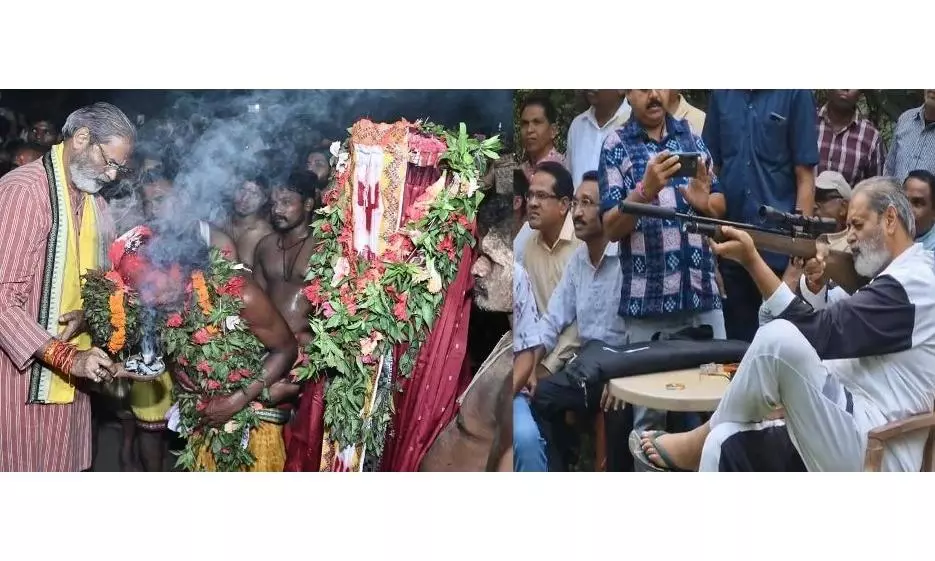
As in previous years, Singh Deo visited Patnagarh, his residential place Patna State, during the festival to participate in the traditional Bael Jatra celebrations. The ceremonies combine religious observances with a ritual demonstration of the martial traditions associated with the erstwhile kingdom.
The proceedings begin on Mahanavami, when the Barua, a ritual representative of Maa Pataneswari, visits the shrine of Maa Samaleswari to seek her blessings. Sacred observances, including Khaparchupa and Digabandhana, are performed at the Samadhi Peetha of Ashtamalla.
The Barua then proceeds to Rajkhamar in the royal palace to offer prayers to Maa Dashamati. After the rituals, a ceremonial procession passes through the town before returning to the temple.
The following day brings one of the most eagerly watched events of the celebrations: Lakhabindha, a traditional display of archery and martial skill in which Singh Deo takes aim at green coconuts.
This year, he successfully brought down all three coconuts, drawing cheers from the assembled crowd.
The spectacle is more than a display of marksmanship. It serves as a reminder of a tradition through which the royal household's historical relationship with its people continues to find expression in contemporary public life.
“Every year on Dussehra, we perform this traditional Lakhabindha. This centuries-old practice is an occasion when the subjects of the kingdom come to see how well they are protected under their king,” Singh Deo says.
The reference to the king and his subjects belongs to an older social order, but the ritual continues to draw people together around a shared cultural memory. For the Maharaja, participation in these ceremonies is a way of keeping that heritage alive.
Punctuality and personal connection
Away from the ceremonial setting of Patnagarh, Singh Deo has another reputation in Odisha's political circles: punctuality. He is known for arriving at scheduled programmes ahead of time, a habit that distinguishes his public engagements from the delays that often accompany busy political calendars.
His interactions with ordinary people also contribute to his public image. Rather than maintaining an exclusively formal distance, he often mingles with people in a manner that makes the interaction feel personal.
For residents who approach him with requests or concerns, the combination of accessibility and familiarity can create the impression of a leader who is willing to offer support and encouragement beyond the confines of an official meeting.
Royal titles may evoke memories of a bygone era, but their significance in a democratic society depends increasingly on how those who inherit them engage with citizens. In Patnagarh, Singh Deo's public hearings and continued participation in traditional festivals bring these two worlds together.
His story is, in many ways, about the meeting of two identities: the Maharaja who preserves the rituals of an erstwhile princely state and the elected representative who must respond to the everyday expectations of a democratic constituency.
In that meeting lies the enduring appeal of a familiar sight in Patnagarh—the royal figure returning home, listening to people one by one and taking his place in a tradition that continues to connect the past with the present.
