Union power minister Manohar Lal Khattar said, “We have decided the minimum temperature of ACs will be fixed at 20 degrees Celsius and the maximum at 28 degrees Celsius.”
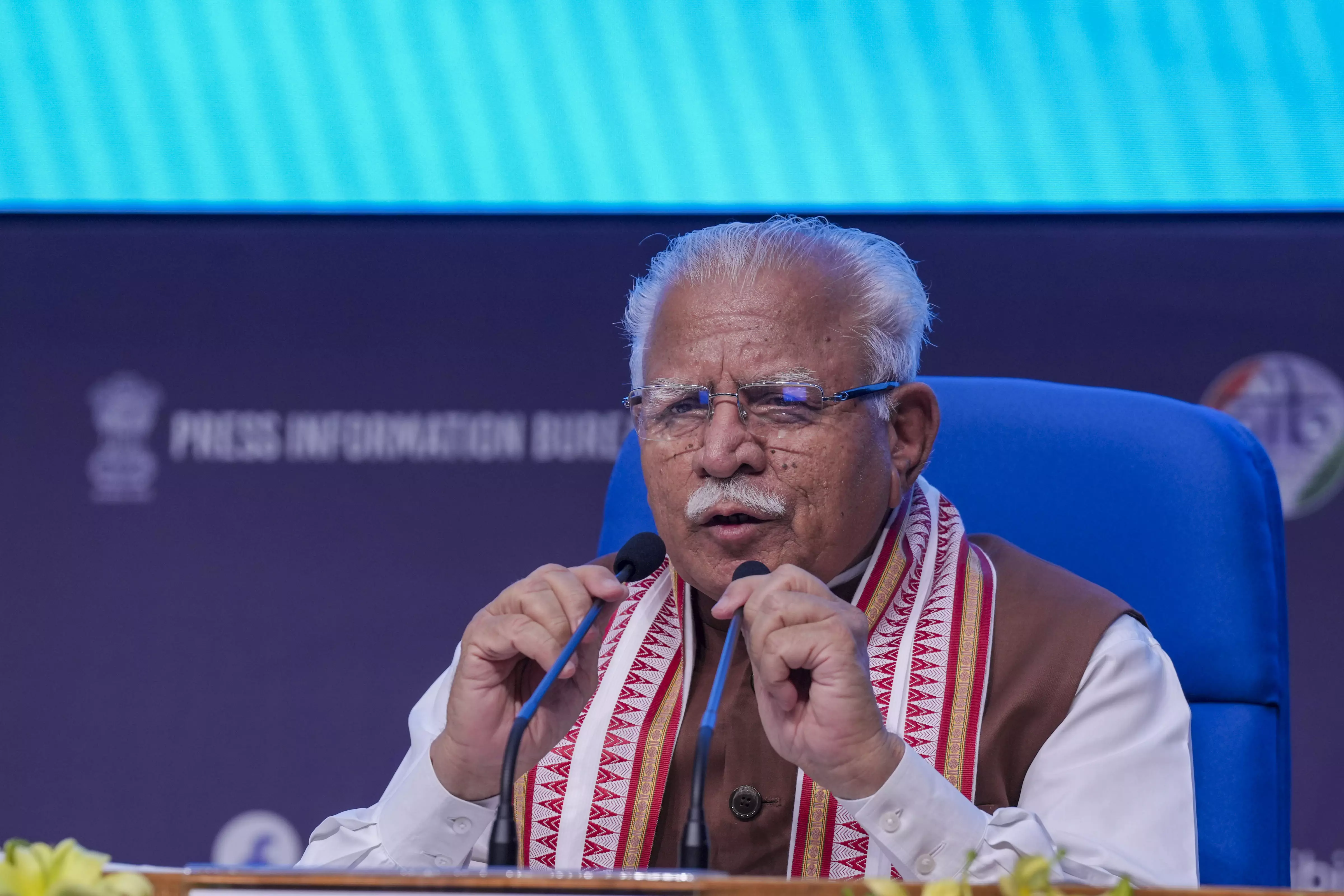
New Delhi:In a bold energy efficiency policy initiative, the Centre is planning to implement a new standard temperature range for air conditioners across the country, capping the minimum temperature at 20 degrees Celsius and the maximum at 28 degrees Celsius.
Union power minister Manohar Lal Khattar said, “We have decided the minimum temperature of ACs will be fixed at 20 degrees Celsius and the maximum at 28 degrees Celsius.”
The minister noted that the new rules aim to bring uniformity to air conditioning use and help reduce excessive power consumption due to extremely low cooling settings.
Highlighting 11 years of transformative growth in the power sector in the country, Mr Khattar said that there has been no shortage of electricity in the county and India is emerging as an energy surplus nation.
The Union minister mentioned that demonstrating remarkable growth and resilience, India successfully met peak power demand of 241 GW on June 9. “This achievement underscores the nation's robust power infrastructure, with zero peak shortage reported,” he said, pointing out that peak power demand can touch 270 GW during this summer season.
Mr Khattar noted that the peak power demand has been lower than projected so far, as unseasonal rains in May reduced the use of cooling appliances like desert coolers and air conditioners.
Mr Khattar stated that due to significant additions in generation and transmission capacities, energy shortages at the national level have reduced to a mere 0.1 per cent in April 25 from 4.2 per cent in 2013-14. Total electricity generation grew annually by 5.2 per cent in 2024-25.
“The average electricity supply in rural areas increased from 12.5 hours (2014) to 22.6 hours (2025), with urban areas reaching 23.4 hours,” he said.
The minister said that the government has increased the compensation paid to landowners for laying transmission lines. “Compensation for tower areas increased from 85 per cent to 200 per cent of land value and for RoW corridors from 15 per cent to 30 per cent of land value. Compensation has been linked to the market value of land. Subsequently, issued supplementary guidelines on March 21, for assessing the market rate of land by registered valuers. Haryana and Delhi have adopted the guidelines,” Mr Khattar added.

