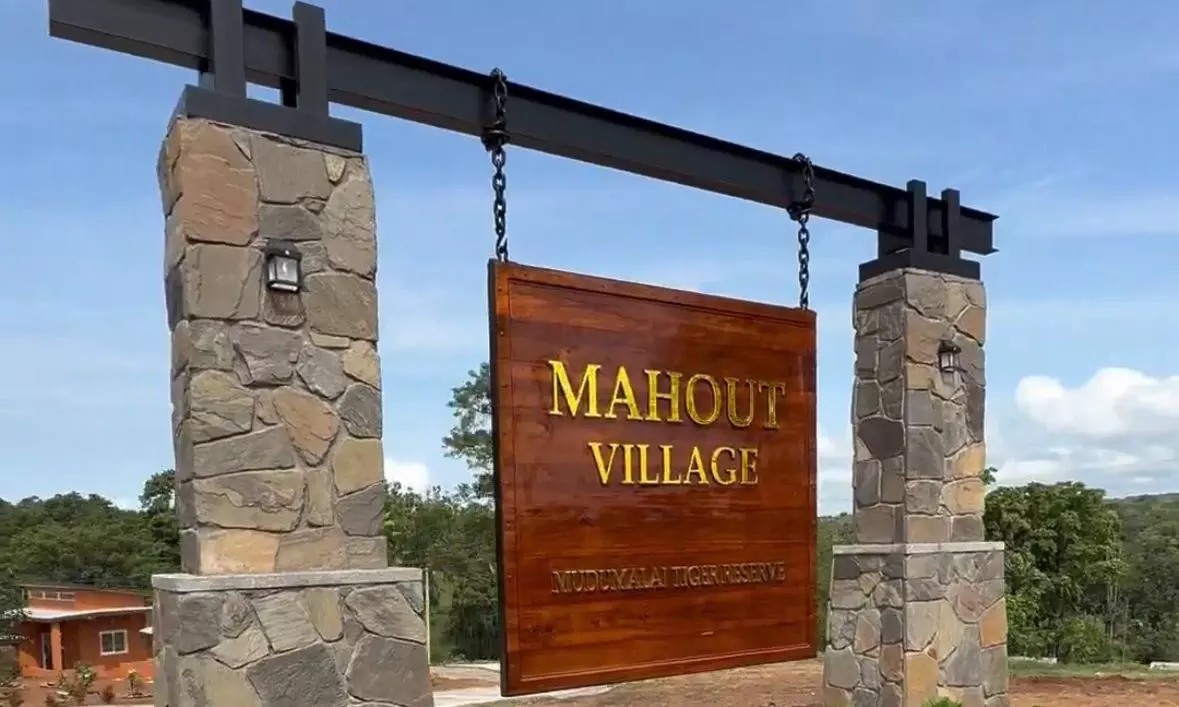
Tamil Nadu Inaugurates India's First Mahouts Village At Theppakadu

The cost of this initiative, developed by the Tamil Nadu Forest Department, was Rs 5.6 crores, which includes eco-friendly houses, solar lighting, a basketball court, a children’s playground, and a protective solar-powered fence.
The Oscar-winning documentary, “The Elephant Whisperers,” certainly caught our attention about the love the Mahouts and the caretakers have for their elephants and their calves at Theppakadu, Mudumalai Tiger Reserve in the Nilgiris in Tamil Nadu.
The documentary is a story of Bomman and Bellie, elephant caretakers from the Kattunayakan tribe. The featured couple had requested houses for mahouts and caretakers in March 2023, when CM M K Stalin welcomed them at the Secretariat after the documentary won Oscars. And this Tuesday, the dedicated “Mahout village” was finally inaugurated. Under this project, 44 tribal mahouts and their assistants, called as “Cavadies,” were given house keys to the newly built houses in their names.
This marks a step in improving the lives of those who have long committed passionately to caring for the state’s elephants. A similar housing project at Kozhikamuthi Elephant Camp was developed with 47 greenhouses. The cost of this initiative, developed by the Tamil Nadu Forest Department, was Rs 5.6 crores, which includes eco-friendly houses, solar lighting, a basketball court, a children’s playground, and a protective solar-powered fence.
The design and amenities have been developed by consulting the mahouts to ensure facilities meet their needs. The houses are made eco-friendly to maintain harmony with their local building traditions. The village lanes have been named after the elephants cared for within the camp. This project addresses the age-old concerns about the welfare of mahouts and their elephants in Tamil Nadu.
There have been concerns regarding the disparities in compensation and working conditions of mahouts, especially those employed by the Forest Department, who receive better support than mahouts working for temples and private settings.
The establishment of a proper village with improved facilities represents a significant step in integrating community welfare along with wildlife conservation. This ensures that those who care for our beloved wildlife are supported, valued and respected.
The article is authored by Nikhila Kalla as part of internship program with Deccan Chronicle.
