Supreme Court To Hear Plea on Wages for Temple Priests Today

PIL seeks a judicial panel to review pay, benefits and rights of temple workers
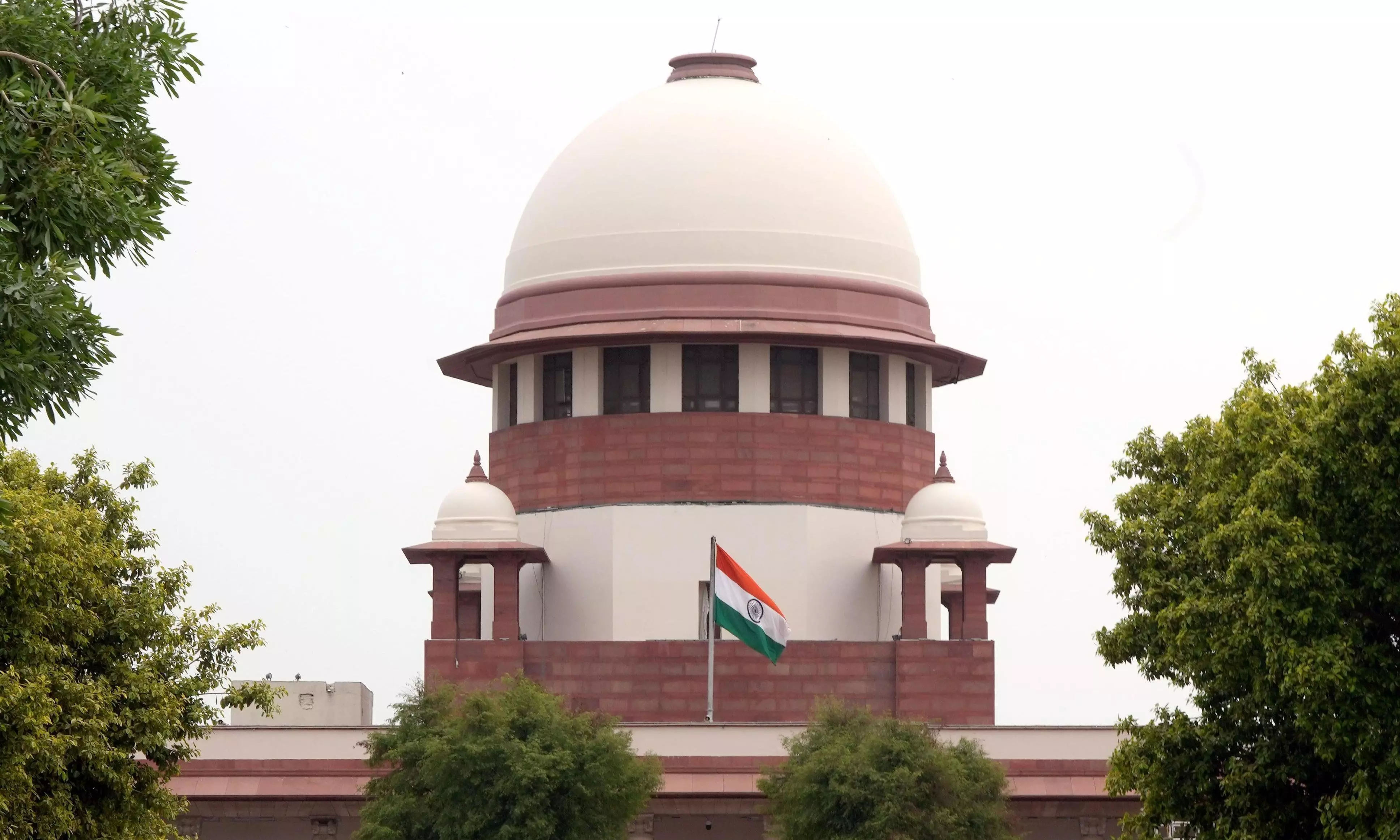
New Delhi: The Supreme Court is scheduled to hear on Monday a plea seeking the constitution of a judicial commission or expert committee to review wages and benefits of priests, sevadars and temple staff in state-controlled temples.
A bench of Justices Vikram Nath and Sandeep Mehta is likely to take up the public interest litigation filed by advocate Ashwini Upadhyay.
The petition seeks directions to the Centre and states to set up a mechanism to examine remuneration and service conditions of priests and temple staff.
"Petitioner also seeks a declaration that priests and temple staff are employee' under Section 2(k) of the Code on Wages, 2019. Petitioner submits that once the State assumes the administrative, economic and financial control over temples, an employer-employee relationship arises and denial of dignified wages to priests and temple staff violates the right to livelihood guaranteed under Article 21," it said.
The petitioner said the issue came to his notice on April 4 during a visit to Varanasi, where he learnt that priests and temple staff at a state-controlled temple were not being paid minimum wages.
"Recently, in Andhra Pradesh and Telangana, priests and temple staff organised a large-scale protest demanding the minimum wages. Priests and temple staff are not getting even the minimum wage prescribed by the state for unskilled and semi-skilled workers. This is a systemic exploitation. State is acting as a model employer through the endowments department, but violating the Minimum Wages Act and the directive principles of state policy (Article 43)," the plea said.
The petition argued that non-payment of minimum wages in line with the 2026 inflation-adjusted cost of living index warranted judicial intervention.
Referring to a February 7, 2025 circular issued at the Dandayuthapani Swami Temple in Madurai, the petitioner said restrictions on accepting “dakshina” had exposed the vulnerability of priests dependent on such offerings.
"It is necessary to state that priests in such temples often receive no formal salary from the State and rely entirely on 'Dakshina'; the State's administrative order directly threatened them with starvation. Although withdrawn due to public outrage, the incident highlights the State's arbitrary power over the survival of the priests. This is also a bitter truth that States are controlling lakhs of temples but not a single mosque or church," the PIL claimed.
The plea also sought directions to the Centre and states to take steps for the welfare of priests, sevadars and temple staff in line with earlier Allahabad High Court judgments.
