Supreme Court Sees 'Bleak Chance' for Early Trial in Shabir Shah Case

17 March 2026 3:20 PM IST17 March 2026 3:20 PM IST
Supreme Court grants bail to Shabir Ahmed Shah after 8.5 years in custody due to poor trial prospects.
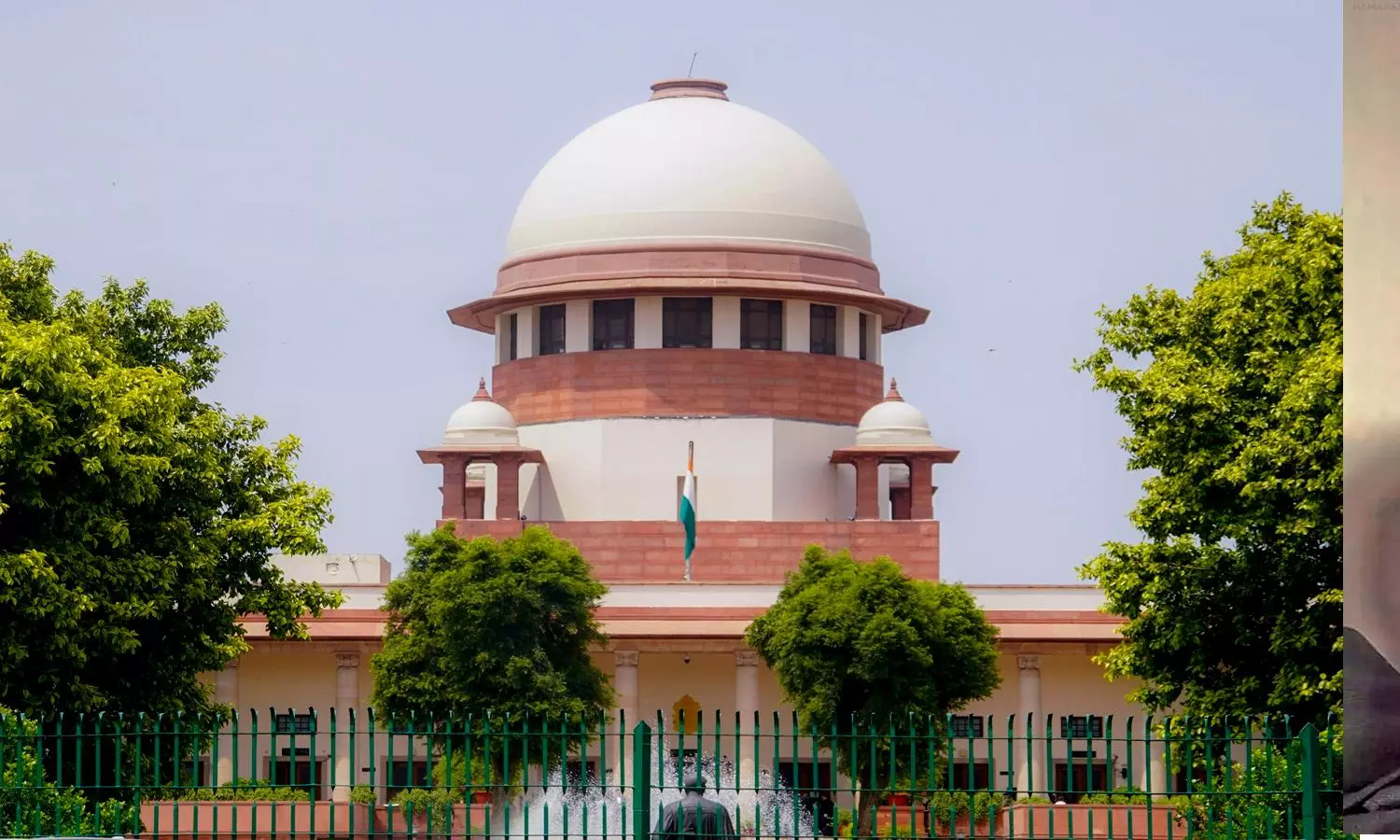
Supreme Court (DC File Photo)
New Delhi: Underlining that if the trial was unlikely to conclude within a reasonable time, continued detention could result in curtailment of personal liberty guaranteed under the Constitution, the Supreme Court has granted bail to Kashmiri separatist leader Shabir Ahmed Shah who has been in jail for over eight years in a terror funding case.
A bench of Justices Vikram Nath and Sandeep Mehta, which observed that there were bleak chances of the trial's early disposal and the 74-year-old had been in custody for a prolonged period, however, imposed stringent bail conditions on Shah, including not commenting to the media about the case, according to a detailed order of the March 12 verdict.
Noting that Shah, who was arrested by the National Investigation Agency (NIA), had been in jail for eight-and-a-half years, the bench said, "Prolonged incarceration of an accused, particularly in circumstances where the trial has made little or no substantial progress, is a relevant factor in adjudicating the matter of bail."
It highlighted that if the trial was not likely to conclude within a reasonable time, continued detention could result in the curtailment of personal liberty guaranteed under the Constitution.
"Without making any observations on the merits of the case and considering the fact that there are bleak chances of an early disposal of the trial, the prolonged period of custody suffered by the appellant and his advanced age, we are inclined to enlarge the appellant on bail during the pendency of the trial," the apex court said.
It imposed several conditions on Shah, such as not leaving the national capital, surrendering his passport, using only one mobile phone or landline number and providing its details, keeping the mobile phone switched on at all times, reporting to the investigating officer every fortnight, and not tampering with evidence or influencing witnesses.
"He shall furnish an undertaking before the trial court that he shall not commit any further offence of a similar nature while being on bail, and he shall not make any comment in the media about the present case or his role in the case," the top court said.
It said that if Shah violated any bail conditions, the prosecution could seek cancellation of the relief.
The bench passed the order after hearing rejoinder arguments on behalf of Shah, represented by senior advocate Colin Gonsalves. Senior advocate Siddharth Luthra appeared on behalf of the NIA.
During the hearing, the bench pointed out several anomalies in the trial and flagged the long incarceration of Shah.
On September 4 last year, the apex court refused to grant interim bail to Shah in the case and issued notice to the NIA, seeking its response on his plea challenging a Delhi High Court order dated June 12, 2025, that denied him relief.
The high court had refused to grant bail to Shah, observing that the possibility of his carrying out similar unlawful activities and influencing witnesses could not be ruled out.
In 2017, the NIA booked 12 people on allegations of conspiracy for raising funds to disrupt peace by way of pelting stones, damaging public property and conspiring to wage war against the central government.
Shah was alleged to have played a "substantial role" in facilitating a separatist movement in Jammu and Kashmir by inciting the general public to raise slogans in support of Jammu and Kashmir's secession, paying tributes to the family of slain terrorists by eulogising them as "martyrs", receiving money through hawala transactions and raising funds via cross-LoC trade, which were allegedly used to fuel subversive and militant activities.
( Source : PTI )

Next Story