Chief Justice of India B.R. Gavai noted that, over the years, the Court’s registry has seen a significant increase in both the volume and variety of records generated by its multiple branches
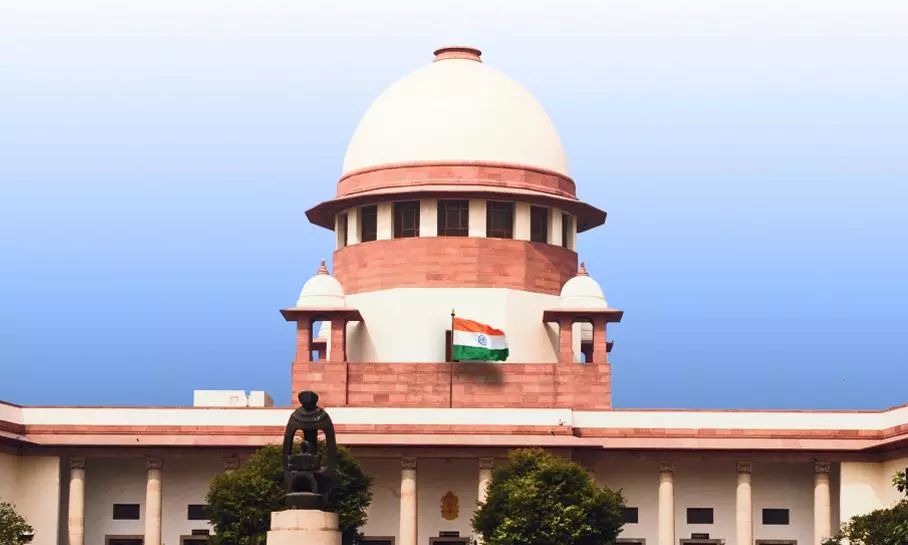
Supreme Court of India
New Delhi: The Supreme Court on Thursday issued comprehensive guidelines for the retention and disposal of administrative documents to enhance accountability and efficiency across all registry divisions.
Chief Justice of India B.R. Gavai noted that, over the years, the Court’s registry has seen a significant increase in both the volume and variety of records generated by its multiple branches. “While judicial records related to case proceedings are governed by explicit provisions in Order LVI of the Supreme Court Rules, 2013, and further detailed in Chapter XXI of the Handbook on Practice and Office Procedure of the Supreme Court of India, 2017, there has been a persistent gap in the management of administrative records,” he said.
To address this disparity and promote coherent, accountable, and efficient record-keeping, the Court has released the “Guidelines for Retention and Destruction of Records 2025.” These guidelines cover all administrative materials, including institutional decisions, policy implementations, inter-departmental correspondence, audits, and external-stakeholder engagements. Proper management of these records, CJI Gavai emphasized, is essential for transparency and accountability.
The new framework mandates that original submission notes or paper books bearing the signatures of the Chief Justice or other Supreme Court judges, as well as policy files, office orders, and circulars, be preserved permanently. For all other records, retention periods will begin only after the final resolution of any related arbitration, litigation, inquiry, or audit. Before any document is destroyed, each branch must confirm that no court case remains pending concerning the subject matter and must obtain approval from the relevant registrar.
By systematically eliminating obsolete records, the guidelines will reduce storage burdens and accelerate document retrieval. They also ensure compliance with audit and statutory requirements by defining retention periods based on fiscal, legal, and administrative relevance, in alignment with national public-record management standards. These measures were developed following detailed consultations among the Supreme Court’s registrars and registry officials.
( Source : Deccan Chronicle )


Next Story