SC Flags Trial Court’s Reliance on AI-Generated ‘Fake’ Judgments

2 March 2026 3:36 PM IST2 March 2026 3:36 PM IST
Court issues notices to key legal figures, including the Attorney General and Bar Council of India, investigating AI-generated judgments in legal proceedings.
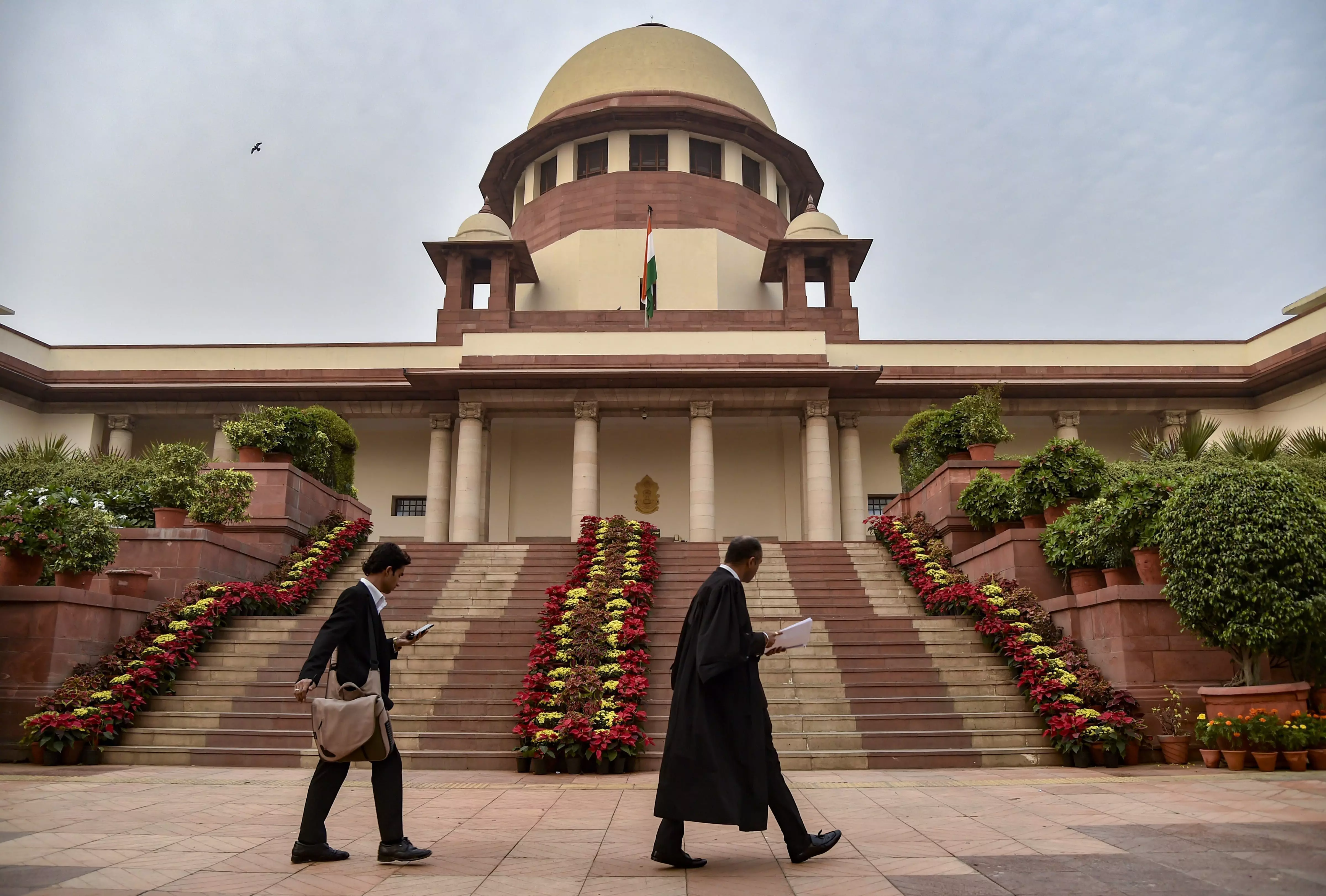
Supreme Court (DC File Photo)
New Delhi: Taking cognisance of a trial court relying on alleged non-existent verdicts generated using artificial intelligence, the Supreme Court has observed that a decision based on such fake judgments would not merely be an error in decision-making but would amount to misconduct.
A two-judge bench of Justices P.S. Narasimha and Alok Aradhe said it would examine the issue in detail and issued notice to the Attorney General R. Venkataramani, Solicitor General Tushar Mehta, and the Bar Council of India.
The apex court also appointed senior advocate Shyam Divan to assist it in the matter.
The court observed: “We take cognisance of the trial court’s reliance on AI-generated, non-existent or synthetic judgments and propose to examine the consequences and accountability arising from such conduct, as it directly affects the integrity of the adjudicatory process. A decision founded on fabricated or non-existent precedents is not a mere error of judgment; it constitutes misconduct and will attract legal consequences. This issue warrants detailed examination.”
The issue arose while the apex court was hearing a plea challenging a January order of the Andhra Pradesh High Court in a suit seeking an injunction.
The Supreme Court said the case raises serious institutional concerns, not regarding the merits of the decision, but with respect to the process of adjudication.
It noted that, pending disposal of the suit, the trial court had appointed an advocate-commissioner to record the physical features of the disputed property. The petitioners challenged the commissioner’s report by raising certain objections.
In its order passed in August last year, the trial court dismissed the objections and relied on certain judgments in doing so. The petitioners contended that the verdicts cited and relied upon were non-existent and fabricated.
The Supreme Court noted that the High Court had examined the objection and realised that the cited judgments were AI-generated. After recording a word of caution, the High Court proceeded to decide the case on merits, dismissing the civil revision petition and affirming the trial court’s order.
The petitioners then approached the apex court challenging the High Court’s decision.
Agreeing to hear the plea, the Supreme Court directed: “Pending disposal of the special leave petition, the trial court shall not proceed on the basis of the advocate-commissioner’s report.”
The matter has been posted for hearing on March 10.
In a separate hearing on February 17, a Supreme Court bench headed by Chief Justice Surya Kant expressed concern over a growing trend of lawyers filing petitions drafted using AI tools that contain non-existent judgments, including cases such as “Mercy vs Mankind.”
( Source : Deccan Chronicle )

Next Story