Supreme Court Directs High Court To Decide Plea On Chandi Devi Temple Receiver

A bench of Justice Ahsanuddin Amanullah and Justice S.V.N. Bhatti directed the district magistrate of Haridwar to submit a report on whether there was any mismanagement in the temple administration to submit a report in the High Court and deferred the matter by six weeks.
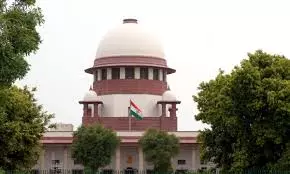
NEW DELHI: The Supreme Court on Tuesday directed the Uttarakhand High Court to decide the plea of ‘sevayat’ of the Maa Chandi Devi temple in Haridwar, seeking a stay on an order directing the Badri Kedar temple committee to appoint a receiver for overseeing the temple management.
A ‘sevayat’ is a priest actively involved in the daily rituals and management of a temple.
A bench of Justice Ahsanuddin Amanullah and Justice S.V.N. Bhatti directed the district magistrate of Haridwar to submit a report on whether there was any mismanagement in the temple administration to submit a report in the High Court and deferred the matter by six weeks.
The plea of Mahant Bhawani Nandan Giri, moved in the top court, contended that the High Court without any evidence and complaint delegated the control of the temple to the committee.
The plea argued the direction was passed despite the presence of a panel comprising the DM and senior superintendent of police of Haridwar that it constituted in 2012. The petitioner further argued that the direction to appoint the receiver was passed during an anticipatory bail plea hearing of an accused in a criminal matter.
The Maa Chandi Devi Temple was founded in the 8th century by Jagadguru Sri Adi Shankaracharya and since then petitioner's ancestors were stated to have been managing and looking after it as ‘sevayat’.
The plea claimed neither was there a complaint nor the question of mismanagement or misappropriation ever been flagged by the committee comprising the DM and the SSP.
"The High Court passed directions which are arbitrary, illegal and perverse and outside the pleadings and without any specific relief, that too in violation of the principle of natural justice as the petitioner, who is the sevayat/chief trustee, was not heard,” the plea added.
