Strategic Energy Mitigation Framework Needed to Protect Economy From Oil Shocks: Panel

The panel also recommended the establishment of a more formalised 'Sinking Fund' to manage the redemption of long-term bonds systematically. “The DEA maintains high levels of transparency regarding 'Off-Budget' liabilities to ensure the market has an accurate view of the total repayment obligations, thereby maintaining the stability of the sovereign credit rating,” the panel suggested.
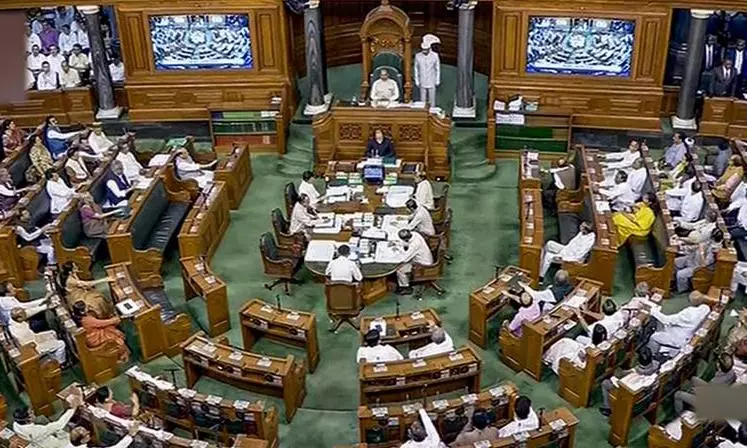
New Delhi: A parliamentary panel on Tuesday suggested that the department of economic affairs should develop a strategic energy mitigation framework to protect the economy from oil shocks and ensure long-term stability. Besides, the standing committee on finance also emphasised in its report that a coordinated national strategy is also needed for the rapidly evolving global competition for critical minerals and rare earth elements.
Critical minerals and rare earth elements are essential for semiconductors, renewable energy systems, electric mobility, defence technologies, and the development of alternative fuels, requires a coordinated national strategy. “The framework should incorporate sector-specific incentives, including single-window approvals, fast-track clearances for high-value manufacturing and frontier technology projects, and targeted R&D linked fiscal benefits, to attract and retain institutional investors despite global volatility,” the panel said in a report.
The panel, headed by senior BJP leader Bhartruhari Mahtab, has, therefore, recommended that the government accelerate efforts to secure diversified international supply chains for critical minerals, such as lithium, cobalt, and rare earth elements, while simultaneously strengthening domestic exploration, processing, and value-addition capabilities to support emerging sectors, including renewable energy, electric mobility, and alternative fuel technologies.
Regarding investment, the panel has recommended that the Department of Economic Affairs (DEA) under the Finance Ministry must streamline the FDI regulatory framework to counter the global downward trend and ensure India remains a preferred destination for long-term institutional capital. Most critically, the committee have recommended that the department facilitate a 'Structural Reform Bridge' to help states transition away from revenue deficit grants (RDGs).
“This must include a rigorous mechanism to discourage fiscal populism by linking 'Special Assistance for Capital Investment' to the successful rationalisation of revenue expenditure. By enforcing strict adherence to off-budget borrowings (OBBs) reporting and promoting fiscal prudence, the government can ensure that the transition to a post-RDG era strengthens the internal economic fabric of the nation,” the report said.
The panel also recommended the establishment of a more formalised 'Sinking Fund' to manage the redemption of long-term bonds systematically. “The DEA maintains high levels of transparency regarding 'Off-Budget' liabilities to ensure the market has an accurate view of the total repayment obligations, thereby maintaining the stability of the sovereign credit rating,” the panel suggested.
