Supreme Court seeks immediate and long-term solutions as Delhi’s AQI nears 400 and GRAP-III restrictions kick in
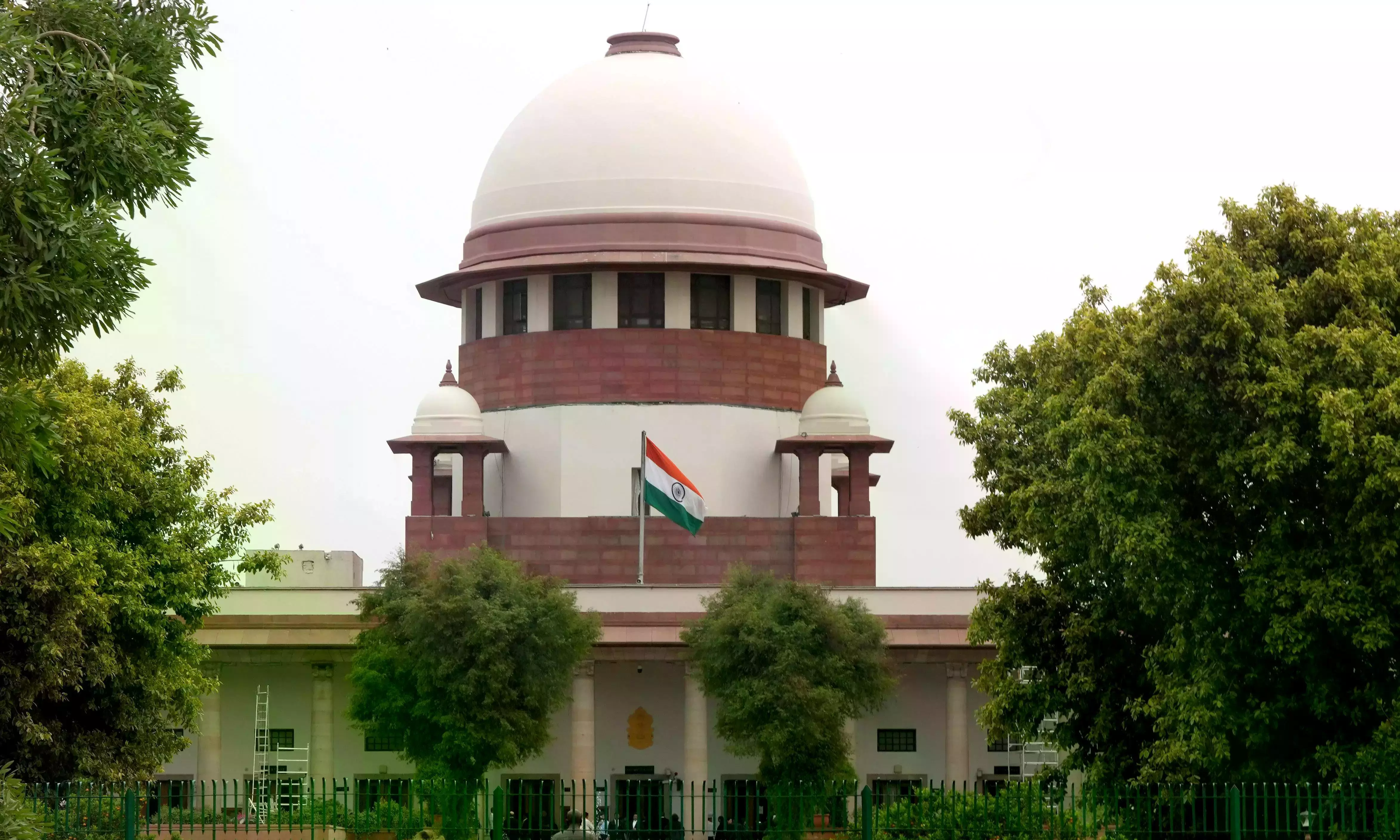
New Delhi: The Supreme Court on Friday questioned the effectiveness of Delhi-NCR’s pollution-control framework, describing temporary restrictions on vehicles and construction as “old, tried and failed” measures.
Flagging bumper-to-bumper traffic across the region, the court identified vehicular emissions as a major contributor to deteriorating air quality and called for immediate, medium- and long-term measures.
The observations came as the Commission for Air Quality Management invoked Stage III of the Graded Response Action Plan (GRAP), imposing restrictions on dust-generating construction and demolition activities across the NCR.
The Indian Institute of Tropical Meteorology, Pune, forecast very poor air quality on November 6 and severe conditions from November 7 to 9. Its outlook for the subsequent six days ranged from severe to very poor.
Under GRAP-III, the Delhi and NCR state governments must decide whether public, municipal and private offices should operate with 50 per cent attendance, with the remaining employees working from home.
Meanwhile, the Delhi High Court exempted lawyers and court staff from restrictions on non-Delhi-registered vehicles below BS-VI emission standards on court working days. The order came on a petition by the Delhi High Court Bar Association.
Hearing the air-pollution matter, a bench of Chief Justice of India Surya Kant, Justice Joymalya Bagchi and Justice V. Mohana questioned why pollution continued to recur despite existing controls.
The court pointed to heavy traffic on roads connecting Delhi with Ghaziabad, Greater Noida, Gurgaon and Faridabad.
“Despite all these measures, why is pollution recurring? Is it only because of the movement of vehicles, irrespective of the quality of fuel being used, whether petrol or diesel,” the CJI asked, noting that the AQI was approaching 400.
Describing Delhi as “virtually free for all”, he questioned how authorities could monitor the fuel, emissions and condition of vehicles entering from other states.
“Even if a vehicle enters Delhi for just two hours and then leaves, those two hours are enough to cause damage,” he said.
On stubble burning, the court favoured economic incentives and practical alternatives rather than relying solely on restrictions. The CJI suggested purchasing agricultural residue at a predetermined rate so farmers could earn from it instead of burning it.
“Once they understand that it is incentivised and beneficial for them, they will retain the stubble and not burn it,” he said.
The Centre said the Ministry of Earth Sciences’ Decision Support System estimated stubble burning’s contribution to Delhi’s pollution at about 14 per cent on November 5.
The court also highlighted the exposure of roadside vendors, workers and daily-wage earners, who travelled by bicycle or small vehicles and spent much of their working day outdoors. The festive season was an important earning period for them, it noted.
Additional Solicitor General Aishwarya Bhati outlined measures addressing industrial and vehicular emissions, construction dust, road dust and stubble burning. She cited improvements in public transport, ring roads, highways, elevated corridors and peripheral roads.
The Centre said restrictions on vehicles below BS-VI standards were being implemented and pollution-under-control certificates were being linked to testing locations.
Amicus curiae Aparajita Singh flagged gaps in implementing earlier directions to reduce congestion at Delhi’s borders, saying commercial vehicles continued to idle at checkpoints.
The Centre countered that multi-lane free-flow systems had been installed at nine major toll plazas handling nearly 90 per cent of traffic across 126 toll points.
The bench said it would examine the status report and charts before considering directions. It proposed listing the matter immediately after the Diwali break and seeking further reports and updates.
Delhi’s overall AQI stood at 391 at 9 am on Friday. Of 59 monitoring stations, 30 recorded severe air quality and the rest very poor conditions. Rohini recorded an AQI of 475, followed by IIT Delhi at 472.