Srinagar: Omar Abdullah Outlines Talks With Home Minister; Criticises Communal Discrimination

The Chief Minister also condemned the recent assault on two Muslim women journalists in Delhi: Reports
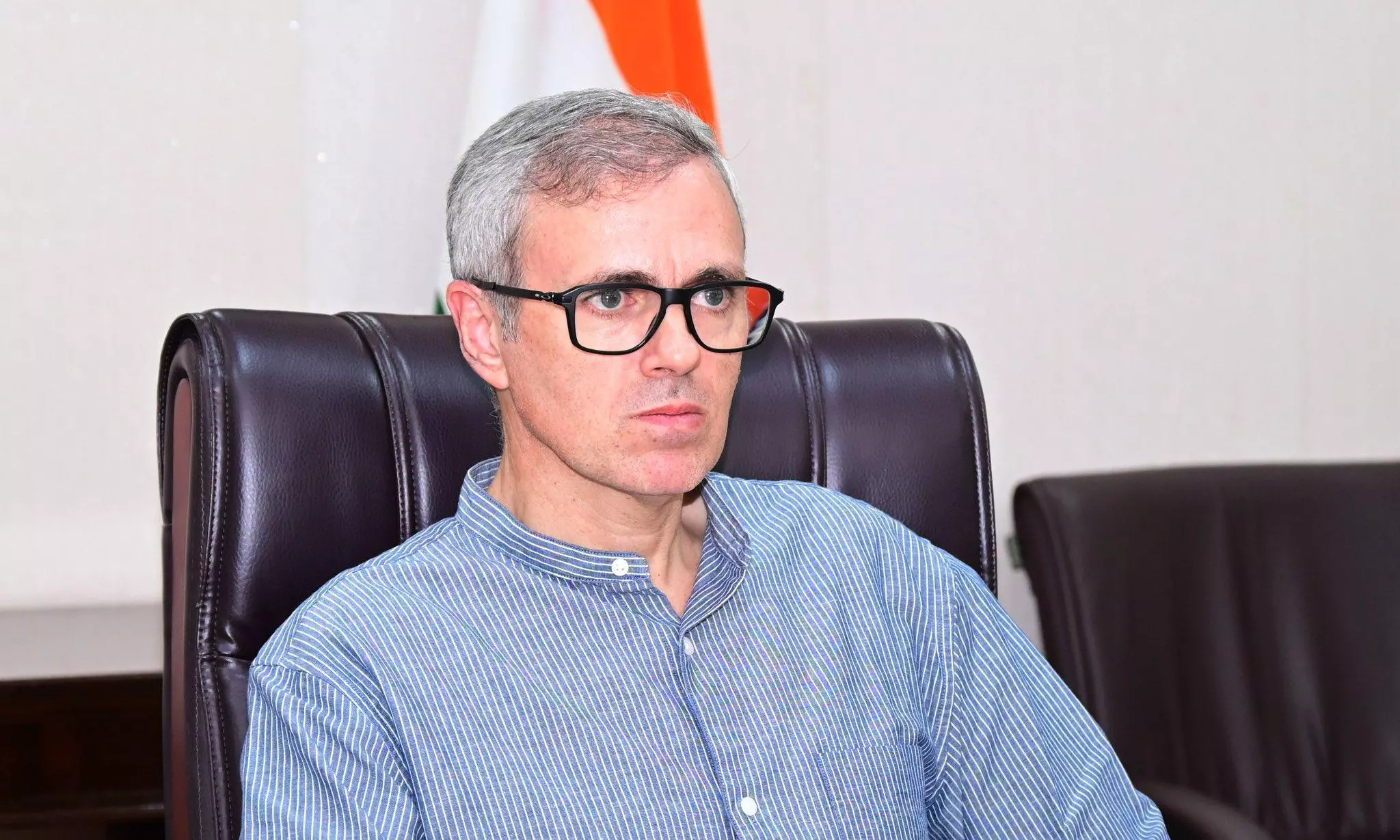
SRINAGAR: Chief Minister Omar Abdullah on Monday offered a detailed and unusually candid assessment of the issues currently straining relations between Jammu and Kashmir and the Central government, stressing that he remains in “constant touch” with New Delhi over the restoration of statehood and several long‑pending administrative matters. Abdullah said he discussed these concerns at his recent meeting with Union Home Minister Amit Shah, though he did not reveal what response he received.
While talking to reporters here, Abdullah described the engagement with the Centre as an ongoing, multi‑layered process. He noted that several critical matters have been left unresolved for years, including the finalisation of business rules, the appointment of an Advocate General, and pending decisions on reservation policies. “It has been about two years now that the Advocate General has not been appointed,” he said, adding that his Cabinet has prepared a reply on the reservation issue but has not yet forwarded it to the Centre. “There are a number of issues to discuss, and that is why I met the Home Minister,” he explained.
When asked about the demolition of an old mosque in Saharanpur, Uttar Pradesh—an incident that has drawn national attention—Abdullah was sharply critical. Reports indicate that the mosque, which stood on revenue‑recorded land with valid documentation, was demolished by local authorities who claimed encroachment. Community members have argued that all legal papers were in order, and that the demolition was carried out without due process.
Abdullah said the episode reflects a disturbing pattern. “What can be said? They can’t see our papers. No action is taken against others even if they don’t possess papers. Decisions are taken on the basis of religion,” he remarked. He urged authorities to at least adhere to the spirit of recent remarks made by the RSS chief in London, who called for fairness and restraint. “It would be a good thing if they do as much as he said. But these people say one thing and do the other. Either they don’t believe in what their leaders say, or they don’t have the strength to implement it. This is unfortunate.”
The Chief Minister also condemned the recent assault on two Muslim women journalists in Delhi, calling it part of a broader trend of treating Muslims as “outsiders.” He said the incident, along with mosque demolitions and other targeted actions, reflects a climate of hostility that should alarm anyone concerned about democratic values. “Both incidents are extremely unfortunate and something that shouldn’t happen,” he said.
Turning to security concerns in the Valley, Abdullah urged the security establishment to take seriously the renewed threats issued against Kashmiri Pandit employees working under the Prime Minister’s special job package. He warned against complacency, recalling past targeted killings of government employees, shopkeepers, dhaba owners, and bank workers—attacks carried out solely on the basis of ethnicity and religion.
“We have already paid a heavy price for what happened in the early 1990s,” he said. Abdullah stressed that the security establishment must investigate these threats thoroughly, identify those responsible, and allow the law to take its course. “It is not something that should be ignored,” he cautioned.