Sonam Wangchuk Alleges Alcohol Push in Ladakh

Sparks Debate Over Opening of Liquor Outlets Across UT
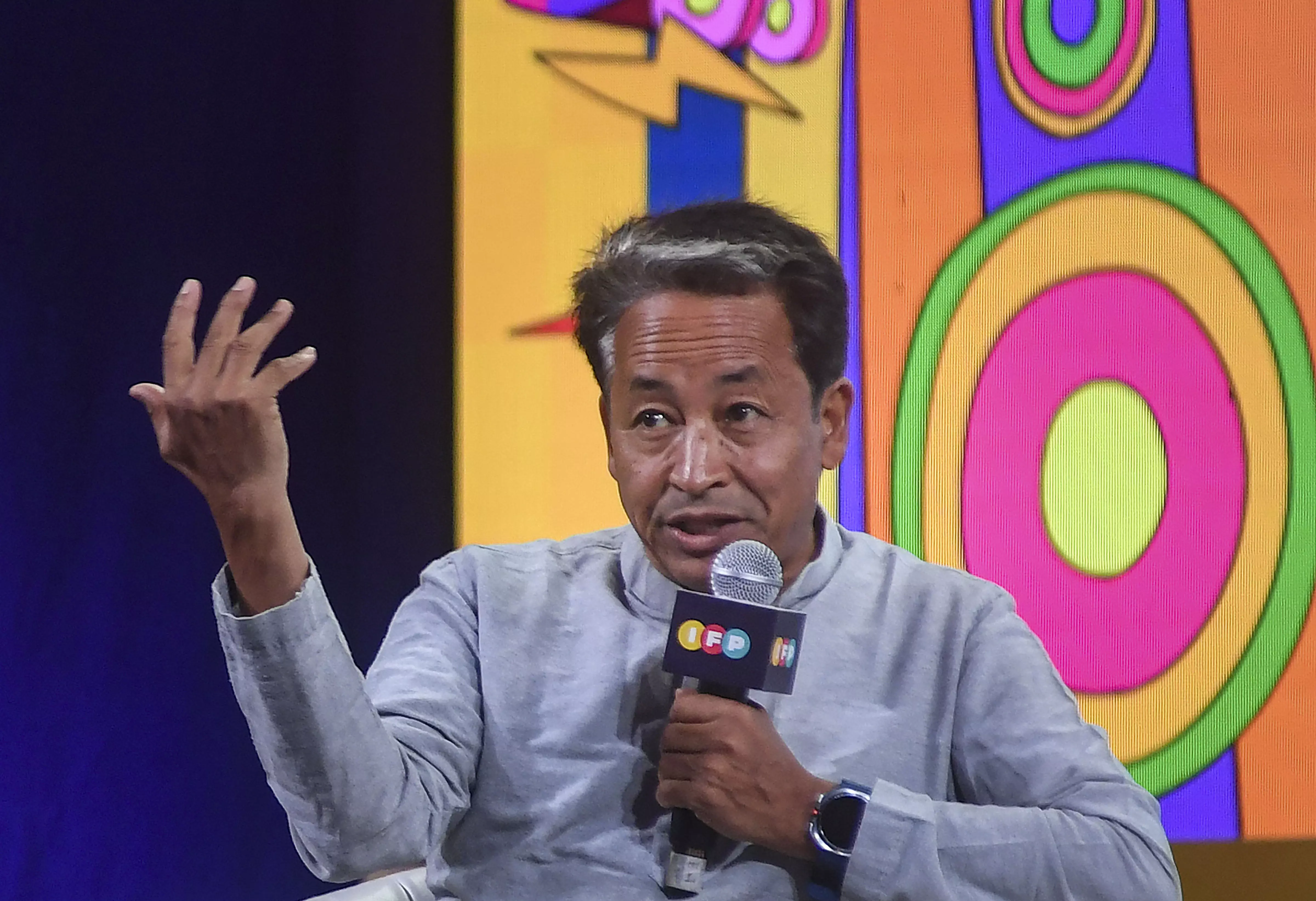
Srinagar: Climate activist Sonam Wangchuk has strongly criticised the opening of liquor stores across Ladakh and accused Lieutenant Governor Vinai Kumar Saxena of promoting alcohol even as the administration claims to be combating drug abuse in the Union Territory.
Wangchuk's remarks come amid growing protests by women's groups, civil society organisations and community bodies opposing the expansion of liquor sales in several parts of Ladakh.
Referring to reports of Chinese incursions in Arunachal Pradesh, Wangchuk on Monday drew a contrast with the situation in Ladakh, stating that the region's current dispute is not with China but with its own administration. He wrote on 'X', "DISPUTES ON THE LADAKH BORDER: Unlike in Arunachal Pradesh in Ladakh it's not with China. It's with Ladakh's own LG VK Saxena ji who is constantly firing alcohol cannons to... 'fight drug abuse in Ladakh'.'
He added, "Mothers & Women's Alliances are protesting now for the 6th day against the forcible opening of bars in villages, homestays & guesthouses & near schools & temples".
Highlighting what he described as inadequate national attention to the issue, Wangchuk further stated, "Unfortunately very few media houses are covering this crisis in Ladakh. People fail to understand why they're pushing alcohol in Ladakh while making Gujarat a dry state."
The controversy has centred on the Ladakh administration's decision to expand the licensing of liquor outlets, bars and alcohol-serving facilities across the UT, including in villages, tourism establishments, homestays and guesthouses. Administration officials have argued that the policy is intended to regulate the sale of alcohol, curb illegal liquor trade and establish a controlled framework for alcohol distribution in a rapidly growing tourism economy.
However, the move has triggered widespread opposition from local communities that fear it could accelerate alcohol consumption, social problems and substance abuse, particularly among young people.
Several local organisations, including women's groups, religious bodies, student associations and village-level committees, have voiced strong resistance to the policy. Protesters have argued that Ladakh's unique cultural and social fabric, shaped by centuries-old Buddhist and Islamic traditions, is incompatible with the aggressive expansion of alcohol outlets. Many community leaders have expressed concern that the opening of liquor shops near residential areas, schools, places of worship and tourist hubs could adversely affect public health, family welfare and social harmony.
Women's alliances have been particularly vocal, organising demonstrations and public campaigns against the licensing of liquor establishments. Protesters contend that the administration has ignored local sentiment and failed to adequately consult residents before implementing the policy. They maintain that rather than addressing rising concerns over addiction and drug abuse, easier access to alcohol could aggravate existing social challenges and place additional burdens on families and communities.
While the administration maintains that regulated alcohol sales are necessary for tourism management and revenue generation, opponents argue that economic considerations should not override public health concerns and the wishes of local communities.
