SC Weighs Euthanasia for Man in Coma for 13 Years

The apex court fixed January 13 to meet the parents after perusing a secondary medical report submitted by the All India Institute of Medical Sciences (AIIMS) on the patient’s condition.
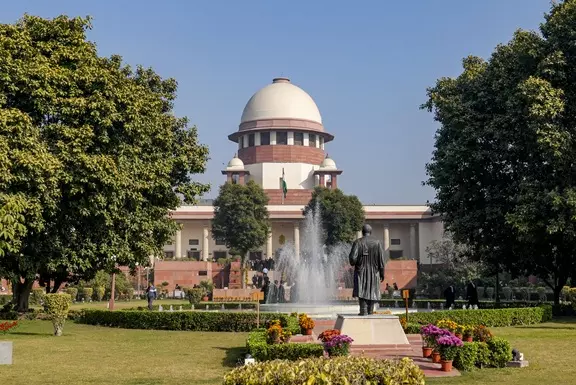
New Delhi: The Supreme Court on Thursday said it would meet the parents of a 31-year-old quadriplegic man who has been in a vegetative state for the past 13 years, while considering their plea for passive euthanasia by withdrawal of artificial life support.
The apex court fixed January 13 to meet the parents after perusing a secondary medical report submitted by the All India Institute of Medical Sciences (AIIMS) on the patient’s condition.
The patient, Harish Rana, suffered severe head injuries after falling from the fourth floor of a building in 2013 and has been on artificial life support for over 12 years. Passive euthanasia involves withholding or withdrawing medical treatment necessary to sustain life.
A two-judge Bench comprising Justices J.B. Pardiwala and K.V. Viswanathan examined the secondary medical board’s report detailing Rana’s medical history and described it as “very sad”.
“It is a very sad report. We cannot keep this boy in this stage,” the Bench observed, scheduling a meeting with his parents at 3 pm on January 13.
The court was hearing a petition filed by Ashok Rana, seeking permission to withdraw life support for his son. Earlier, a primary medical board had found that there was a negligible chance of recovery.
On December 11, the court had noted that Rana was in a “pathetic condition”, observing that he was bedridden with a tracheostomy tube for respiration and a gastrostomy tube for feeding, and was suffering from severe bedsores. The Bench had recorded that he had remained in a vegetative state for 13 years with virtually no prospect of recovery.
As per Supreme Court guidelines issued in 2023, both primary and secondary medical boards must be constituted to provide expert opinions before any decision is taken on withdrawal of artificial life support in such cases.
Earlier, counsel for the petitioner had referred to a 2018 Supreme Court judgment, stating that after the primary board’s assessment, the matter must be placed before a secondary board constituted by the Chief Medical Officer. Acting on this, the court had directed AIIMS to form a secondary medical board and submit its report, which has now been considered.
