Exercise Restraint, SC Tells Law Enforcement Agencies

5 Aug 2026 1:01 PM IST5 Aug 2026 1:01 PM IST
Top court says youngsters should be counselled and heard, even if some indulge in violence, while hearing a plea seeking action against organisers of the 'Sansad Chalo' march.
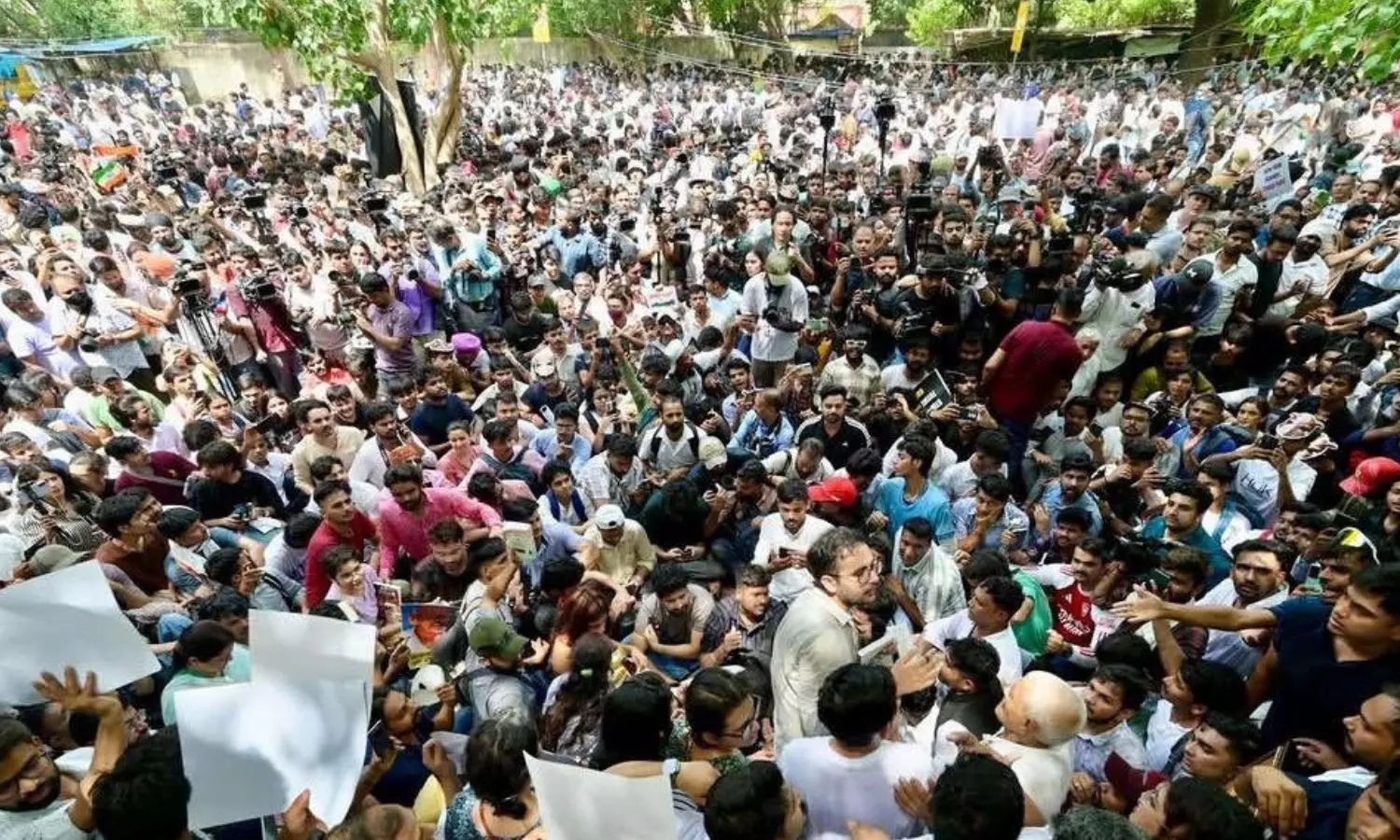
The Supreme Court stressed restraint by law enforcement during protests and agreed to hear a plea seeking action against organisers of the July 20 'Sansad Chalo' march over alleged incitement to violence.
NEW DELHI: The Supreme Court on Wednesday emphasised restraint by law enforcement during protests, observing that youngsters should be counselled and pacified even if some “misguided elements” resort to stone-pelting.
A three-judge Bench headed by Chief Justice of India Surya Kant, along with Justices Joymalya Bagchi and V. Mohana, made the observations while agreeing to hear a plea seeking action against organisers of the July 20 “Sansad Chalo” march for alleged incitement to violence. The Bench tagged the petition, filed by a retired Air Force officer, with a similar plea.
The July 20 march to Parliament followed protests over alleged exam irregularities and the NEET paper leak.
Appearing for petitioner Maneesh Kumar Solanki, advocate Rizwan Ahmed said, "Fifteen days have passed... What about the accountability of the organisers? They are going from channel to channel giving provocative statements and refusing to douse the fire".
He argued that governments should not “bend backwards” in handling protests, citing a recent law and order situation in Rajasthan. “If the government bends backwards in a matter concerning the national capital, will it not set a precedent in Rajasthan? There also the government will bend backwards to accommodate students. Tomorrow, if college students in Lucknow have some demand and start pelting stones at buses, will the government in Uttar Pradesh also bend backwards?” he submitted.
Responding, the CJI said, “They need advice and counselling. Any aggressive approach from the side of the mighty state may socially aggravate the situation and precipitate further violence. That needs to be avoided.”
He added, “What is important is to promote a peaceful march. If some incident takes place, the police also need to exercise a great deal of restraint to ensure that the situation does not go out of hand. Wherever such incidents take place, we need to deal with them very carefully.”
“We need to tread carefully, so that these youngsters do not indulge in violence. The better course is to counsel them and pacify them. The most powerful tool is listening. Listen to them and understand why they are shouting. But let us leave it to the wisdom of the law-enforcement agencies. They know better than you, and they know better than us how to deal with this kind of situation,” the CJI said.
The petitioner’s counsel contended that those involved in stone-pelting should be held accountable and not allowed to go “scot-free”.
“This is a very dangerous precedent. Three years back, the farmers were at the Singhu border. Tomorrow, Generation Alpha, Beta, Delta will come,” he said.
He also said Parliament was the “temple of democracy” and raised concerns over security. “What if they had opened fire? They were not marching on a national highway. They were not marching on a railway line. They were marching towards the temple of democracy. Everyone must be held accountable,” he submitted.
The plea further sought directions to identify persons who allegedly used derogatory language against police and security personnel and to mandate community service for them.
The July 20 march to Parliament followed protests over alleged exam irregularities and the NEET paper leak.
Appearing for petitioner Maneesh Kumar Solanki, advocate Rizwan Ahmed said, "Fifteen days have passed... What about the accountability of the organisers? They are going from channel to channel giving provocative statements and refusing to douse the fire".
He argued that governments should not “bend backwards” in handling protests, citing a recent law and order situation in Rajasthan. “If the government bends backwards in a matter concerning the national capital, will it not set a precedent in Rajasthan? There also the government will bend backwards to accommodate students. Tomorrow, if college students in Lucknow have some demand and start pelting stones at buses, will the government in Uttar Pradesh also bend backwards?” he submitted.
Responding, the CJI said, “They need advice and counselling. Any aggressive approach from the side of the mighty state may socially aggravate the situation and precipitate further violence. That needs to be avoided.”
He added, “What is important is to promote a peaceful march. If some incident takes place, the police also need to exercise a great deal of restraint to ensure that the situation does not go out of hand. Wherever such incidents take place, we need to deal with them very carefully.”
“We need to tread carefully, so that these youngsters do not indulge in violence. The better course is to counsel them and pacify them. The most powerful tool is listening. Listen to them and understand why they are shouting. But let us leave it to the wisdom of the law-enforcement agencies. They know better than you, and they know better than us how to deal with this kind of situation,” the CJI said.
The petitioner’s counsel contended that those involved in stone-pelting should be held accountable and not allowed to go “scot-free”.
“This is a very dangerous precedent. Three years back, the farmers were at the Singhu border. Tomorrow, Generation Alpha, Beta, Delta will come,” he said.
He also said Parliament was the “temple of democracy” and raised concerns over security. “What if they had opened fire? They were not marching on a national highway. They were not marching on a railway line. They were marching towards the temple of democracy. Everyone must be held accountable,” he submitted.
The plea further sought directions to identify persons who allegedly used derogatory language against police and security personnel and to mandate community service for them.
( Source : Deccan Chronicle )

Next Story