SC Urges Centre to Review Sonam Wangchuk’s Detention, Cites Health Concerns

4 Feb 2026 6:15 PM IST4 Feb 2026 6:15 PM IST
Court inquiry into Sonam Wangchuk's detention raises issues of national security versus individual health rights amid serious allegations of violence in Leh.
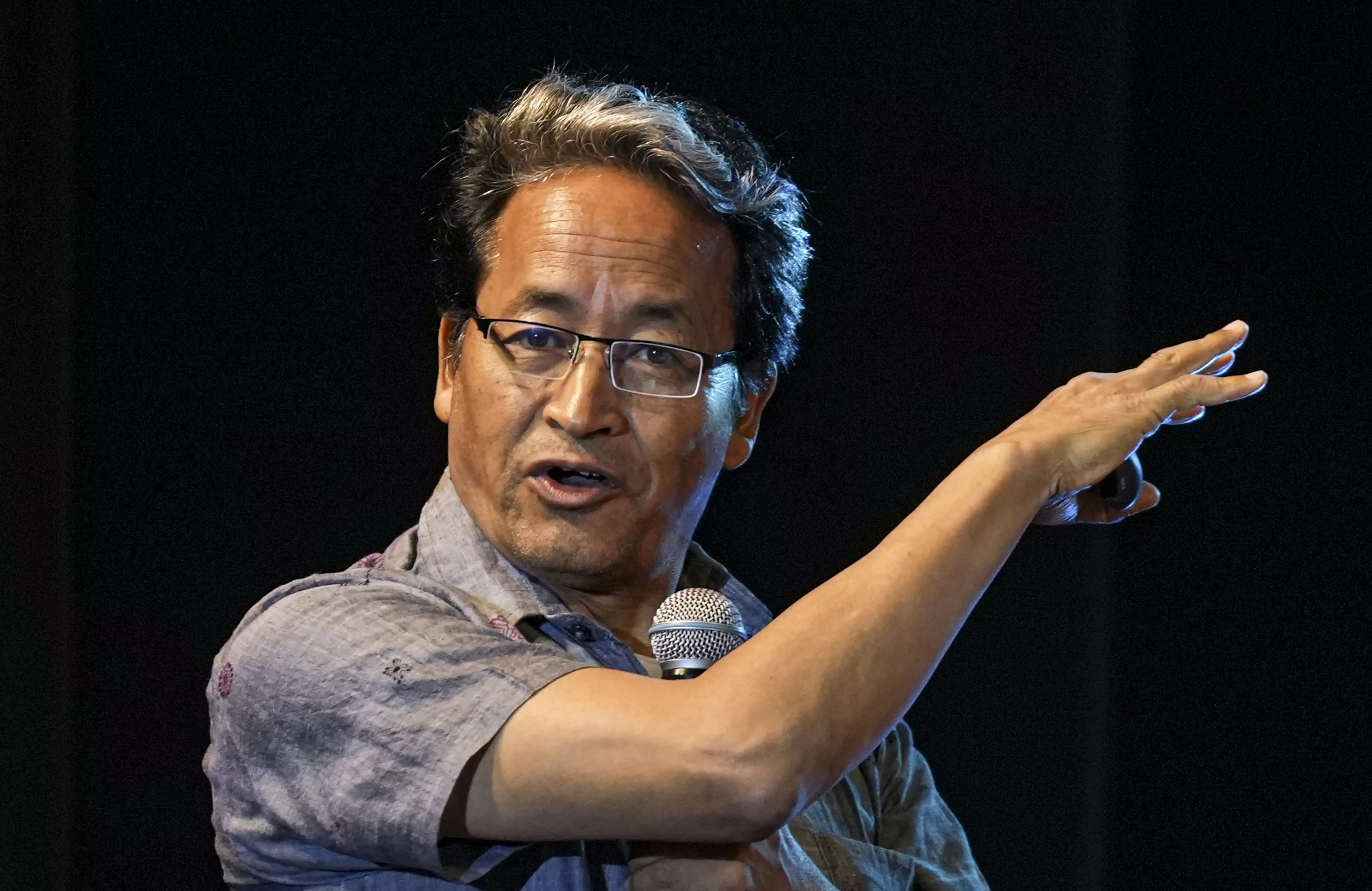
Sonam Wangchuk (PTI File Photo/Swapan Mahapatra)
New Delhi: The Supreme Court on Wednesday asked the Centre if there was any possibility for the government to relook at the detention of climate activist Sonam Wangchuk considering his health condition.
A bench of Justices Aravind Kumar and P B Varale observed that Wangchuk's health report was not good and asked Additional Solicitor General K M Nataraj, appearing for the Centre, to seek instructions in the matter.
"Apart from submissions, counter submissions and law points, just give a thought to it, as an officer of the Court. The detention order is passed on September 26, 2025, nearly five months.
"Considering the health condition of the detainee... The report which we saw earlier, it shows that his health is not that good. There are certain age-related, may be otherwise. Is there a possibility for the government to rethink, or even relook? the bench observed orally.
Nataraj said that he would put the suggestion to the concerned authorities.
During the hearing, the additional solicitor general submitted that Wangchuk was responsible for violence in Leh last year in which four people died and 161 were injured.
"It was ultimately, his provocative speech, provocation, instigation. The person need not actively participate, the propensity of person to influence a group of persons...that is more than sufficient," Nataraj said.
The law officer contended that order of Wangchuk's detention was approved on October 3, 2025, and there is no challenge to the approval order.
The arguments remained inconclusive and are set to continue on Thursday.
On Tuesday, the Centre and the Union Territory of Ladakh administration had told the apex court that Wangchuk was detained for instigating people in a border area where regional sensitivity is involved.
Justifying Wangchuk's detention, Solicitor General Tushar Mehta had told the bench that all procedural safeguards were followed while ordering his detention under the National Security Act (NSA).
On Monday, the Centre had said that Wangchuk tried to instigate Gen Z for protests like in Nepal and Bangladesh.
Mehta had said that Wangchuk even referred to Arab Spring-like agitation which has led to the overthrow of multiple governments in countries of the Arab world.
The top court was hearing a plea filed by Gitanjali J Angmo, the wife of Wangchuk, against his detention under the stringent NSA.
The NSA empowers the Centre and states to detain individuals to prevent them from acting in a manner "prejudicial to the defence of India". The maximum detention period is 12 months, though it can be revoked earlier.
On January 29, Wangchuk, who is under detention in the Jodhpur Central Jail, denied allegations that he made a statement to overthrow the government like the 'Arab Spring', emphasising that he has the democratic right to criticise and protest.
Senior advocate Kapil Sibal, appearing for Angmo, submitted that police have relied on "borrowed material" and selective videos to mislead the detaining authority.
Angmo claims the detention is illegal and an arbitrary exercise violating his fundamental rights.
Wangchuk was detained on September 26 last year, two days after violent protests demanding statehood and Sixth Schedule status for Ladakh left four people dead in the Union Territory. The government accused him of inciting the violence.
The plea said it is wholly "preposterous" that Wangchuk would suddenly be targeted after more than three decades of being recognised at the state, national and international levels for his contributions to grassroots education, innovation and environmental conservation in Ladakh and across India.
Angmo said the unfortunate events of violence in Leh on September 24 last year cannot be attributed to the actions or statements of Wangchuk in any manner.
Wangchuk himself condemned the violence through his social media handles and categorically said violence would lead to the failure of Ladakh's "tapasya" and peaceful pursuit of five years, Angmo said, adding it was the saddest day of his life.
( Source : PTI )

Next Story