SC Steps In: “Newspapers Cannot Be Stopped,” Punjab Kesari Gets Relief

The Punjab and Haryana High Court heard the petition and reserved verdict but interim relief had not been granted, he added.
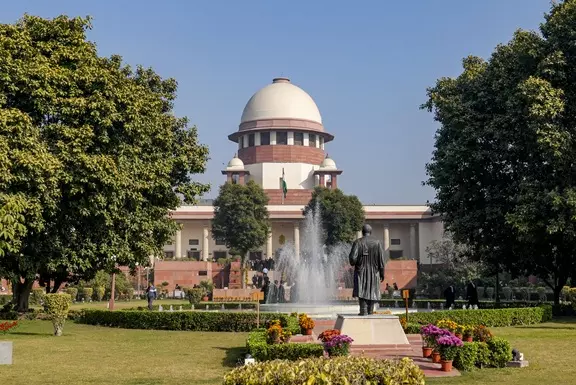
New Delhi: Underscoring that "newspapers cannot be stopped", the Supreme Court on Tuesday directed the Punjab government and its pollution control board to not take any coercive steps against the publication of the ‘Punjab Kesari’ newspaper in the state.
Granting an urgent hearing upon oral mentioning to the plea of the newspaper group, the apex court accorded interim relief saying the printing presses of the Hindi daily shall continue to function uninterrupted notwithstanding the Punjab State Pollution Control Board's decision to snap power supply due to alleged violations.
A three-judge bench of Chief Justice of India Surya Kant and Justice Joymalya Bagchi and Justice Vipul Pancholi said its interim order will remain effective for one week even after the pronouncement of verdict by the Punjab and Haryana High Court on a petition filed by the newspaper group challenging the state's actions.
In its order, the apex court said: "Without prejudice to the rights of both sides, and without expressing any opinion on the merits of the case, it is directed that the printing press of ‘Punjab Kesari’ newspaper shall continue to function uninterruptedly. However, status quo shall be maintained with respect to the other commercial establishments, be it the hotel etc. This interim arrangement is made till the pronouncement of the judgment of the high court and one week more to enable the aggrieved party to approach the appropriate forum."
Appearing for the newspaper group, senior advocate Mukul Rohatgi described the situation as an "extraordinary matter," alleging a coordinated campaign of state harassment following the publication of articles critical of the Punjab government.
Rohatgi said after the publication of the article, various coercive actions were initiated against the management, including cutting off the electricity, notices by the Pollution Control Board against the press, shutting down of the hotels run by the newspaper owners and FIRs.
"All this happened in a matter of two days because we published articles which are not favourable to the dispensation in Punjab," he said. Senior counsel said the printing press working for the last few decades has been directed to be immediately closed over some alleged water pollution issue.
The Punjab and Haryana High Court heard the petition and reserved verdict but interim relief had not been granted, he added.
Senior advocate Shadan Farasat, appearing for the Punjab government, submitted that all steps were taken by the state strictly in accordance with the law. He said the High Court had reserved judgment and the verdict is expected soon. "The matter can certainly wait. The actions are exactly as per the book in terms of the Pollution Control law. They are making something else out of it. Whatever action was needed, it has already been taken; we are not going to take further action," he submitted.
"It is all right. Newspapers cannot be stopped," the CJI said and granted the interim relief.
