SC Moots Arrests For Stubble Burning, Questions Punjab On Laxity Over Farm Fires

“You take a call, otherwise we will issue a mandamus”: Bench of Chief Justice of India B.R. Gavai and Justice K. Vinod Chandran
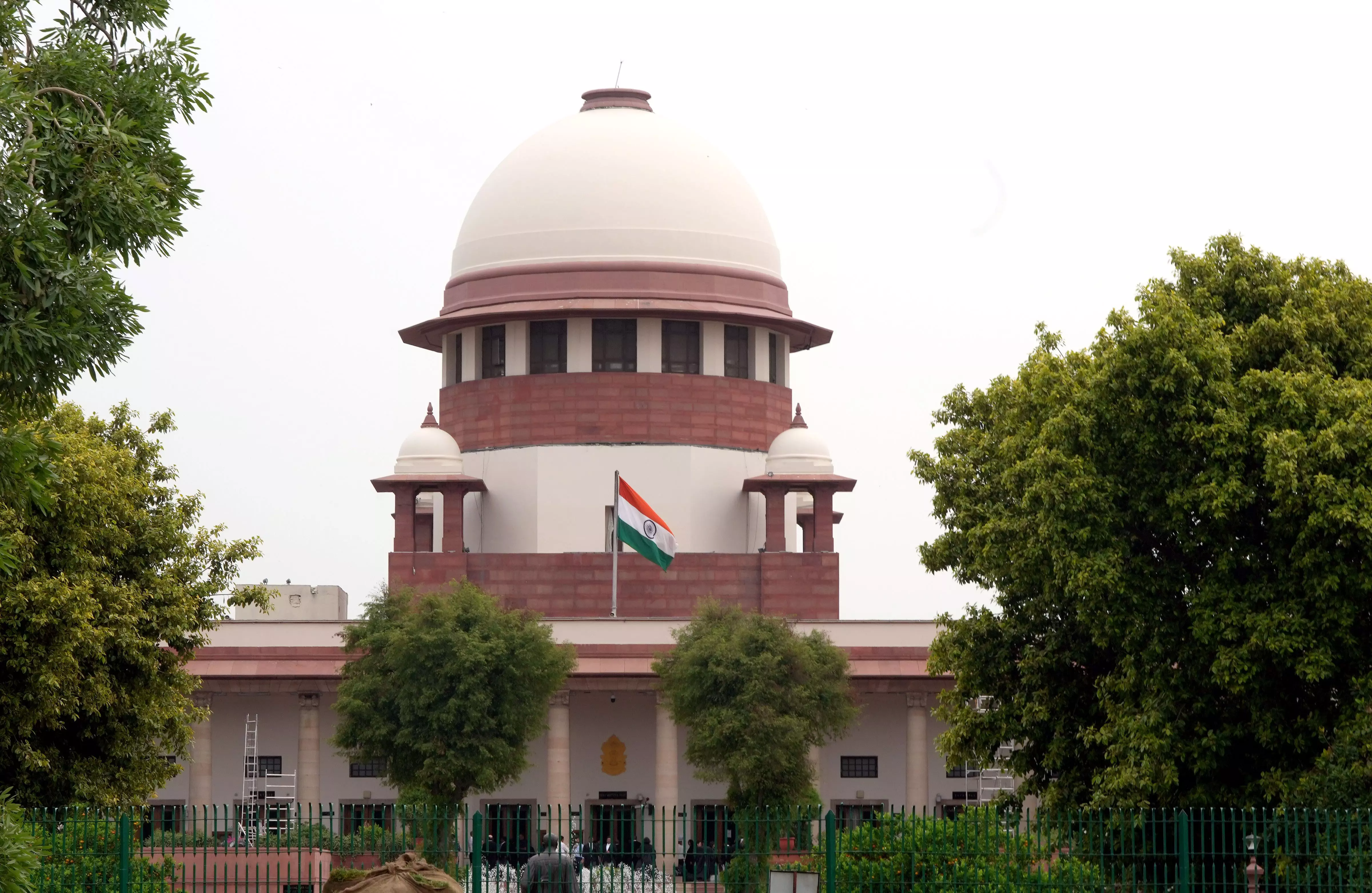
NEW DELHI: Concerned over the usual spike in pollution levels during winter, the Supreme Court on Wednesday asked the Punjab government why errant farmers involved in stubble burning should not be arrested to send a stern message. Stubble burning is considered a key contributor to air pollution in northern India.
The Court directed the Commission for Air Quality Management (CAQM), the Central Pollution Control Board (CPCB), and state pollution control boards to come up with measures to curb air pollution within three weeks, ahead of the winter season.
Making strong observations, a Bench of Chief Justice of India B.R. Gavai and Justice K. Vinod Chandran warned: “You take a call, otherwise we will issue a mandamus.”
The Court was hearing a suo motu case on filling vacancies in the pollution control boards of Uttar Pradesh, Haryana, Rajasthan, and Punjab, as well as in the CAQM. It ordered these states and authorities to fill the vacancies within three months, while granting six months to fill promotional posts. The Bench stressed that additional manpower should be appointed immediately, even on deputation or contract, to deal with the worsening winter pollution.
During the hearing, the CJI asked senior advocate Rahul Mehra, appearing for the Punjab government, why errant farmers should not face arrest and penalties. “Farmers are special and we are eating because of them, but that does not mean we cannot protect the environment. If some people are behind bars, it will send the right message. Why shy away if you have a real intention of protecting the environment?” he remarked.
The CJI noted that stubble could be repurposed as biofuel and pressed the state to consider stricter punitive provisions. The Court also questioned why criminal prosecution provisions under the Environment Protection Act had been withdrawn. “Having people behind bars will send the right message,” the CJI said.
Mr. Mehra responded that Punjab had already taken several steps and that stubble-burning incidents had reduced significantly—from 77,000 to 10,000 in recent years. He argued that arresting small farmers, who typically cultivate only one hectare, would disproportionately affect their families.
Amicus curiae Aparajita Singh countered that despite subsidies, equipment, and repeated court orders since 2018, the situation on the ground had not improved substantially. “Farmers even report being asked to burn stubble when satellites are not passing overhead. The State continues to plead helplessness,” she said.
The CJI qualified his remarks, clarifying that arrests need not be routine but may be necessary to set an example. Additional Solicitor General Aishwarya Bhati, appearing for regulatory bodies, sought time to place updated status reports on record.
Last year, the Court had summoned the Chief Secretaries of Punjab and Haryana on the issue. On Wednesday, it again came down heavily on states for failing to fill long-pending vacancies, observing that inadequate manpower during peak pollution seasons only worsens the environmental crisis. At present, the pollution control boards in Haryana, Punjab, Uttar Pradesh, and Rajasthan have 44, 43, 166, and 259 vacancies, respectively.
