SC: Menstrual Health Fundamental Right, Orders free Pads for Schoolgirls

30 Jan 2026 3:31 PM IST30 Jan 2026 3:31 PM IST
Court ruling highlights schools' duty to safeguard female students' rights, ensuring free sanitary pads and adequate sanitation, connecting health and education rights.
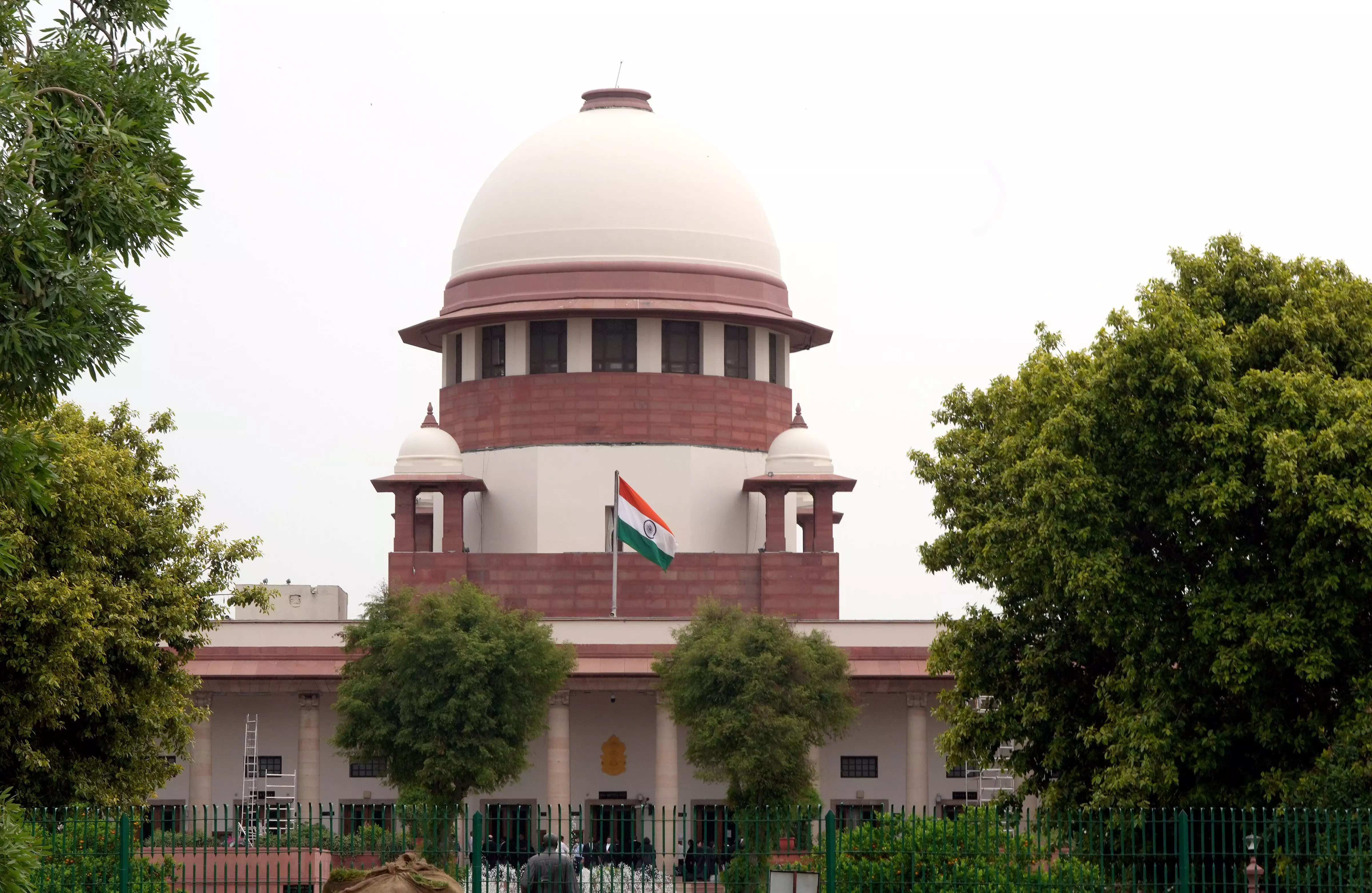
Supreme Court (DC File Photo)
New Delhi: In a landmark verdict aimed at ensuring gender justice and educational equity, the Supreme Court on Friday held that the right to dignified menstrual health forms part of the right to life and education under the Constitution. The apex court directed all States and Union Territories to provide free oxo-biodegradable sanitary napkins to girl students and ensure functional, gender-segregated toilets in all schools.
A two-judge Bench comprising Justices J.B. Pardiwala and R. Mahadevan issued a series of binding directions applicable to government, aided and private schools alike. While keeping the plea pending, the court said the Centre would have to demonstrate substantial compliance.
Opening the 126-page judgment with a quote by American educator and activist Melissa Berton — “A period should end a sentence, not a girl’s education”— Justice Pardiwala said the issues before the court reflected persistent barriers to girls’ education. The court warned of stringent consequences for non-compliance, including derecognition of private schools and holding state governments directly accountable for lapses in public institutions.
The verdict held that Article 21 encompasses the right to menstrual health, noting that access to safe, effective and affordable menstrual hygiene management is essential to dignity, privacy and the highest attainable standard of reproductive health. It linked this right to Article 21A (right to education), describing education as a “multiplier right” enabling the exercise of other human rights.
On equality under Article 14, the court said a substantive approach requires addressing individual, institutional and systemic barriers that prevent rights from being realised in practice, and placed an obligation on the state to remedy structural disadvantages. It observed that lack of menstrual hygiene facilities undermines dignity and privacy, leads to exclusion from schooling and has long-term consequences on participation in public life.
Directing uniform implementation, the court ordered that all schools, in urban and rural areas, provide free oxo-biodegradable sanitary napkins compliant with ASTM D-6954 standards. These should be readily accessible—preferably through vending machines within toilet premises or via designated points.
The court further directed states and UTs to ensure functional, gender-segregated toilets with usable water connectivity; privacy-oriented design; accessibility for children with disabilities; and continuous availability of soap and water. It mandated the establishment of Menstrual Hygiene Management (MHM) corners in every school, stocked with spare innerwear, uniforms, disposable bags and other essentials, along with safe and environmentally compliant disposal mechanisms in line with Solid Waste Management Rules.
On awareness and training, the court asked National Council of Educational Research and Training (NCERT) and State Councils of Educational Research and Training (SCERTs) to incorporate gender-responsive curricula on menstruation, puberty and related health concerns. District education officers were directed to conduct periodic inspections, while child rights bodies — National Commission for Protection of Child Rights (NCPCR) and State Commissions — were tasked with oversight.
All directions are to be complied with within three months. The court underscored that infrastructure alone would be insufficient unless stigma is addressed, dedicating a section to the “Role of Men in Menstruation.” It stressed sensitisation of boys and male teachers, noting that unsensitised environments can deter girls from attending school.
( Source : Deccan Chronicle )

Next Story