SC May Refer Talaq-e-Hasan Challenge to Constitution Bench

Justice Kant remarked, Society at large is involved. Some remedial measures have to be taken
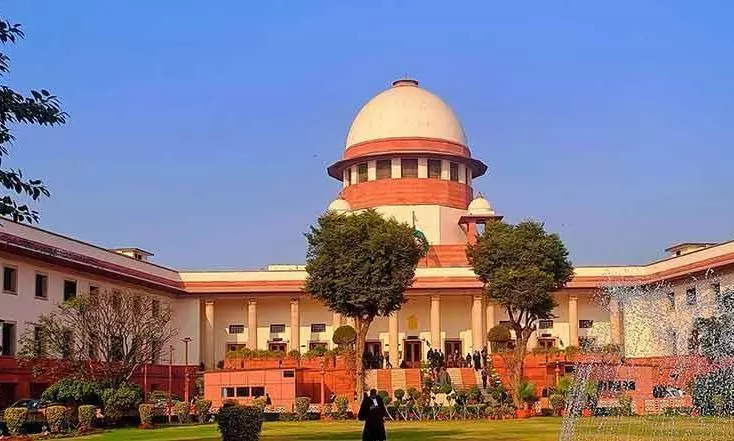
NEW DELHI: The Supreme Court on Wednesday indicated that it may consider referring the challenge to the validity of Talaq-e-Hasan, a form of divorce practiced among Muslims, to a five-judge Constitution Bench.
Under Talaq-e-Hasan, a husband can dissolve a marriage by pronouncing “talaq” once a month over a three-month period. The divorce becomes final after the third pronouncement if cohabitation has not resumed in the meantime. If the couple resumes cohabitation after the first or second pronouncement, the law presumes reconciliation.
In 2017, the Supreme Court declared triple talaq unconstitutional, calling it arbitrary and violative of the fundamental rights of Muslim women.
A three-judge bench of Justices Surya Kant, Ujjal Bhuyan and N. Kotiswar Singh strongly criticised the practice whereby Muslim husbands authorise lawyers or third parties to issue Talaq-e-Hasan notices on their behalf. “Should a civilised modern society allow this?” the bench asked.
Seeking clarity, the Court directed parties to submit written notes explaining the various types of talaq recognised under Islamic practice. It said the task was not to strike down a religious practice but to regulate it in accordance with constitutional values.
Observing that the issue impacts society at large, the bench said it may be compelled to take remedial steps. “Once you give us a brief note, we will consider the desirability of referring the matter to a five-judge Constitution Bench. Give us the broad questions that arise. We will see whether they are predominantly legal and require adjudication,” it said.
The Court was hearing a batch of petitions filed by Muslim women challenging Talaq-e-Hasan divorces issued by their husbands.
Referring to petitioner Benazeer Heena, a journalist, the bench said that if such practices are occurring in Delhi and Ghaziabad, “what may be happening in far-off places in Odisha, Chhattisgarh and rural areas?”
Justice Kant remarked, “Society at large is involved. Some remedial measures have to be taken. If there are gross discriminatory practices, then the court has to interfere.”
Senior advocate M.R. Shamshad, appearing for Heena’s former husband, argued that the practice of authorising another person to issue the notice is recognised among Muslims. The bench responded sharply: “What kind of practice is this? How are you promoting this in 2025? Is this how a woman’s dignity is upheld? Should a civilised society allow this?”
The bench questioned why the husband could approach his lawyer or another person, but not communicate directly with his wife. It directed Shamshad to ensure the husband is present on the next hearing date, stating, “If talaq is to take place as per religious practice, the entire procedure must be followed.”
The bench added, “Now an advocate will start granting divorce? Tomorrow what if a client disowns the advocate? We salute this woman for fighting for her rights. But what about poorer women who lack resources?”
Advocate Rizwan Ahmed, appearing for Heena, submitted that because of the way the Talaq-e-Hasan notice was sent, she has been unable to prove that she is divorced, even as her husband has remarried and moved on. She continues to struggle with documentation required for her five-year-old child’s school admission and for travel papers.
Heena, addressing the court herself, broke down while narrating her hardships. The bench asked her to file a simple application and assured her that the Court would examine it.
The Court directed all counsel, including advocate Ashwini Upadhyay, to submit the issues requiring adjudication and specify the extent to which the Court may intervene in matters of personal law.
It allowed applications filed by the All India Muslim Personal Law Board and Samastha Kerala Jamiyyathul Ulama seeking to intervene in the case and invited their submissions.
