SC Gives Tamil Nadu Three Months To Identify Land For Navodaya Schools

The court was hearing the state government’s petition challenging a September 2017 Madras High Court directive to facilitate the establishment of a Navodaya Vidyalaya in every district.
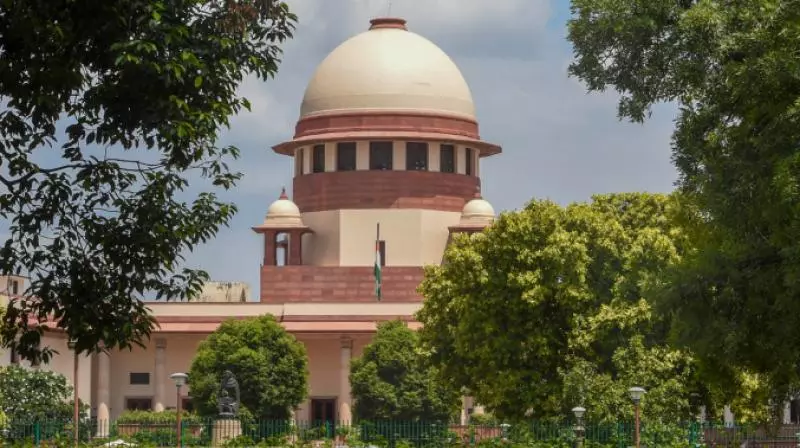
NEW DELHI: The Supreme Court on Thursday directed the Tamil Nadu government to comply with its December 2025 order to identify land for establishing a Navodaya Vidyalaya in every district, stressing the need for cooperative federalism.
“There has to be cooperative federalism. Tomorrow, if the Central government comes up with any policy in the Concurrent List and each state starts saying, ‘I don’t accept your policy’, what will happen to our federal structure?” a bench comprising Justice B.V. Nagarathna and Justice Augustine George Masih observed.
The court was hearing the state government’s petition challenging a September 2017 Madras High Court directive to facilitate the establishment of a Navodaya Vidyalaya in every district.
Asking the state government to change its mindset, the court observed: “People in Chennai should not alienate Delhi, and vice versa. Everybody must work together.”
“We are not alienating you or them. Some more types of schools coming to your state will only enhance the high standards that we are aware of. This is not going to lower your standards,” the court said.
It asked the Centre and the state government to hold discussions on establishing the schools and posted the case for hearing on December 14.
Senior advocate Jaideep Gupta, appearing for Tamil Nadu, said the state had filed an application seeking the recall of the Supreme Court’s December 15, 2025, order.
Under that order, the state was directed to identify within six weeks the land required to establish a Navodaya Vidyalaya in every district.
“We are not recalling that order,” the court said.
Noting that the government in Tamil Nadu had changed since December 15, the court directed the state to comply with its earlier order and granted it three months to identify the required land.
“Your mindset must first change. If you say, ‘I don’t want Navodaya schools because I don’t want Hindi to be taught on the soil of Tamil Nadu...’” the court told the state’s counsel.
Mr Gupta said Tamil Nadu did not oppose the teaching of Hindi and that a substantial number of schools in the state offered the language.
Additional Solicitor-General K.M. Nataraj, appearing for the Centre, said the state was required only to provide the land.
“The rest will be taken care of by the Central government. There will be no burden on the state government,” he said, adding that issues concerning the language policy could be resolved.
Tamil Nadu has opposed the establishment of Navodaya Vidyalayas because of concerns over the three-language curriculum followed by the schools.
The Madras High Court had held that the state’s refusal to permit Navodaya Vidyalayas curtailed students’ right to choose educational institutions and was inconsistent with the Right of Children to Free and Compulsory Education Act, 2009.
The Supreme Court stayed the High Court directive on December 11, 2017, after the state challenged it. On December 15, 2025, it modified the interim stay and directed Tamil Nadu to identify land for the schools.
