Rupee Closes At New Low Of 95.62 Against US Dollar

At the interbank foreign exchange, the rupee opened at 95.50 and lost further ground to touch an all-time low of 95.74, edging closer to the 96 mark against the American dollar.
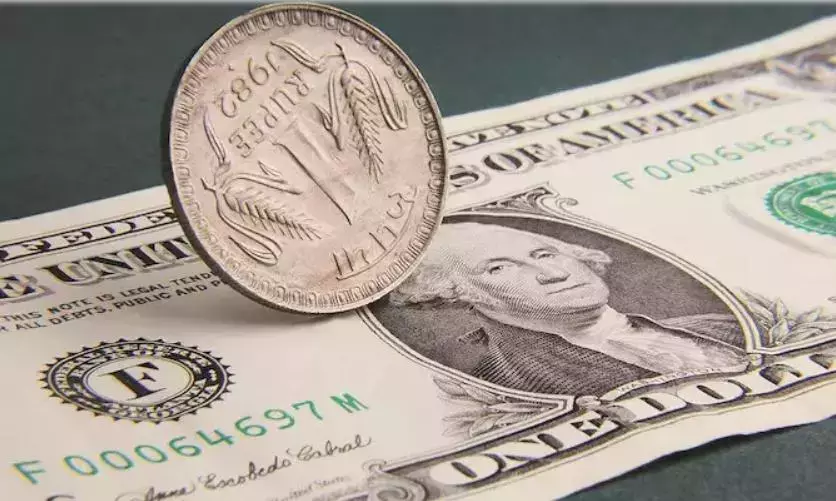
Mumbai: The Indian rupee extended its losing streak for a third day slipping to a record low closing at 95.62 to a dollar on Tuesday, down 31 paise against its previous close as rising crude oil prices intensified dollar demand. Traders said that Prime Minister Narendra Modi’s appeal to Indians to maintain austerity invited panic dollar buying from importers, especially gold importers. Tensions escalated after the US President Donald Trump rejected Iran’s peace proposal. Persistent Foreign Institutional Investors (FII) outflows also weighed on the rupee.
At the interbank foreign exchange, the rupee opened at 95.50 and lost further ground to touch an all-time low of 95.74, edging closer to the 96 mark against the American dollar. It made a high of 95.42 before closing the day at 95.62 to a dollar, down 31 paise from its previous close. On Monday, the rupee had fallen 83 paise to close at a record low of 95.31.
Says Anil Bhansali, head treasury at Finrex Trading Advisors, “India’s external vulnerability has been the main reason for the fall in the rupee in the last two years. Foreign Portfolio Investor outflows have gone up and their share in the market is down to 17 per cent from 25 per cent. Secondary steps need to be taken by the RBI such as the FCNR(B) deposit mobilization scheme, lowering Liberalised Remittance limits to ensure that foreign capital comes back into the country.”
“The rupee has been protected from a collapse by the RBI's dollar selling, otherwise it would be close to 100 levels. For tomorrow we expect the rupee to be in the range of 95.25 to 96,” added Bhansali.
Meanwhile, the dollar index, which gauges the greenback's strength against a basket of six currencies, was trading at 98.28, up 0.33 percent.
Brent crude, the global oil benchmark, rose sharply by 3.09 per cent to $ 107.43 per barrel in futures trade, triggering fears of supply disruptions and rising energy costs.
Foreign institutional investors have remained firmly in a risk-off mode amid escalating geopolitical uncertainty and global market instability, selling Rs two lakh crore from the equity market in 2026, much higher than the Rs 1.66 lakh crore pulled out during the entire 2025. In May alone they have dumped stocks worth Rs 14,231 crore so far as per the data with the NSDL.
According to Nomura Asia Insights report, Modi’s appeal to citizens to conserve energy and foreign exchange suggests a reduced policy appetite for further worsening of twin deficits.
The report said that India’s fiscal policy has served as the first line of defence since the outbreak of the West Asia conflict. While measures such as excise duty cuts on petrol and diesel have helped keep inflation low and consumer demand resilient, they have simultaneously increased pressure on India’s twin fiscal and current account deficits.
The excise duty reductions alone are estimated to cost the government nearly 0.5 per cent of GDP. At the same time, higher global energy prices are expected to inflate fertilizer and petroleum subsidy bills. Against this backdrop, Nomura has projected India’s fiscal deficit at 4.6 per cent of GDP in FY27, higher than the Union Budget target of 4.3 per cent. The brokerage also expects the current account deficit to widen to 2.4 per cent of GDP in FY27.
