Roll Revision General, Not Targeted: EC Defends Process In Supreme Court

Dwivedi referred to legal schemes which govern the preparation and revision of electoral rolls and regulate the conduct of elections.
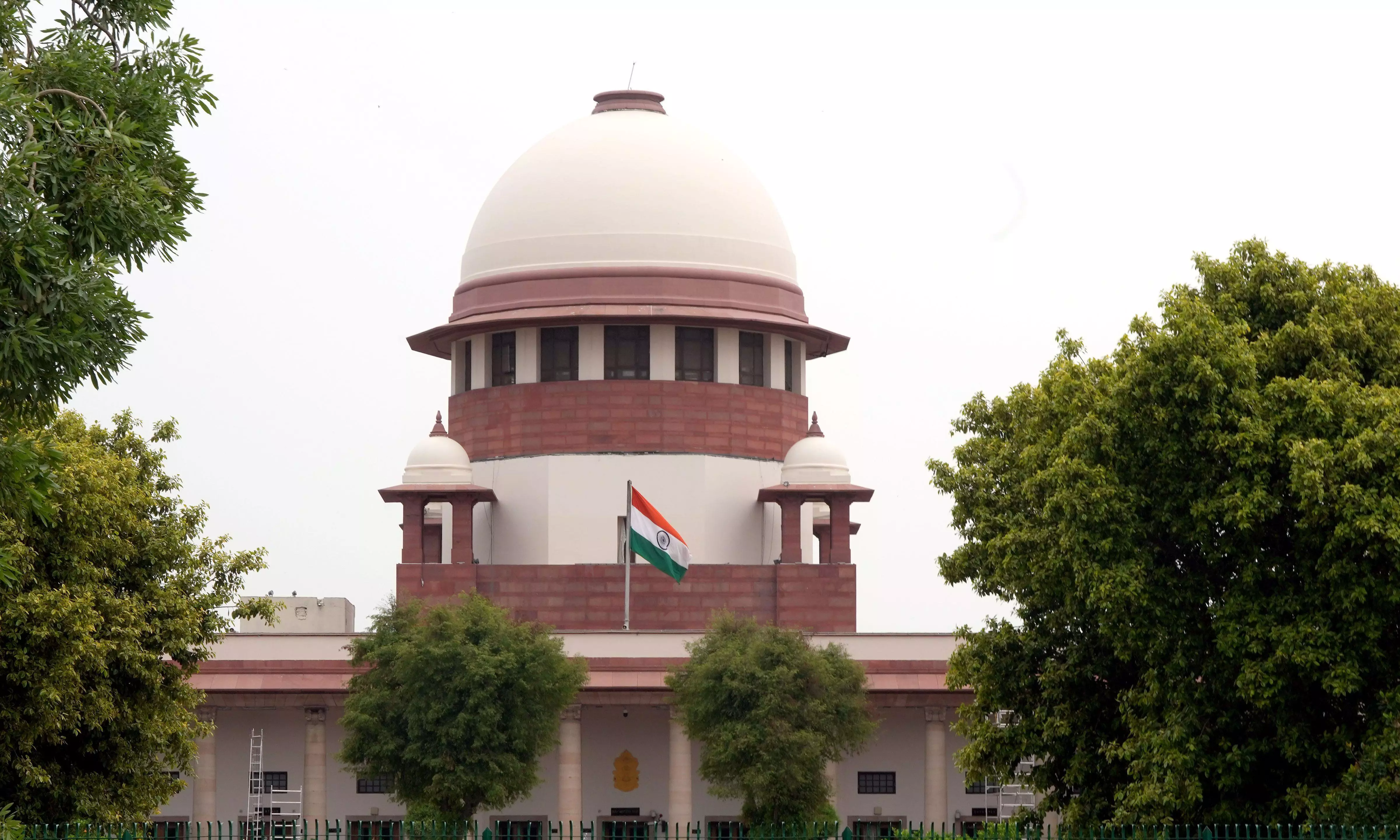
NEW DELHI: The Election Commission on Tuesday told the Supreme Court that its order on Special Intensive Revision (SIR) of electoral rolls in various states was legislative in character, laying down guiding principles, and prescribing documents needed. “It is a general order applicable to the whole country, except the Assam case," senior counsel Rakesh Dwivedi, appearing for the poll panel, said.
He made the submissions before a two-judge bench of Chief Justice of India Surya Kant and Justice Joymalya Bagchi during the final hearings on a batch of petitions challenging the poll panel’s SIR of electoral rolls undertaken in several states.
The hearing remained inconclusive and would resume on Wednesday.
The petitions, including the lead one filed by NGO 'Association for Democratic Reforms', raise significant constitutional questions concerning the scope of the poll panel's powers, the determination of citizenship for electoral purposes, and the fundamental right to vote.
Dwivedi referred to legal schemes which govern the preparation and revision of electoral rolls and regulate the conduct of elections.
Referring to Section 62 of the Representation of Peoples Act, he submitted that voter registration was subject to specific statutory conditions. Dwivedi said Articles 324 to 326 of the Constitution, read with Section 19 of the 1950 Act, impose a Constitutional obligation on the EC to ensure that only citizens were enrolled as voters. "That is what the framers of the Constitution intended," he said.
Dwivedi clarified that the SIR did not proceed on the assumption that every elector must submit documentary proof. "It is not a case where no presumption has been attached at all," he said.
Senior counsel explained that voters whose names appeared in earlier electoral rolls, particularly those up to June 2025, were given presumptive validity if they could establish a linkage with their parents' names in previous lists. "Only where such linkage is unavailable have this court's directions required the production of 11 specified documents, including Aadhaar," Dwivedi said, stressing that the nature of the SIR inquiry is fundamentally different from ordinary verification exercises.
He said adequate probative value had been extended at multiple levels. He pointed out that enumeration forms were issued to all voters up to June 2025, consequently conferring probative value even to the 2002 electoral rolls.
If a voter could establish lineage to those earlier entries, no documents were required. Only in cases where linkage could not be established were documents sought, he said.
Underscoring that the "symbiotic relationship" between Parliament and the EC, Dwivedi referred to Article 327, he said the phrase "subject to the provisions of this Constitution" imposed limits not only on the EC but also on Parliament itself. "At the same time, the Election Commission cannot claim an unfettered field to do whatever it wants," he said.
He contended that Article 324 was a "vast reservoir" encompassing administrative, adjudicatory, and even legislative functions.
Dwivedi rejected allegations of coercion or excessive scrutiny, asserting that there was no involvement of police at any stage and dismissed claims of large-scale disenfranchisement.
