Restrictions at Srinagar’s Grand Mosque on Shab-E-Qadr

Mirwaiz Umar Farooq is under house arrest as worshippers are barred from mosque on the holy night
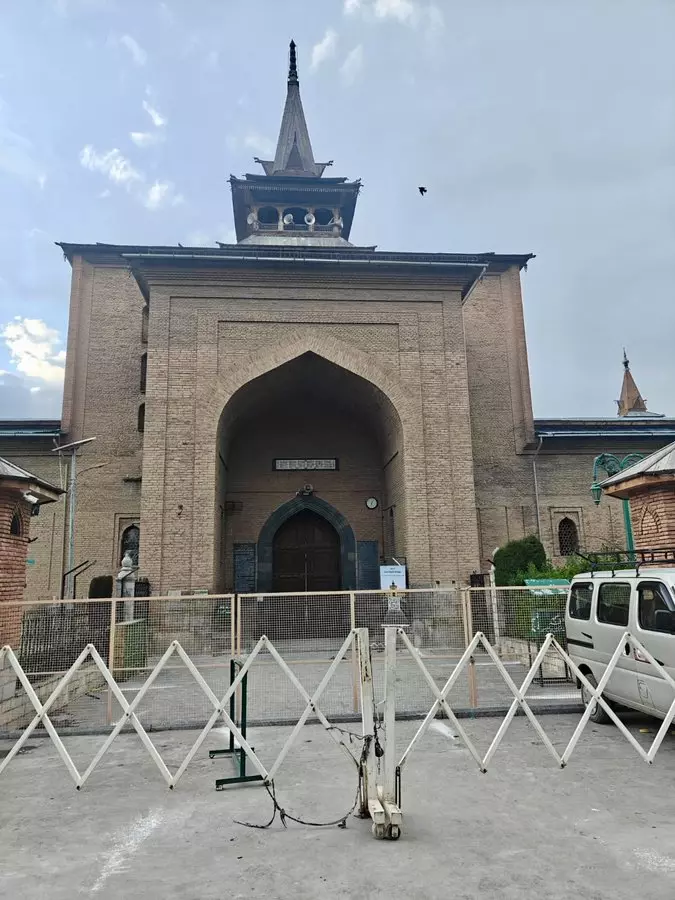
Srinagar: Authorities on Monday evening once again closed all entrances of Srinagar’s historic Grand Mosque, informing its management that the annual Shab‑e‑Qadr or Laylat al‑Qadr congregation would not be permitted. The decision prevented thousands of worshippers from gathering at the Valley’s central place of worship on one of the holiest nights in the Islamic calendar, a night believed to carry the spiritual weight of a thousand months of devotion.
Mirwaiz Muhammad Umar Farooq, Kashmir’s chief Muslim cleric who was scheduled to deliver the sermon, said on ‘X’ that he had been placed under house arrest and that the mosque had been locked on a night when “prayers and supplications resound in mosques seeking Allah’s mercy and forgiveness.” He described the closure as a sign of “insecurity” and a shrinking space for religious practice, adding that the Qur’an warns against preventing the remembrance of Allah in His houses of worship. He expressed hope that “zulm (tyranny) and injustice” would not endure.
Shab‑e‑Qadr, observed in the last ten nights of Ramadan, holds profound significance for Muslims. It is believed to be the night when the Qur’an was first sent down from the heavens and when its earliest verses were revealed to Prophet Muhammad. Worshippers traditionally spend the night in prayer, reflection and seeking divine mercy.
The authorities had ordered the closure of the gates of Jama Masjid also on March 13, preventing worshippers from gathering for the special Friday congregational prayers. Mirwaiz Umar—who was scheduled to deliver the sermon and the customary post‑sermon address on issues concerning the people of Jammu and Kashmir and the wider Muslim community—was simultaneously placed under house arrest.
Government officials did not cite any specific reason for the renewed closure of the historic mosque, describing the move only as a “preventive measure.” Similar actions in the past have also been justified as “precautionary” steps aimed at averting potential law‑and‑order disturbances, with authorities often referring to what they call “bitter past experiences.” One such incident frequently invoked is the killing of Deputy Superintendent of Police Muhammad Ayub Pandith, who on the night of June 22, 2017—on the eve of Shab‑e‑Qadr—was caught by a mob, stripped, and beaten to death in the vicinity of the mosque.
Meanwhile, Lieutenant Governor Manoj Sinha extended greetings to the people on the eve of Shab‑e‑Qadr, calling it a night that embodies compassion, selfless service and divine grace. He prayed that the Almighty accept the supplications of the faithful and guide society toward unity, love and communal harmony.
In a message, he said, “On the auspicious occasion of Shab-e-Qadr, I extend my heartiest greetings and best wishes to all. This holy night epitomizes the virtues of selfless service, compassion, and divine grace. May the Almighty accept our prayers on this blessed night, and continue to guide us on the path of love, unity, and communal harmony.”
