In 2024, the United Nations presented Gadgil with the annual Champions of the Earth award, the UN's highest environmental honour
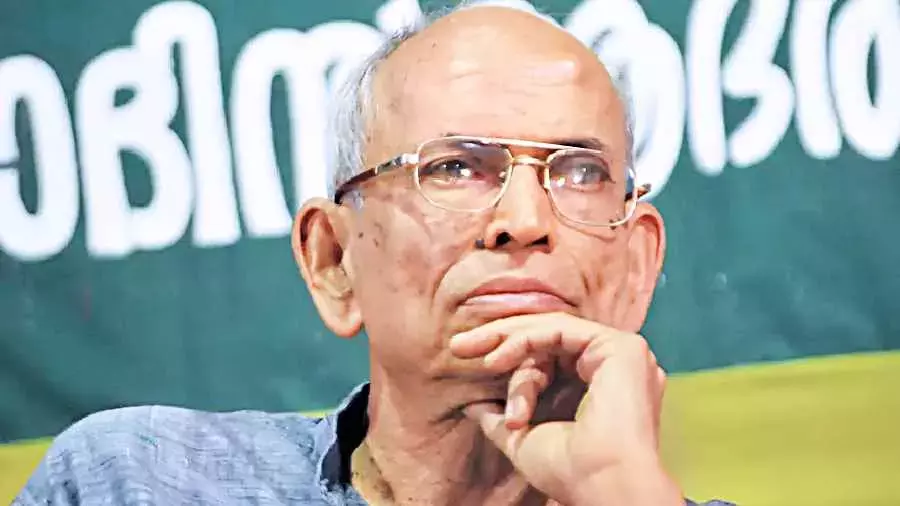
Mumbai: Veteran ecologist Madhav Gadgil, who is considered as a revered figure in India’s ecological and environmental conservation movement, passed away in Pune on late Wednesday night after a brief illness. He was 83.
“I am very sorry to share the sad news that my father, Madhav Gadgil, passed away late last night in Pune after a brief illness,” his son, Siddhartha Gadgil, said in a statement.
Gadgil is most renowned for his pioneering work on the ecological significance of the Western Ghats, one of the world’s most biodiverse regions. He was the founder of the Centre for Ecological Sciences. He also served as a member of the Scientific Advisory Council to the Prime Minister of India.
Gadgil chaired the Western Ghats Ecology Expert Panel (WGEEP), constituted by the Ministry of Environment and Forests in 2010, to study the impact of population pressure, climate change and development activities on the ecologically fragile region. The panel’s 2011 report – widely known as the ‘Gadgil Report’ – identified the entire Western Ghats, a global biodiversity hotspot, as an Ecologically Sensitive Area.
The report recommended stringent controls on mining, quarrying, large dams and polluting industries to protect the fragile mountain ecosystem. It noted that areas falling within the highly sensitive category required stringent protection from developmental pressures and human-induced degradation. While praised by scientists and environmentalists for its depth and precautionary approach, it provoked strong opposition from several state governments and development lobbies, who argued it would impede economic growth.
In 2024, the United Nations honoured Gadgil with the Champions of the Earth award, the organisation’s highest environmental accolade, recognizing his seminal contributions to the conservation of the Western Ghats. In addition to this, he also received numerous honours for his contributions to environmental science and policy. These included the Padma Shri in 1981 and the Padma Bhushan in 2006, two of India’s highest civilian awards. Internationally, he was recognised with the Tyler Prize for Environmental Achievement in 2015 and the Volvo Environment Prize.
Gadgil was also a prolific writer. His books, including This Fissured Land (co-authored with Ramachandra Guha), Ecology and Equity, and his autobiography A Walk Up the Hill, remain widely read for their synthesis of ecology, history and social analysis.
“In the passing of Dr. Madhav Gadgil, India has lost one of its foremost voices in ecological inquiry. His leadership transformed scientific evidence into protective action, particularly through his decisive engagement in landmark conservation efforts and the promotion of community rights, especially in the Western Ghats,” Congress President Mallikarjun Kharge wrote on X.
Maharashtra Chief Minister Devendra Fadnavis said, “The news of the passing of senior environmentalist, Padma Shri and Padma Bhushan Dr. Madhavrao Gadgil is extremely saddening. Madhavrao was a leading name in India's intellectual discourse on environmental awareness, protection, and advocating for relevant policies. He did not confine himself merely to writing and raising awareness, but also worked practically on how to utilize natural resources effectively, emphasizing the participation of local communities. His work in the conservation of the Western Ghats is particularly noteworthy. He must be credited as the architect of India’s Biodiversity Act.”
Kerala Chief Minister Pinarayi Vijayan paid tributes to Gadgil recalling his contributions to environmental protection. “Through his teachings and research, Gadgil made significant contributions to discussions on environmental protection. His views have been discussed at different levels in debates on development and the environment,” he said.