Rare Sculptural Finds Emerge As ASI Revives Dig At Bhubaneswar’s Sukasari Temple
The excavation, which had remained suspended for nearly three years, was formally relaunched earlier this month after a ceremonial commencement attended by Bhubaneswar MP Aparajita Sarangi and local legislator Babu Singh: Reports
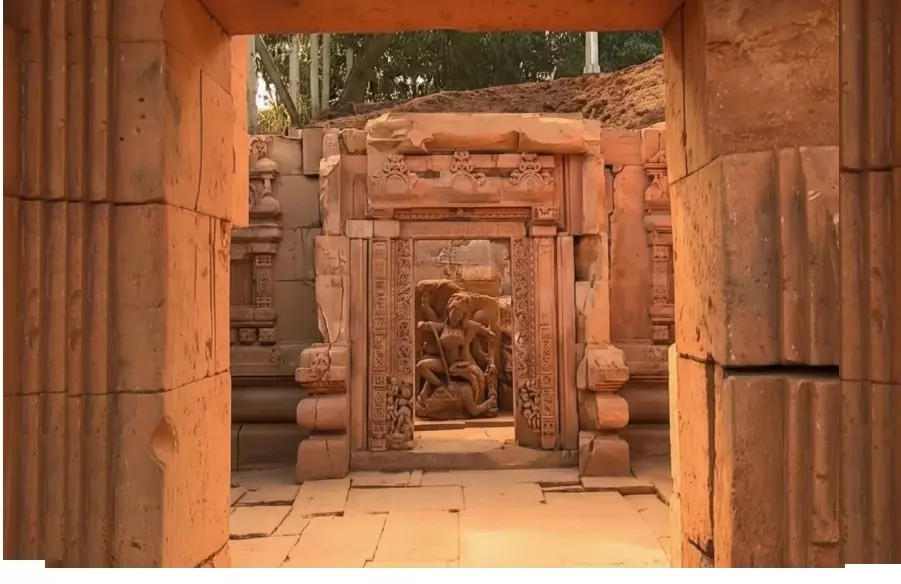
BHUBANESWAR: Fresh archaeological discoveries are shedding new light on Bhubaneswar’s layered past as the Archaeological Survey of India (ASI) resumes long-stalled excavation work at the historic Sukasari Temple, a site believed to date back to the medieval period.
The excavation, which had remained suspended for nearly three years, was formally relaunched earlier this month after a ceremonial commencement attended by Bhubaneswar MP Aparajita Sarangi and local legislator Babu Singh. With digging activity restarting on January 5, archaeologists have begun uncovering significant artefacts buried deep beneath the temple precincts.
Working around the temple’s Chatur Parasa, or four-sided enclosure, ASI teams have excavated up to 20 feet below the existing ground level. Among the most notable finds is an unusually crafted early idol of a deity, distinguished by rare stylistic elements that have attracted the attention of heritage experts. Several other sculpted figures and fragments of temple architecture have also been recovered during the ongoing work.
Officials involved in the project say the remains point to a previously concealed Shiva shrine. Stone slabs, broken structural blocks and other remnants suggest that large sections of the original temple were damaged or buried over time. Inside the garbhagriha, the superstructure appears to have suffered extensive destruction, though traces of ornate craftsmanship in the Kakara Shaili style remain visible.
Scholars note that the Sukasari Temple reflects a blend of classical Kalinga architectural traditions, including Kakara Shaili, Pida Shaili and Rekha Shaili, as described in ancient Shilpa Shastra texts. The monument is estimated to have been constructed between the 12th and 13th centuries and underwent partial renovation in recent decades.
The renewed excavation follows concerns over unauthorised structures that had sprung up around the temple complex during the period when digging was halted. ASI officials say systematic exploration and protection measures are now being prioritised to safeguard the site.
The central agency has earmarked nearly Rs 4 crore for the excavation, conservation and restoration of the Sukasari Temple. Archaeologists point out that the shrine was built almost a century after another distinctive temple in the area, underscoring its importance in understanding the evolution of temple architecture in the ancient capital.
With the excavation regaining momentum, heritage experts hope the initiative will not only reveal more hidden relics but also ensure the long-term preservation of one of Bhubaneswar’s lesser-known yet culturally significant monuments.
