Rare Indian Grey Wolf Spotted In Delhi, First Time Since 1940s

22 May 2025 5:55 PM IST22 May 2025 5:55 PM IST
The Indian grey wolf is native to grasslands, scrublands and dry deciduous forests, and their territory often overlaps with agro-pastoral landscapes, occasionally preying on livestock.
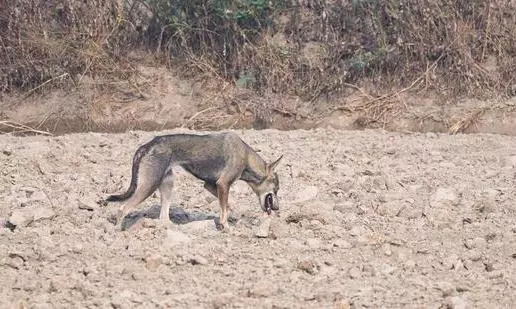
The animal was spotted by Hemanth Garg, a seasoned birdwatcher and nature photographer, during his routine morning walk. (Image/X/Hemant Garg)
In a rare wildlife sighting in Delhi’s northern fringes along the Yamuna floodplains near Palla, a lone Indian grey wolf was spotted for the first time in nearly 80 years. The creature, Canis lupus pallipes, was seen in a region where the species was long considered extinct.
The Indian grey wolf is native to grasslands, scrublands and dry deciduous forests, and their territory often overlaps with agro-pastoral landscapes, occasionally preying on livestock.
The case of this spotting is interesting as the Indian grey wolf is not just another animal rarely seen in urban areas; it is an endangered apex predator who is important in maintaining the ecological balance. For it to have wandered or returned to one of the most densely populated cities highlights the resilience of wildlife and the challenges of conservation in the modern age.
The animal was spotted by Hemanth Garg, a seasoned birdwatcher and nature photographer, during his routine morning walk. The photographs taken by Garg show a canid with an unmistakable lean build and tawny colouring of the Indian grey wolf, a subspecies native to the dry regions and known for its elusive nature.
However, experts believe that this news needs to be taken with a grain of salt. YV Jhala, a renowned wildlife scientist and Indian wolf specialist, claims that the photos look “wolfish” but worries about hybridisation. The dusky coat colour, a jawline, strong chest and tail curvature suggest the possibility of hybridisation with feral dogs. We cannot be completely sure without genetic testing.
He also added that there is a possibility that the wolf may have travelled from Uttar Pradesh or Rajasthan along the riverbank. He also mentions that more research is needed on how animals use urban corridors to understand their movement.
The article is authored by Nikhila Kalla, an intern from Christ University, Bangalore.
( Source : Deccan Chronicle )

Next Story