Quick Commerce in India: Missing the Forest for the Dark Stores

Quick commerce in India is widely framed as a frantic, high-stakes sprint where success is measured almost entirely by who can open dark stores the fastest and burn the most capital to acquire active users.
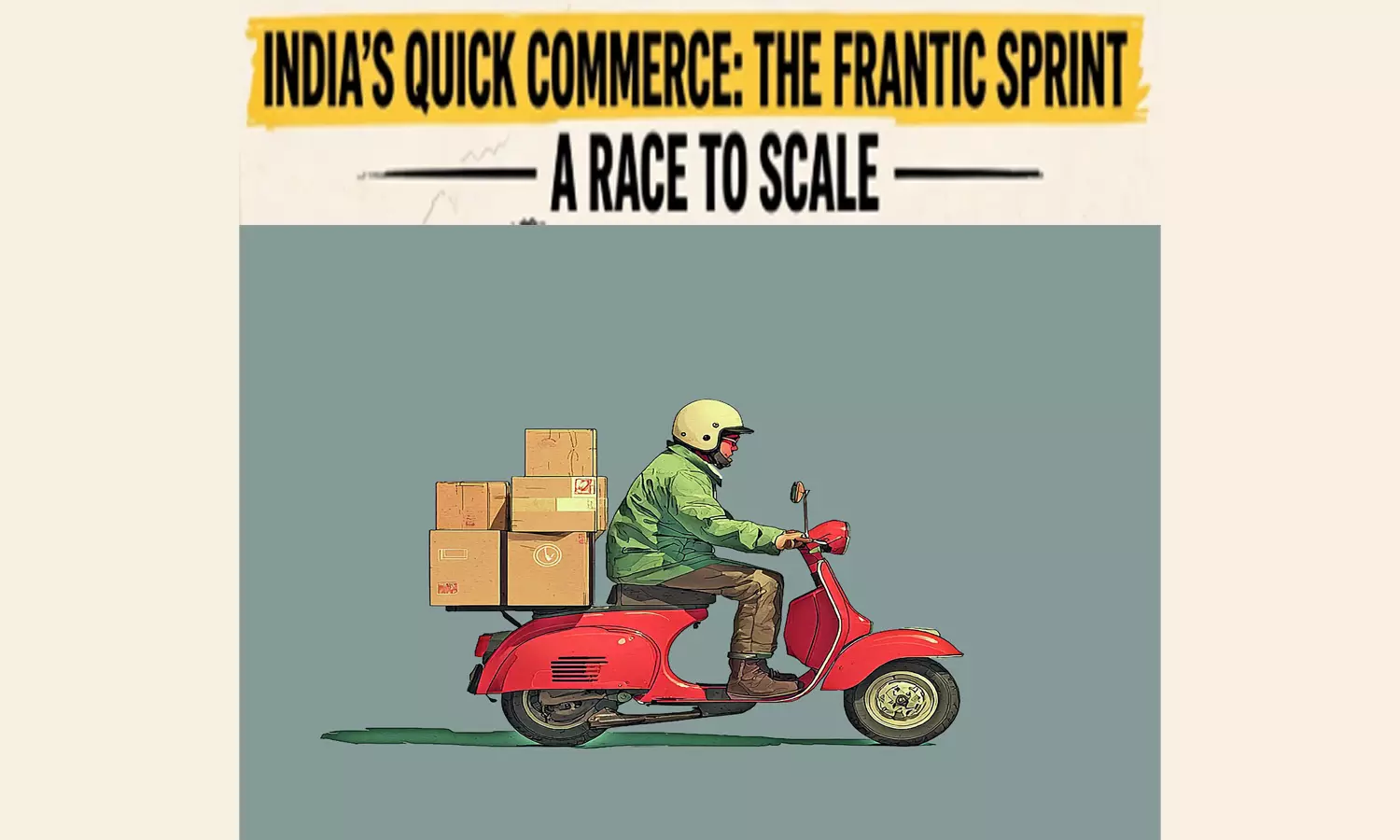
Quick commerce in India is widely framed as a frantic, high-stakes sprint where success is measured almost entirely by who can open dark stores the fastest and burn the most capital to acquire active users. Equity and consulting reports routinely fixate on these surface-level expansion metrics, treating the market as a simple foot race dominated by whoever floods the map with pins. Yet this focus on short-term scale overlooks the far more complex operational and technical reality required to survive the long haul. Building a viable, multi-year quick commerce platform is less about physical footprint and far more about mastering the unglamorous back-end logistics that keep an operation from collapsing under its own weight.
At the heart of hyper-local delivery is a complex supply chain balancing act. Dark stores function in small, dense urban footprints where real estate is constrained and order volume moves at an intense velocity. In this environment, pausing rapid store expansion to fix underlying infrastructure is often a necessary operational pivot rather than a sign of weakness. Managing inventory reconciliation to eliminate phantom stockouts, optimizing automated hub-to-store replenishment from regional distribution centers, and enforcing strict expiry management for perishable goods are the technical capabilities that actually determine long-term margins. Without these system architectures in place, rapid physical growth merely accelerates inventory spoilage and operational waste.
Simultaneously, the regulatory environment is shifting from a passive backdrop to an active operational parameter. As dark-store networks mature across major cities, local authorities and food safety bodies are paying far closer attention to cold-chain verification, shelf-life compliance, and urban zoning impacts. Platforms that proactively build end-to-end traceability and auditability into their backend software insulate themselves against systemic legal exposure and sudden operational halts. Treating compliance as a foundational engineering requirement rather than a secondary afterthought creates a genuine competitive barrier as regulatory oversight inevitable tightens.
Ultimately, the market will transition away from a capital-intensive race built on deep subsidies. Discount-driven user growth creates transient customer loyalty, leaving platforms vulnerable the moment promotional burn moderates. Durable platforms win by driving structural efficiency—raising average order values through higher-margin product categories, leveraging existing app ecosystems to keep customer acquisition costs low, and delivering consistent order fulfillment accuracy. The long-term winners in Indian quick commerce will not be those who sprint to short-term volume targets, but those who quietly build the infrastructure, compliance mechanisms, and unit economics required to endure.
Our recently released report focuses on all players including Blinkit, Instamart, Flipkart Minutes and Amazon Now, in a balanced analysis. While the first two players here are leading the market today, and the second two are expanding. For example, Amazon Now doubled daily orders from 200,000 to 400,000–500,000 in seven months, expanded to 500–600 dark stores, and targets 1,000 by year-end. Amazon strategy of thoughtful expansion to fix storage, hub-to-store transfers, expiry management, and inventory reconciliation — the back-end plumbing that determines whether a quick-commerce operation survives its third year or collapses under its own spoilage. Amazon entered Indian e-commerce years after Flipkart, endured "slow start" commentary, and became the platform consumers trust most for authenticity, returns, and service. The same approach is being replicated in quick commerce: get the supply chain right before flooding the map with pins.
Similarly, Zepto's compliance-forward operating model requires attention. In a sector where food safety, licensing, and regulatory exposure are becoming existential risks, Zepto has built a backend designed for auditability — traceability, cold-chain documentation, and shelf-life protocols that older platforms are still retrofitting. As regulatory scrutiny intensifies, this is not a footnote. It is a competitive moat.
Perhaps the most conspicuous omission in many of these reports is any reckoning with what sustained cash burn actually does. The report treats rising capex and discount moderation as signs of maturing economics, as if the industry's multi-year bonfire of investor capital were simply a phase to optimise through. It is not. Burning cash to buy market share is a short-term exercise that systematically erodes two things no platform can afford to lose: consumer trust and regulatory goodwill.
Consumers acquired through deep discounts are loyalty-light by definition. When subsidies taper — as UBS itself notes they are — these users churn, leaving a customer base conditioned to treat the service as a commodity. Meanwhile, regulators are watching. The DPIIT and CCPA have repeatedly flagged predatory pricing in platform commerce. Every quarter of below-market discounts invites scrutiny on anti-competitive practices and kirana displacement. Dark-store zoning conversations, FDI compliance in inventory-led models, and food-safety enforcement are directly shaped by the perception that platforms are buying dominance rather than earning it.
Platforms choosing measured burn rates — Amazon Now's deliberate pacing, Zepto's compliance investment — are betting that regulators and consumers will reward sustainability over spectacle. Any unbiased analyst should deeply engage with this calculus.
Therefore, the industry players that are building operational foundations for a decade-long play and regulatory goodwill that will matter as oversight tightens are the ones that merit deeper attention by analysts. And consumer trust that is missed by many such reports will ultimately determine which platforms survive consolidation.
Quick commerce is indeed getting bigger. The question analysts should ask is: bigger for whom, and for how long?
The article is authored by Dr. Badri Narayanan Gopalakrishnan, Fellow, NITI Aayog