Protests & Police Action: Know Your Rights During Detention or Arrest

From identity checks to legal aid, here’s what the law says about police powers and citizens’ rights during protests
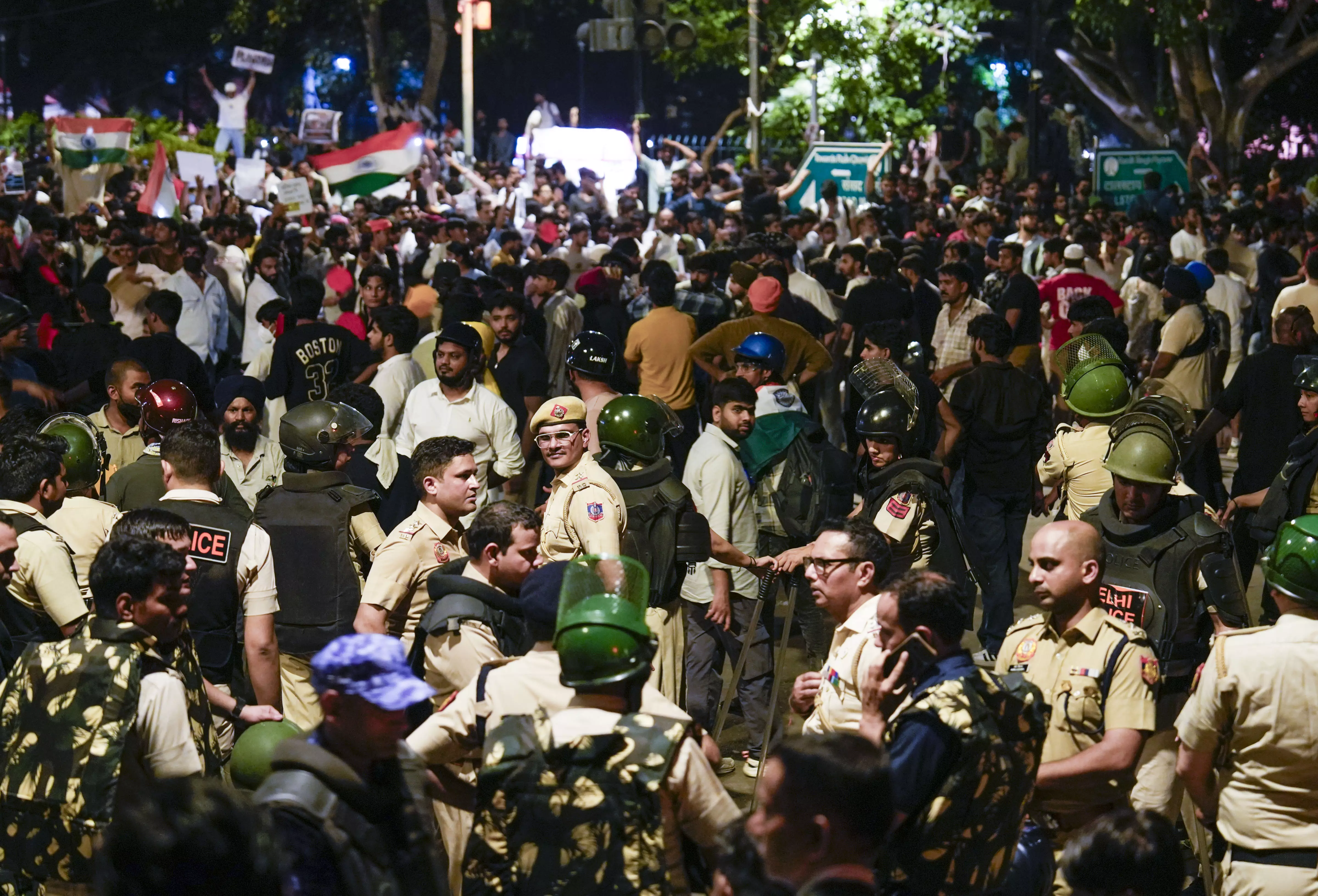
Amid rising protests across the country, it is important for citizens to be aware of their legal rights if stopped, detained, or arrested by the police.
If stopped by police, individuals are advised to remain calm and not resist. Providing correct name and address is mandatory, as giving false information can itself lead to arrest under provisions of the Bharatiya Nagarik Suraksha Sanhita (BNSS).
Detention and arrest are not the same. Detention refers to a temporary stop without formal charges, while arrest involves being taken into custody in connection with an offence or suspicion of a crime.
Special provisions apply to minors. A minor cannot be taken to a regular police station or jail and must be handled by a Special Juvenile Police Unit or Child Welfare Officer under the Juvenile Justice Act, 2015.
For women protesters, the law mandates that arrest and search should generally be carried out by a woman police officer. Male officers cannot physically arrest or search women except under exceptional circumstances permitted by law.
During detention, police may hold a person for a few hours to prevent breach of peace. However, no one can be kept in custody for more than 24 hours without being produced before a magistrate. Police are not allowed to seize belongings during detention.
If arrested, individuals have several rights:
The arresting officer must display clear identification
An arrest memo stating the charges must be provided
A family member or friend must be informed
The person has the right to consult a lawyer
They must be produced before a magistrate within 24 hours
During arrest, police may seize personal belongings, but must prepare a seizure memo. Importantly, individuals cannot be forced to reveal phone passwords or unlock devices.
While in custody, individuals have the right against self-incrimination and can choose to remain silent. They can also request medical examination if injured and seek a copy of the FIR through legal counsel.
Authorities advise protesters to remain peaceful, avoid carrying objects that could be perceived as weapons, and not obstruct police duty. Legal awareness and responsible conduct remain key during public demonstrations.