Promote organic products: PM reviews co-op sector progress

Modi emphasises need for partnerships with global orgs
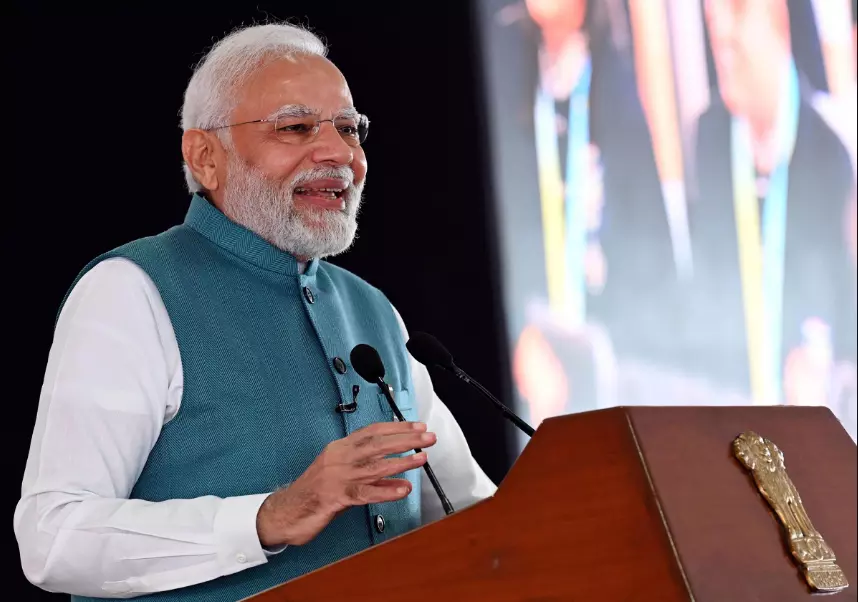
New Delhi:Prime Minister Narendra Modi on Thursday emphasised the need for partnerships with global cooperative organisations to expand the Indian cooperative sector and stressed promoting organic products through cooperative organisations.
Modi chaired a high-level meeting to review the progress of the cooperative sector at his official residence in the national capital.
The meeting was attended by Union home and cooperation minister Amit Shah and senior officials.
Discussions were held on promoting “Sahkar Se Samruddhi” bringing transformation through technological advancements in the sector, plans to increase the participation of youth and women in cooperatives, and the various initiatives of the ministry of cooperation.
“He also suggested focusing on export markets and developing a soil testing model through cooperatives to improve agricultural practices. The Prime Minister highlighted the importance of integrating UPI with RuPay KCC cards to facilitate financial transactions and emphasised the need for healthy competition among cooperative organisations,” the Prime Minister’s Office (PMO) said.
The PM also stressed the importance of documenting the assets of cooperative organisations to ensure transparency and suggested promoting cooperative farming as a more sustainable agricultural model.
Modi recommended the use of digital public infrastructure (Agristack) to expand agriculture and related activities in the cooperative sector, providing farmers with better access to services.
“In the context of education, the Prime Minister proposed introducing cooperative courses in schools, colleges, and IIMs, as well as promoting successful cooperative organisations to inspire future generations,” the PMO said, adding that Modi further added that young graduates should be encouraged to contribute, and cooperative organisations should be ranked based on their performance, so as to promote competition and growth simultaneously.
During the meeting the Prime Minister was briefed about National Cooperation Policy and key achievements of the Ministry of Cooperation over the past three and a half years.
Realising the vision of ‘Sahkar Se Samruddhi’, the Ministry has formulated a draft of the National Cooperation Policy 2025 through an extensive consultation process. Since its inception, the Ministry has undertaken 60 initiatives across seven key areas to promote and strengthen the cooperative movement.
These initiatives include the digitization of cooperative institutions through the National Cooperative Database and Computerization Projects, as well as the strengthening of Primary Agricultural Credit Societies (PACS). Additionally, the Ministry has focused on enhancing the efficiency and sustainability of cooperative sugar mills.
The Centre has implemented various schemes for cooperative societies through a “whole of government approach,” integrating over 15 schemes from more than 10 ministries at the PACS level.
To promote cooperative education, training and research and to provide skilled professionals, a Bill to convert IRMA Anand into “Tribhuvan Cooperative University” and make it an Institution of National Importance has been introduced in the Parliament.
The Prime Minister was briefed on the growth of cooperatives and their vital role across various sectors. Cooperative sector’s contribution to India’s economy, particularly in agriculture, rural development, and economic inclusion was highlighted.
During the meeting it was highlighted that presently, one-fifth of the country’s population is associated with the cooperative sector, which includes over 8.2 lakh cooperative institutions spanning more than 30 sectors, with a membership exceeding 30 crore individuals. Cooperatives play a crucial role in several areas of the economy.
