Rath Yatra Row : Are opposition BJD and Congress Overplaying Their Hand?

The political narrative surrounding this year's Rath Yatra is evolving as the first phase of Rath Yatra begins.
Bhubaneswar : As the first phase of Lord Jagannath's annual Rath Yatra draws to a close, Odisha's political discourse has shifted from devotion to confrontation, with the ruling Bharatiya Janata Party (BJP) and the opposition Biju Janata Dal (BJD) and Congress locked in a battle over the conduct of one of India's most revered religious festivals.
The three majestic chariots—Nandighosa of Lord Jagannath, Taladhwaja of Lord Balabhadra and Darpadalan of Devi Subhadra—have reached the sacred Sri Gundicha Temple, regarded as the deities' birthplace. Lakhs of devotees participated in the first two days of the nine-day festival, which began on Thursday.
Saturday marks Adapa Mandap Bije, the ritual during which the deities are ceremonially taken from their chariots into the sanctum sanctorum of the Gundicha Temple. They will remain there until the Bahuda Yatra (return journey) on July 24.
Despite the largely smooth conduct of the rituals, the opposition has launched a sharp attack on the BJP government, alleging serious administrative lapses.
The BJD and Congress have cited two incidents in particular: the removal of Lord Jagannath's ceremonial Tahia (decorative canopy) during the Pahandi Bije procession, and the deaths of two devotees on the Grand Road during the festival, which they attribute to poor crowd management.
The state government, however, has firmly rejected both allegations.
Officials have maintained that the two devotees died of suffocation amid an unusually dense crowd, and not in a stampede. On the Tahia controversy, they have clarified that the canopy had to be removed after it became excessively heavy due to continuous rainfall, making it difficult for the servitors to safely carry the deity during the ceremonial procession.
Ramakrishna Das Mohapatra, head of the Daitapati Nijog—the body entrusted with overseeing the traditional rituals of the Rath Yatra—dismissed suggestions of any deliberate deviation from tradition.
“It rained continuously throughout the Pahandi procession. The Tahia had become too heavy after soaking in the rain. Had it not been removed, carrying Lord Jagannath safely to the Nandighosa chariot would have been extremely difficult. There was absolutely no ill intention behind the decision,” he said.
Odisha law minister Prithiviraj Harichandan has also defended the administration's handling of the festival, reiterating that the decision was taken solely to ensure the smooth and safe conduct of the ritual.
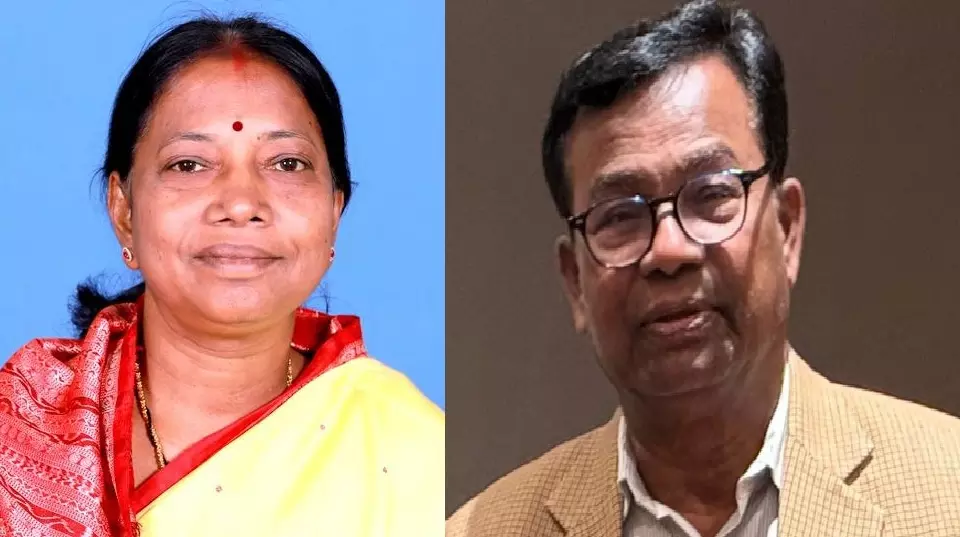
Unconvinced, Odisha Pradesh Congress Committee president Bhakta Charan Das and senior BJD leader Pramila Mallik have accused the government of mishandling the festival. They alleged that the deaths reflected inadequate crowd management while the removal of the Tahia exposed poor planning and administrative failure during one of the most sacred rituals associated with Lord Jagannath.
The controversy has now assumed a distinctly political dimension.
For many observers, however, Rath Yatra occupies a space that transcends partisan politics. The festival is not merely a public event but an expression of centuries-old faith deeply embedded in Odisha's cultural identity. They argue that political parties must exercise caution before drawing conclusions while the festival is still underway.
Political commentator Dr Gouranga Charan Rout believes the opposition may have acted prematurely.
“The opposition risks damaging its own credibility if its allegations fail to resonate with the public. At the same time, if the accusations gain wider acceptance, they could influence public perception of the government's handling of the festival,” he said.
“In my view, they should have waited until the conclusion of the nine-day Rath Yatra, after the deities return to the Srimandir. For devotees, the words of the temple servitors often carry greater credibility than political statements. Ultimately, the people will judge the facts for themselves,” said Dr Rout.
With the Bahuda Yatra and the remaining rituals yet to unfold, the political narrative surrounding this year's Rath Yatra is still evolving. Whether the opposition's criticism reflects genuine public concern or amounts to political overreach remains to be seen.
“As Odisha watches the remainder of the festival, the final verdict is likely to come not from political platforms but from public opinion,” says Ashok Kumar Baral, a senior political observer.
