Odisha : The First Political Litmus Test Before The 2029 Assembly Elections
BJP, BJD, Congress have begun intensive organisational exercises for Odisha's 2027 Panchayat Polls .
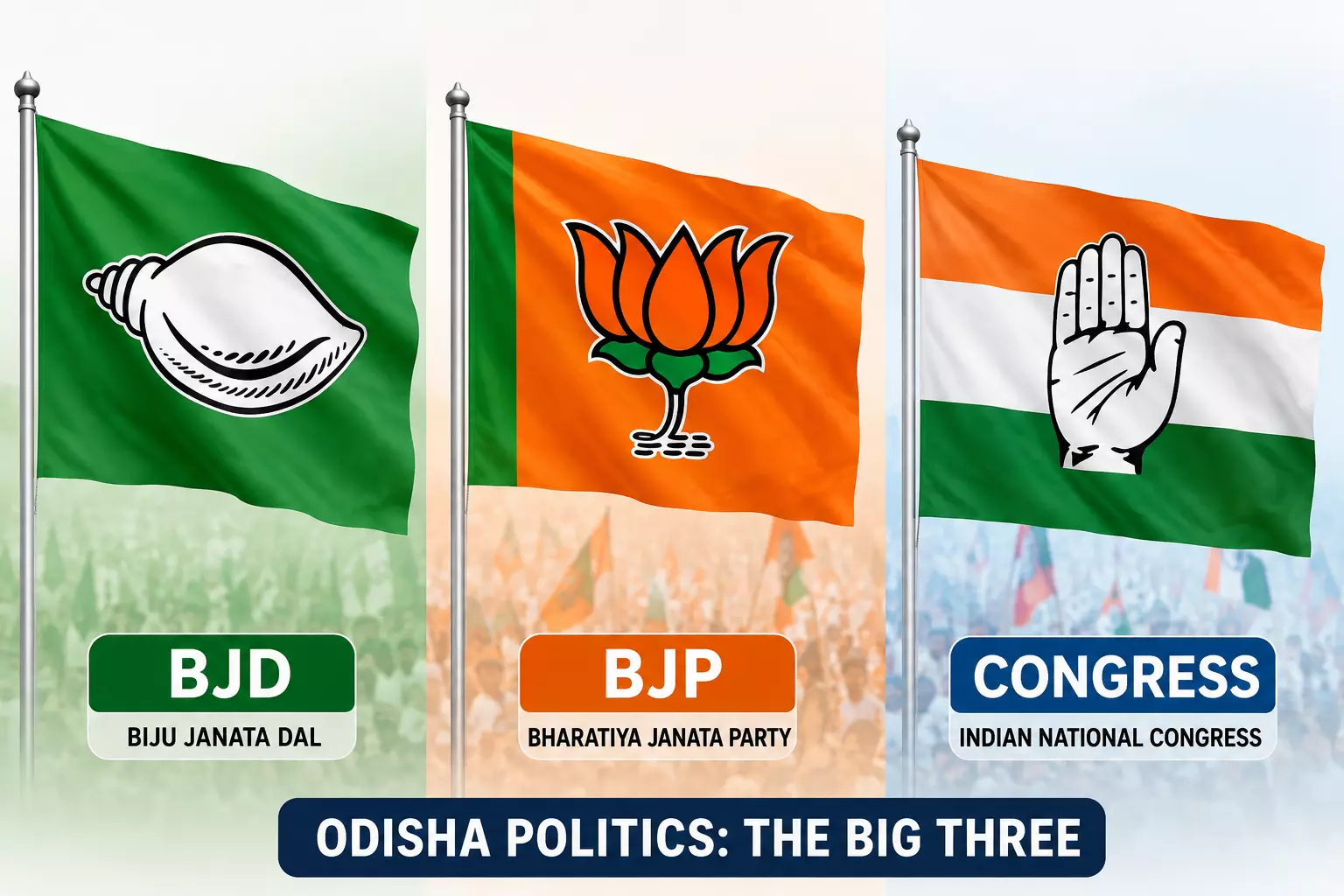
Bhubaneswar : Although the Odisha Panchayat elections are still months away, the state's political landscape has already shifted into election mode. The ruling Bharatiya Janata Party (BJP), the opposition Biju Janata Dal (BJD), and the Congress have all begun intensive organisational exercises, fully aware that the 2027 rural polls will be much more than an election to local self-government institutions. They will serve as the first major political test ahead of the 2029 Odisha Assembly elections.
For all three major political parties, according to political analysts, the outcome of the Panchayat elections will carry significance far beyond the control of Zilla Parishads and Panchayati Raj institutions. It will provide the first statewide indication of the public mood after the BJP's historic victory in the 2024 Assembly elections, which ended the BJD's uninterrupted 24-year rule.
BJP : From electoral victory to political consolidation
For the BJP, the 2027 Panchayat elections represent an opportunity to demonstrate that its 2024 victory was not merely the result of anti-incumbency against the BJD but the beginning of a long-term political realignment in Odisha.
The party is focusing on strengthening its organisation from the booth level upward while simultaneously inducting influential leaders from rival parties. However, the BJP also faces significant challenges. Despite losing power, the BJD continues to retain considerable influence over all the 30 Zilla Parishads and local bodies, giving it a formidable grassroots network.
The BJP government has also faced criticism over issues such as alleged errors in school textbooks, concerns over law and order, incidents of mob violence, and several high-profile murder cases. These issues have inevitably affected the government's public image. Consequently, Chief Minister Mohan Charan Majhi and Odisha BJP president Manmohan Samal will be under considerable pressure to demonstrate administrative efficiency and organisational strength before voters return to the polling booths.
Their performance in the Panchayat elections is likely to become the principal yardstick by which the BJP's first three years in office will be judged.
Mohan Charan Majhi and Manmohan Samal face their biggest political test
The Panchayat elections could emerge as the defining political examination for the leadership combination of Mohan Charan Majhi and Manmohan Samal.
“If the BJP succeeds in winning more Zilla Parishad seats than the BJD, it would not only validate the party's growing grassroots acceptance but also considerably strengthen both leaders' standing within the BJP's national leadership,” says political analyst Srirama Dash.
The party's preparations have already received close attention from the central leadership. BJP national president Nitin Nabin and senior party leader Tarun Chugh have already toured Odisha, reviewed organisational preparedness, and assigned responsibilities to both senior and grassroots leaders. Their visits underline the importance the BJP attaches to the Panchayat elections as a stepping stone toward retaining power in 2029.
BJD: A referendum on Naveen Patnaik's enduring popularity
For the BJD, the Panchayat elections represent something even more crucial—a chance to demonstrate that the party's electoral defeat in 2024 has not weakened its deep-rooted social and organisational base.
Despite losing power, the BJD continues to enjoy substantial grassroots support across rural Odisha. The active political entry of Sujata Raut Karthikeyan Pandian has generated fresh discussions and renewed enthusiasm within sections of the party organisation. At the same time, BJD president Naveen Patnaik has repeatedly emphasised organisational discipline and unity as the party prepares for its first major electoral contest after losing power.
The central question before the BJD is whether its traditional vote base remains intact despite the change in government.
“For Naveen Patnaik personally, the elections will amount to a referendum on whether his popularity continues to transcend electoral setbacks. After governing Odisha for nearly a quarter-century, he now faces the challenge of proving that he remains the state's most influential political leader even while sitting in the opposition,” observes Prasanna Mohanty, a political commentator.
Congress: An opportunity for revival
The Congress views the Panchayat elections as a realistic opportunity to rebuild its organisation and regain political relevance.
The party's newly appointed Odisha in-charge, Lalji Desai, has already begun consultations with district presidents to formulate a roadmap for strengthening the organisation. Along with Odisha Pradesh Congress Committee president Bhakta Charan Das, he has initiated organisational reviews across districts while attempting to bring younger workers into the party fold.
The Congress continues to maintain pockets of influence, particularly in southern Odisha, and is also focusing on districts such as Kandhamal and Angul in an effort to expand its political footprint.
For Bhakta Charan Das, the elections will also serve as a test of leadership. Even if Congress does not emerge as the dominant force, improving its organisational presence and capitalising on anti-incumbency sentiments against both the BJP and the BJD could significantly strengthen the party ahead of 2029.
Three parties, three different stakes
Political observers argue that the 2027 Panchayat elections carry distinct implications for each of Odisha's three principal political parties.
For the BJP, the election is about reaffirming public confidence in its government and demonstrating that the political change witnessed in 2024 has become permanent.
For the BJD, it is about proving that its formidable grassroots machinery and voter loyalty remain intact despite losing state power.
For the Congress, it offers perhaps the best opportunity in years to re-establish itself as a meaningful political force by rebuilding its organisational structure and expanding its electoral base.
The semi-final before 2029
In Odisha's political history, rural electoral trends have often shaped the outcome of subsequent Assembly elections. For that reason, many political observers already regard the 2027 Panchayat elections as the "semi-final" before the 2029 Assembly contest.
The results will not merely determine control over local self-government institutions; they are expected to influence political narratives, organisational morale, and electoral strategies for the next two years.
If the BJP outperforms the BJD, Mohan Charan Majhi and Manmohan Samal are likely to emerge stronger within the party's national hierarchy and receive greater confidence from leaders such as Nitin Naveen and Tarun Chugh.
If the BJD stages a strong comeback, Naveen Patnaik would reinforce his position as Odisha's most formidable opposition leader and dispel speculation about the party's decline after 2024. The renewed involvement of Sujata Raut Karthikeyan Pandian would also be seen as having contributed to the party's revival.
For the Congress, Bhakta Charan Das and Lalji Desai will be expected to translate organisational rebuilding into electoral gains, proving that the party remains capable of shaping Odisha's political future.
Ultimately, the 2027 Panchayat elections will not simply be about villages, Zilla Parishads or local governance. They will be a political litmus test for Mohan Charan Majhi and Manmohan Samal, a leadership referendum for Naveen Patnaik, and an opportunity for Bhakta Charan Das and Lalji Desai to demonstrate that the Congress can once again emerge as a credible alternative in Odisha.
The verdict of rural Odisha in 2027 could well set the tone for the battle that truly matters—the 2029 Assembly elections.
