GoPro Camera Traced to China Emerges as Key Evidence in Pahalgam Terror Attack Probe

According to the National Investigation Agency (NIA), the device was used by the terrorist module to conduct pre‑attack reconnaissance, track movement patterns, and prepare operationally for the assault
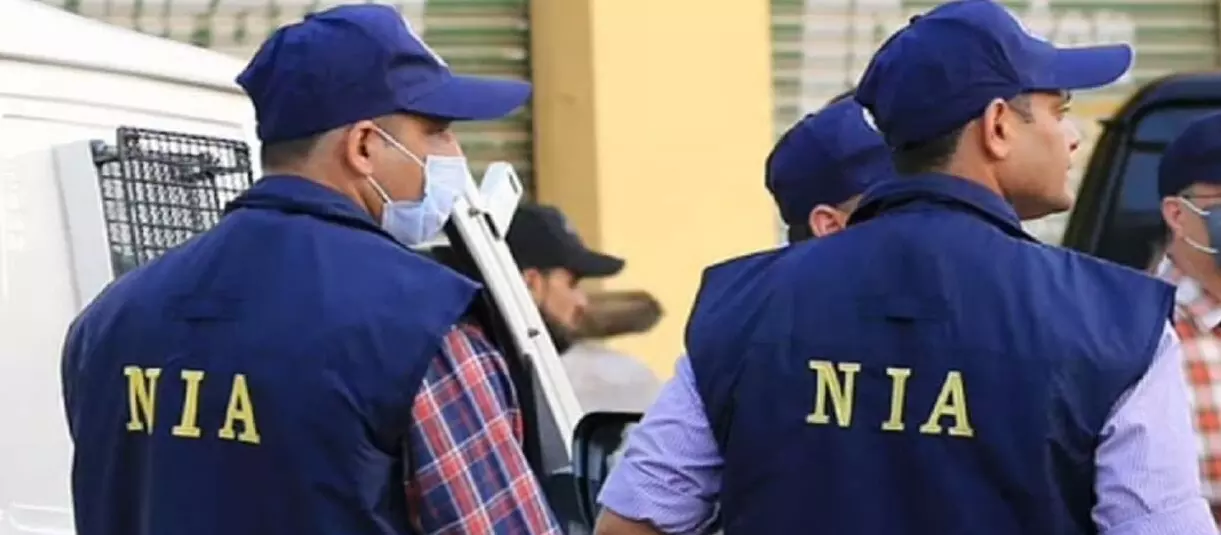
SRINAGAR: A GoPro Hero 12 Black camera transported from China to Jammu and Kashmir has emerged as a crucial piece of evidence in the investigation of the April 22, 2025 terror attack at Baisaran Valley in Pahalgam, where 26 civilians—including 25 tourists and a local horse handler—were killed.
According to the National Investigation Agency (NIA), the device was used by the terrorist module to conduct pre‑attack reconnaissance, track movement patterns, and prepare operationally for the assault.
A report published in Jammu’s Daily Excelsior said that the revelation came through an application filed by the NIA before the Special NIA Court in the winter capital, seeking permission to issue a Letter Rogatory (LR) to Chinese authorities to identify the purchaser and end user of the camera. The court granted the request, noting that the Ministry of Home Affairs had already cleared the process. The NIA argued that essential information about the camera’s activation, initial usage, and commercial trail lies within the jurisdiction of the People’s Republic of China, making international judicial assistance necessary.
In its submission, the NIA stated that investigators had examined multiple electronic devices linked to the conspiracy and execution of the attack. Among them, the GoPro Hero 12 Black—bearing serial number C3501325471706—was identified as a critical device used for reconnaissance. However, the agency has so far been unable to trace the camera’s end‑user records or determine how it was transported from China to J&K. Establishing this chain of custody, the NIA said, is vital to uncovering the broader conspiracy behind the attack.
The court, while approving the Letter Rogatory, observed that the camera was originally supplied by GoPro B.V., a US‑based manufacturer, to AE Group International Limited, a distributor in China. The device was activated on January 30, 2024, in Dongguan, China. GoPro B.V., when approached earlier by the NIA, stated that it does not maintain downstream transaction data and therefore cannot provide details of the purchaser or end user. This made Chinese cooperation indispensable for accessing activation logs, sales records, and other technical data.
The Special Judge noted that although India and China do not share a Mutual Legal Assistance Treaty (MLAT), both countries are signatories to the United Nations Convention against Transnational Organized Crime (UNTOC), under which such assistance can be sought. The court directed the Investigating Officer to upload a soft copy of the LR—along with translated versions—on the MLAT portal. It further ordered that three physical sets of the LR, including Chinese translations, be forwarded to the International Police Cooperation Unit (IPCU) of the CBI, which will transmit the request to Chinese authorities through diplomatic channels.
The NIA maintains that identifying the purchaser, tracing the device’s movement, and securing associated technical records are essential to establishing user attribution and evidentiary linkage. The agency believes that these details will help expose the larger network behind the Pahalgam attack, which remains one of the deadliest assaults on civilians in recent years.
