To map 51 crore voters from Nov. 4
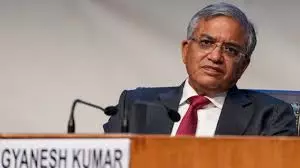
New Delhi: The Election Commission of India on Monday announced the Special Intensive Revision (SIR) of electoral rolls for nine states and three Union territories to map 51 crore voters from November 4. These comprise nine states and three Union Territories, including Tamil Nadu, Kerala and West Bengal and the UT of Puducherry will go to the polls next year. Assam, which will see state polls next year, has been excluded for now because of special requirements. The ECI overrode objections of the Kerala government seeking more time in view of the impending local polls, while Tamil Nadu has said it will approach the court.
Chief Election Commissioner (CEC) Gyanesh Kumar said many changes have occurred in the electoral rolls since the previous SIR in 2002-04 due to frequent migration, resulting in voters getting registered in multiple locations, non-removal of dead voters and “wrongful inclusion of any foreigner”. He did not give the number of foreigners detected in voter lists during the Bihar SIR. The CEC did underline that the SIR would ensure that no eligible elector was left out and no ineligible elector was included in the poll rolls.
The enumeration process will begin on November 4, the first draft rolls will be published on December 9 and the final rolls on February 7. Aggrieved voters have a right to appeal with the district magistrates and then the chief electoral officers.
The other states and UTs where the SIR in a week’s time are the UTs of Andaman and Nicobar Islands, Lakshadweep, and Goa and the states of Chhattisgarh, Gujarat, Madhya Pradesh, Rajasthan, Uttar Pradesh. On Kerala, the CEC said the dates for local body polls had not been announced.
The ECI said it had decided to simplify the procedure this time and allowed online filling of forms for voters, particularly urban voters and temporary migrants, acknowledging that many would either be in their workplaces or out of station during this period. The booth-level officers will conduct house-to-house visits and help voters in matching or linking their or parent’s names in previous lists. They will also collect Form 6 for inclusion of new electors. The BLOs will make at least three visits to the house of each elector. Except for the enumeration form, no other document will be sought during the “enumeration phase”.
The electoral registration officers (ERO) will issue notices to all such electors whose forms do not come back or whose names do not match with the database. Upon receiving notice, the voters need to provide any of the 12 documents, including Aadhaar, which of course will be with conditions.
Gyanesh Kumar clarified that in Assam, where Assembly polls are also due in 2026, the revision of electoral rolls will be announced separately since the citizenship rules for the state “differs from the rest of the country”. Since Assam shares borders with Bangladesh, it has specific citizenship rules under Section 6A of the Citizenship Act as per provisions of the Assam Accord. The CEC said a separate SIR date will be announced for Assam.
With regard to the process in politically charged West Bengal, the CEC said there will be no hurdles in the implementation of SIR as the states are constitutionally obliged to provide the poll authority with personnel to carry out the electoral roll clean-up exercise.
The last SIR in states will serve as the cut-off date. The CEC said most states had the last SIR of the voters’ list between 2002 and 2004, and they have nearly completed the mapping of current electors according to the last SIR held in their respective states.
The EC said that in Bihar as the eligibility of electors enrolled in the electoral rolls after the last intensive revision was established then, the commission has decided that such electors need not attach any additional document along with the enumeration form, except the extract of the roll. It added that officials should also take care that genuine electors, particularly old, sick, disabled, poor and other vulnerable groups, are not harassed and are facilitated to the extent possible, including through deployment of volunteers. For electors whose enumeration forms have not returned, the BLO may identify a probable cause, such as absent/shifted/death/duplicate, based on an inquiry from the nearby electors.