Denial For How Long: Congress Questions Centre Amid World Bank Pollution Report

The World Bank report says that air pollution across the Indo-Gangetic Plains and Himalayan Foothills is one of the most pressing health and development challenges in South Asia
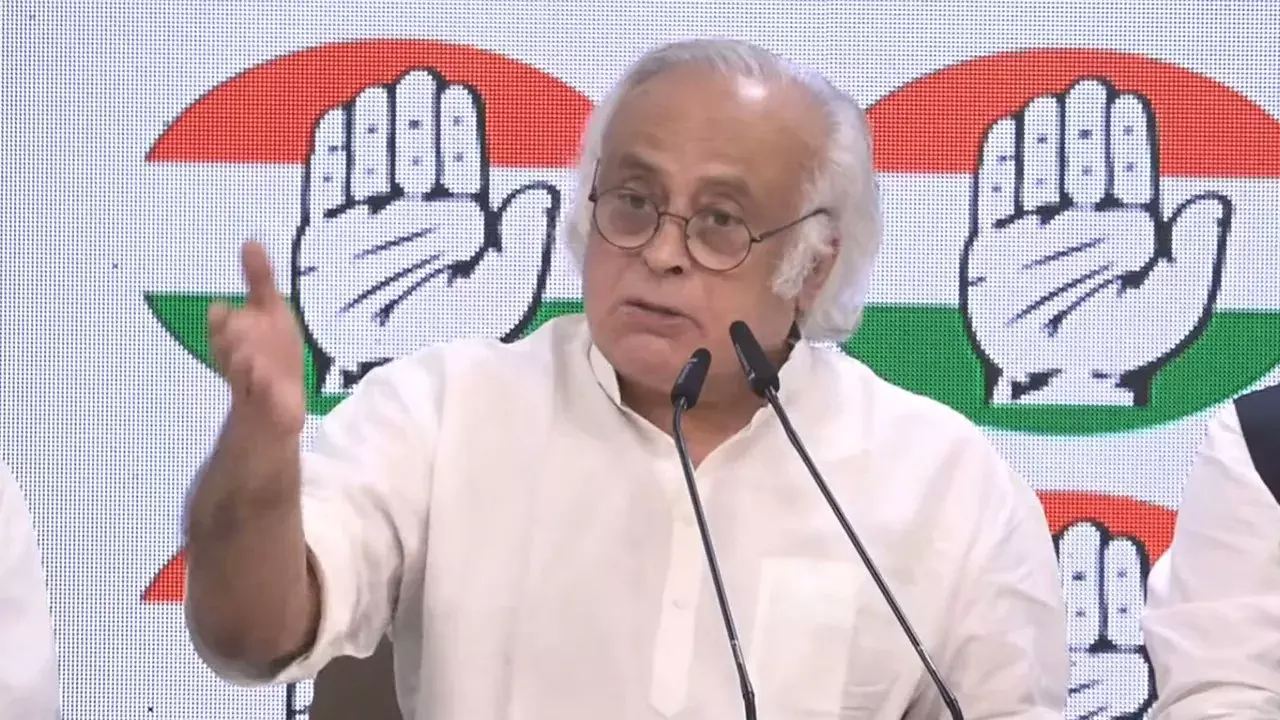
New Delhi: The Congress on Sunday cited a World Bank report on air pollution that says around one million premature deaths happen in the Indo-Gangetic plains and Himalayan foothills annually to ask how long the Narendra Modi government would live in "denial". Congress general secretary, communications, and former Union environment minister Jairam Ramesh said his party has been suggesting several measures in view of the deepening AQI-induced health crisis, including tougher and uncompromising enforcement of air pollution norms and standards without any relaxation.
"The World Bank's latest report on air pollution in the Indo-Gangetic Plains and Himalayan foothills, titled 'A Breath of Change', is comprehensive, evidence-based, and unambiguous.
"It is also, obviously, very timely. It highlights the fact that there are now around 1 million premature deaths annually in this region, which also suffers economic losses of about 10 per cent of regional GDP every year," he said in a post on X.
Ramesh said the report spells out what must be done, which includes, among other things, enforcement of coal power plant emission norms and accelerated retirement of the oldest units, shift from city-centric plans to legally empowered airshed-based governance that cuts across states, and expansion and electrification of public transport and tightening of vehicle emission and fuel standards.
"Keeping in view the deepening AQI health crisis that has become so very real in recent years, the INC (Congress) has repeatedly been suggesting a review of the Air Pollution (Control and Prevention) Act of 1981 and the National Ambient Air Quality Standards (NAAQS), 2009, with a focus on PM 2.5," Ramesh said.
The former environment minister also said the Congress has suggested a vast expansion of the National Clean Air Programme (NCAP), both in terms of financial outlays and geographic coverage, with measurement of PM 2.5 levels as the yardstick for performance.
It has also suggested a tougher and uncompromising enforcement of air pollution norms and standards without any relaxations or dilutions, he noted. "How long will the Modi government live in denial?" Ramesh asked.
The World Bank report says that air pollution across the Indo-Gangetic Plains and Himalayan Foothills is one of the most pressing health and development challenges in South Asia.
"Nearly one billion people are exposed to hazardous air every day, leading to around one million premature deaths annually and shortening average life expectancy by more than three years.
"The economic cost is immense, with an estimated 10 per cent of regional GDP lost to reduced productivity, illness, and related damages," it flagged.
The Congress leader's remarks come in the wake of rising air pollution in the national capital, with high AQI levels that have given rise to health concerns.
