Congress’ Steady Decline In Odisha: From Dominance To Margins

The 2019 Assembly elections marked a historic low, as the Congress was reduced to just 9 seats, accompanied by a sharp fall in vote share to 16.12 per cent.
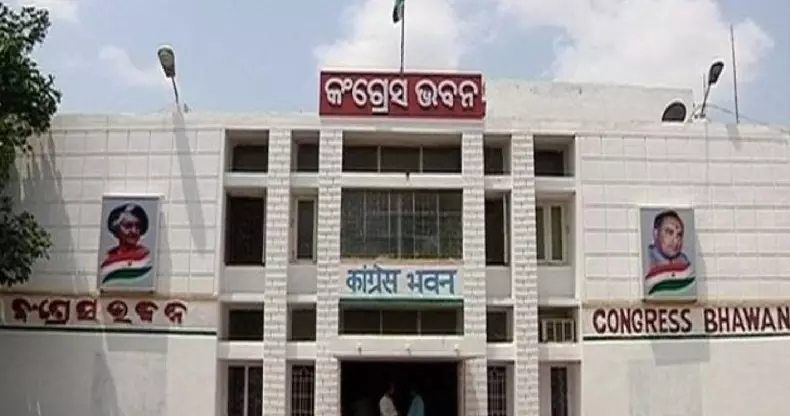
Bhubaneswar : The electoral trajectory of the Indian National Congress in Odisha over the past two decades reflects a consistent and sharp decline, transforming the party from a dominant political force into a marginal player in the State’s Assembly politics.
Data from successive Assembly elections since 2000 reveal a steady erosion in both vote share and seat tally for the Congress, underscoring a prolonged phase of organisational weakening and voter drift.
In the 2000 Assembly elections, the Congress secured 26 seats with a vote share of 33.78 per cent. Despite a brief recovery in 2004, when it won 38 seats and improved its vote share to 34.82 per cent, the party’s downward slide began soon after.
By 2009, the Congress’ tally dropped to 27 seats, with its vote share falling to 29.10 per cent. The decline became more pronounced in the following elections. In 2014, the party managed to win only 16 seats, with its vote share shrinking further to 25.7 per cent.
The 2019 Assembly elections marked a historic low, as the Congress was reduced to just 9 seats, accompanied by a sharp fall in vote share to 16.12 per cent. Although the party showed a marginal recovery in 2024 by winning 14 seats, its vote share continued to dip, reaching 13.26 per cent — the lowest in over two decades.
Political observers attribute this sustained decline to multiple factors, including leadership vacuum, organisational disarray, and inability to counter the dominance of regional and national rivals such as the Biju Janata Dal and the Bharatiya Janata Party.
While the BJD consolidated its position as the principal political force in the State over the years from 2000 to 2024, the BJP snatched away that position the regional party in 2024 and assumed power in the state. The saffron party is now steadily expanding its vote base and seat share in the state. This bipolar contest between the BJD and BJP has significantly squeezed the Congress’ political space.
The data also indicate a worrying trend for the party in terms of electoral efficiency. Despite fielding a large number of candidates in successive elections, its strike rate has steadily declined, pointing to weakening grassroots connect and reduced conversion of votes into seats.
The marginal improvement in seat count in 2024 offers little consolation, as the continued decline in vote share suggests that the party’s core support base remains fragile.
“As Odisha’s political landscape increasingly tilts towards a BJP-BJP contest, the Congress faces an uphill task to regain relevance. Reviving organisational strength, rebuilding leadership credibility, and reconnecting with grassroots voters will be crucial if the party hopes to arrest its long electoral slide in the State,” says Srirama Dash, a political analyst.
