BJD Faces Uncertain Future as BJP Expands Its Political Influence
Political analysts suggest that the coming months will be crucial—not just for the BJD but for regional parties across India
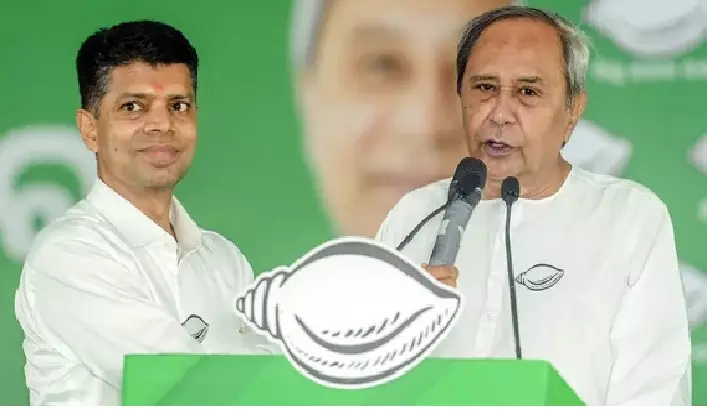
Bhubaneswar: The Bharatiya Janata Party’s (BJP) resounding victory in the recent Delhi Assembly elections has intensified concerns among regional parties across India, particularly Odisha’s ruling Biju Janata Dal (BJD). Under the leadership of Naveen Patnaik, the BJD now faces an uncertain political future as the BJP continues to gain ground in the state.
The saffron party’s rising dominance is evident not only in Odisha but also in states like Haryana and Maharashtra, where it has made significant electoral gains. This shift has sparked speculation about potential defections within the BJD, with some party leaders reportedly considering a switch to the BJP to safeguard their political careers.
The anxiety within the BJD reflects a broader trend affecting several regional parties struggling to retain their influence. In Telangana, the Bharat Rashtra Samiti (BRS) suffered a major electoral setback against the Congress, while in Karnataka, the Janata Dal (Secular) (JDS) has seen its hold weaken due to the ongoing power tussle between the BJP and Congress. Similarly, Haryana’s Jannayak Janta Party (JJP), which emerged after a split in the Indian National Lok Dal (INLD), faced a near-total electoral wipeout.
West Bengal Chief Minister Mamata Banerjee is also under pressure as the BJP strengthens its foothold in her state. Meanwhile, Maharashtra’s political landscape has shifted dramatically, with Uddhav Thackeray’s Shiv Sena faction and Sharad Pawar’s Nationalist Congress Party (NCP) suffering heavy electoral losses.
For the BJD, the 2024 Assembly elections marked a turning point, ending Naveen Patnaik’s 24-year rule. Political analysts attribute the party’s downfall to growing public dissatisfaction with its governance model, which many felt had become increasingly autocratic.
The party’s early years (2000–2012) were heavily influenced by bureaucrat-turned-politician Pyarimohan Mohapatra, whose centralized style of governance became known as the “Pyari Model.” A similar structure later emerged under V. Karthikeyan Pandian, another bureaucrat-turned-political strategist, reinforcing the perception of an authoritative administration that sidelined grassroots leadership.
By 2024, public discontent over administrative inefficiencies, governance issues, and a perceived disconnect between the BJD and the people had taken root. The election outcome not only marked an electoral defeat but also signaled a deeper shift in Odisha’s political landscape.
Historically, regional parties have positioned themselves as alternatives to national parties, addressing state-specific concerns. However, many of these parties now face the same accusations—misgovernance, corruption, and dynastic politics—that they once used to challenge the national parties.
The BJD’s decline underscores this trend. Once seen as a champion of Odisha’s development since its founding in 1997, the party has faced growing criticism over alleged nepotism and weakening democratic institutions. With the BJP making deeper inroads, the BJD finds itself at a critical juncture.
The party’s survival will depend on its ability to reassess its strategy, reconnect with voters, and rebuild its political image. Whether it can successfully reinvent itself or fade into irrelevance, like many other struggling regional parties, remains to be seen.
Political analysts suggest that the coming months will be crucial—not just for the BJD but for regional parties across India—as they navigate the challenges posed by the BJP’s expanding influence.