Paused IWT Leads to Major Water Crisis in Pakistan

IRSA spokesperson told Pakistani media house The News that there are serious fluctuations in water flow in Chenab, which has not only endangered Pakistan Punjab’s rice cultivation but also impacted filling of Mangla Dam
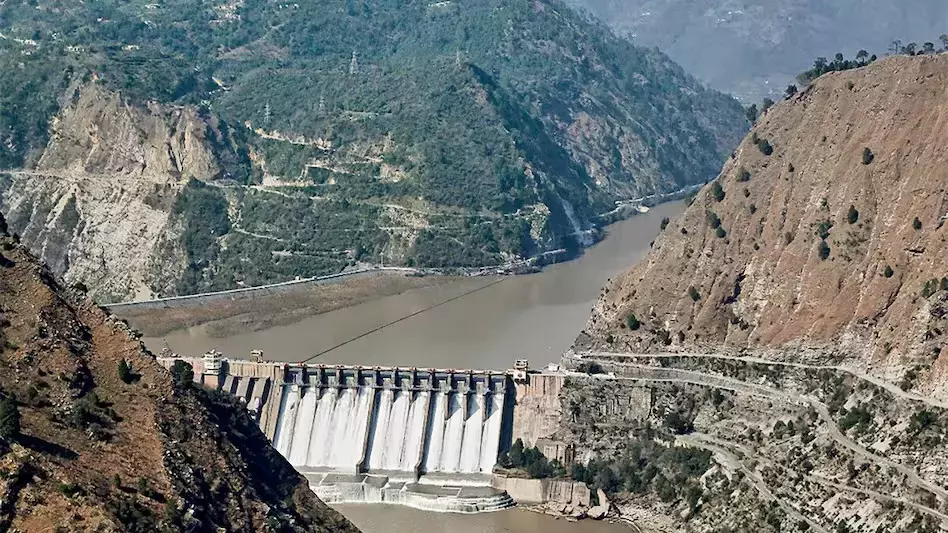
New Delhi: Pakistan is facing a major water crisis due to the impact of the now paused Indus Water Treaty (IWT) by India and its Kharif cultivation is under stress. The latest data released by Indus River System Authority (IRSA) of Pakistan on Monday shows water reaching the `Dead Level’ in Tarbela Dam on the Indus river and Mangla Dam on Jhelum. Water flow at Chashma Barrage is also nearing Dead Level. The data shows that the availability of water in the Indus River System inside Pakistan's Punjab province has declined by 10.3 per cent as of 2 June, 2025, compared to 2 June, 2024 due to which Kharif crops, particularly the ongoing rice cultivation, is expected to be impacted due to the water crisis.
RSA data also showed the increasing gap between demand and supply on a daily basis. Monday’s River Input Monitoring (RIM) station inflows were 2,13,572 cs against Sunday’s 2,21,005 cs which is 3% less and a shortage of 7,433 cs. Compared to this the rim station outflows were 2,40,629 cs against Sunday’s 2,21,962 cs, which is 18,667 cs (8%) more.
IRSA spokesperson told Pakistani media house The News that there are serious fluctuations in water flow in Chenab which has not only endangered Pakistan Punjab’s rice cultivation but also impacted filling of Mangla Dam. He added that IRSA was storing water in Mangla Dam as per hydrology in Jhelum river and that the dam must be filled up to 80% till June 30. The data indicates that the dams are struggling to hold on to water.
The water level at Mangla Dam on June 2 was 1163 ft, while the Dead Level for the dam is 1050 ft. Similarly, in Tarbela Dam on Indus, where the Dead Level is 1402 ft, the water level has already dropped to 1476 ft. Comparison of the IRSA water inflow data from May 25, 2025 shows a fluctuation of water inflow in both dams. Pakistan water monitoring authorities are hopeful that the situation will be better during the monsoon which will reach Pakistan’s Punjab by June end.
A Pakistan Ministry of Water Resources official was quoted by Pakistan’s The News that though water flow in Chenab have returned to normal of 27,000 cusecs, it went from well above normal 110,000 cusecs to a low of 4,800 cusecs between May 29-30. The report quoted the official as saying the water flow fluctuations are away from normal discourse, which is between the range of 27,000 to 30,000 cusecs. The official blamed India for fluctuation in Chenab water flow, adding India released 110,000 cusecs even though, as per rules, it can release up to 130,000 cusecs only in case of a deluge and flood situation, which is not there at present.
However, Pakistan’s Water and Power Development Authority (WAPDA) officials told Dawn newspaper on Saturday that the water inflow in Chenab had reduced by 91000cs. WAPDA chairman Lt Gen (Rtd) Sajjad Ghani recently had threatened India with a military response if it blocks water supply.
