Pathankot Attack: A Decade Later — What We Remembered, What We Learned

1 Jan 2026 10:43 PM IST1 Jan 2026 10:43 PM IST
Commemorating the Pathankot attack, which followed a brief period of diplomatic engagement with Pakistan, emphasizes the fragility of peace in the face of persistent cross-border terrorism and its implications for national security.
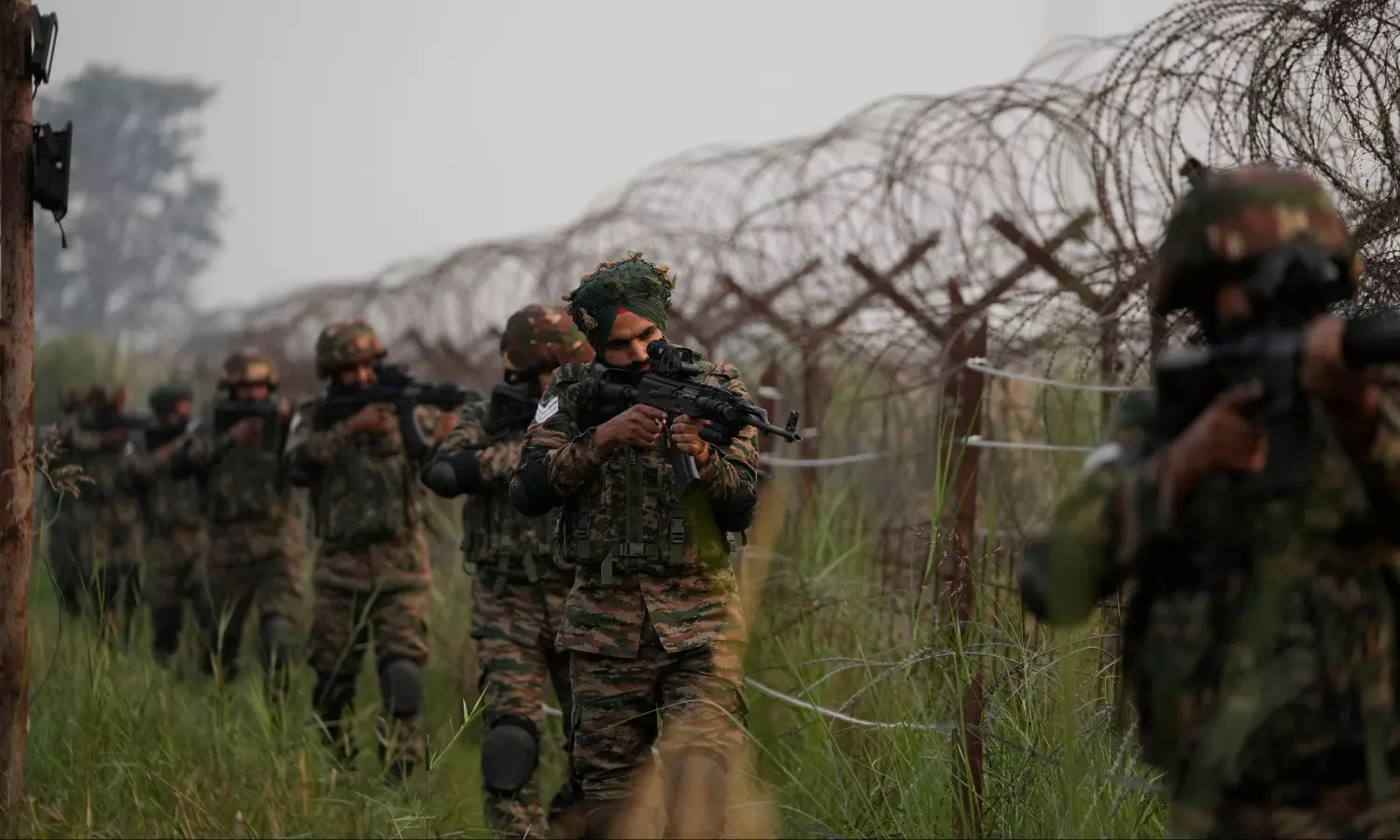
Representational Image/AP Photo
Ten years after terrorists stormed the Pathankot Air Force Station in January 2016, the attack continues to occupy a critical place in India’s national security memory. It was not just an act of terror, but a moment that tested preparedness, patience, and policy.
What we remember
The Pathankot attack is remembered for its timing, duration, and symbolism.
It came days after renewed diplomatic engagement between India and Pakistan, including a surprise visit by Prime Minister Narendra Modi to Lahore. The attack shattered optimism and reinforced long-held concerns about cross-border terrorism.
It is also remembered for the length of the operation. The gun battle and combing exercise stretched across several days, holding the nation’s attention and raising difficult questions about security at sensitive installations.
Above all, it is remembered for the sacrifice of security personnel. Seven members of India’s armed forces lost their lives defending a strategic air base. Their role ensured that no aircraft or critical assets were damaged.
What we learned
A decade later, the lessons of Pathankot are clearer.
First, intelligence alone is not enough.
Despite advance inputs and warnings, terrorists managed to breach the outer perimeter. This underlined the gap between intelligence alerts and ground-level preparedness.
Second, air bases are prime targets.
Pathankot marked a shift in terrorist strategy—from soft civilian targets to hardened military infrastructure—forcing a rethink of base security across the country.
Third, time can be a tactical necessity.
The prolonged operation was criticised at the time, but officials later emphasised that caution was essential to prevent catastrophic damage. The episode highlighted the difficult balance between speed and safety in counter-terror operations.
Fourth, accountability matters.
Investigations linked the attackers to Jaish-e-Mohammed, yet the lack of conclusive prosecutions across the border reinforced India’s long-standing demand for credible global action against terror networks.
How Pathankot changed security thinking
In the years that followed:
Air base perimeter security was strengthened nationwide.
Surveillance systems and access controls were upgraded.
Coordination between the Air Force, Army, NSG, and intelligence agencies improved.
Pathankot became a reference point in security planning — cited not just for what went wrong, but for what had to change.
A decade on
The Pathankot attack did not alter India’s resolve, but it sharpened it. It reminded the country that terrorism adapts, exploits gaps, and strikes symbols of strength. The response since then has been shaped by the hard lessons learned during those tense January days.
Ten years later, remembrance is not just about recalling the attack — it is about recognising how it reshaped India’s approach to protecting its most critical assets.
( Source : Deccan Chronicle )


Next Story