Partial Lockdown in Srinagar as Authorities Block Martyrs' Day Observance

Security forces seal roads to the Mazar-e-Shuhada, preventing political leaders and the public from marking the July 13 commemoration.
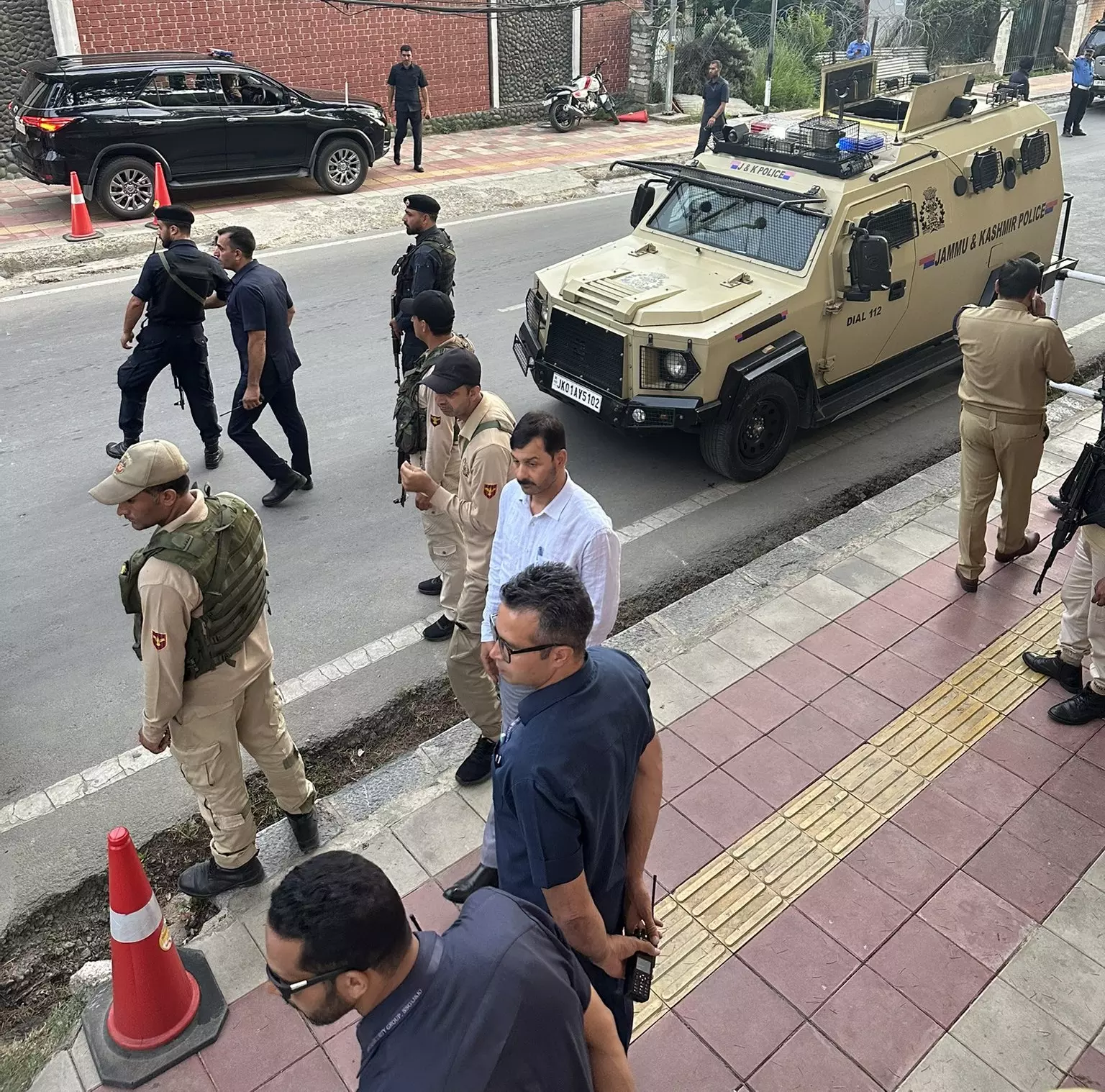
A tightly enforced partial lockdown was imposed in central Srinagar on Monday as Jammu and Kashmir Police, backed by Central Armed Police Forces (CAPFs), sealed roads leading to the Mazar-e-Shuhada (Martyrs' Graveyard) to prevent gatherings on Kashmir Martyrs' Day.
The restrictions blocked political leaders, activists and the public from reaching the historic cemetery near the Naqshband Sahib shrine in Khawaja Bazaar, where annual tributes have traditionally been paid to those killed during the July 13, 1931 uprising.
Barricades, concertina wire and heavy security deployment were put in place, while the cemetery gates remained locked from Sunday evening.
National Conference (NC) leader and Jammu and Kashmir minister Sakina Itoo said she and party colleague Sabiya Qadri attempted to visit the cemetery at around 4.30 am to pay tribute but were stopped by security personnel. In a post on X, Itoo said physical barriers could not prevent people from honouring the sacrifices of the martyrs.
After being denied access, senior NC leaders, including party president Farooq Abdullah and Chief Minister Omar Abdullah, assembled at the party headquarters, Nawa-e-Subha, to offer prayers and pay tributes.
Speaking to reporters later, Omar Abdullah described the restrictions as "unfortunate", saying no barricade or security order could erase the legacy of the 1931 martyrs. He said those who decided to seal the Mazar-e-Shuhada had failed to understand the history of Jammu and Kashmir.
"The people who fought oppression and defended the dignity of Jammu and Kashmir are today being denied tributes. Those who decided to seal Mazar-e-Shuhada should have first read the history of Jammu and Kashmir," he said.
Abdullah urged that the events of July 13, 1931, should not be viewed through a religious lens, describing them instead as "a struggle against oppression, for democracy, and against British paramountcy." He alleged that attempts were being made to reinterpret the historical events.
Questioning the need for the restrictions, he said only a small number of people intended to visit the cemetery. "I don't think more than 150 people would have gone to pay tributes, yet it was treated as a threat. This contradicts repeated claims that everything is normal," he said.
The chief minister asserted that those enforcing the restrictions were only temporary actors in the region. "Those who stopped us from visiting Mazar-e-Shuhada today are here only temporarily. The people of Jammu and Kashmir will remain. If not today, then tomorrow or the day after, we will go and pay our tributes," he said.
Referring to the heightened security measures during the ongoing Amarnath Yatra, Abdullah said such restrictions had not been imposed during previous pilgrimages. "We are repeatedly told everything is normal, but the ground reality says otherwise. Earlier, such restrictions were never imposed during the Yatra. Today, they are," he added.
