Pan Masala Cess Bill Passed; Funds Earmarked for National Security and Public Health

To levy a production-capacity-based cess on pan masala manufacturing to create a "dedicated and predictable resource stream" for national security and public health expenditure.
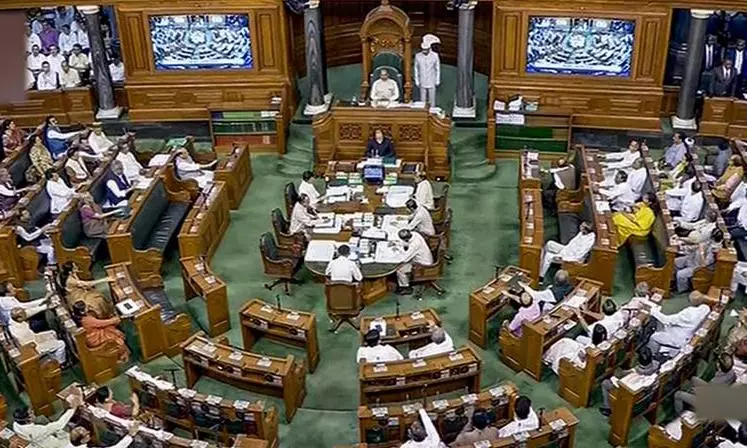
New Delhi: The Lok Sabha on Friday cleared the Health Security se National Security Cess Bill, 2025 — a bill to levy a cess on manufacturing units of pan masala, and utilise the fund for strengthening national security and improving public health. The bill, however, seeks to augment the resources for meeting expenditure on national security and for public health by levying a cess on the machines installed or other processes undertaken to manufacture pan masala and similar goods as well.
Silencing the Opposition, Union finance minister Nirmala Sitharaman also said that the cess would be shared with the states, noting that public health falls within the state government’s domain. “The purpose of the bill is to create a ‘dedicated and predictable resource stream’ for two domains of national importance — health and national security,” she said, while replying to the debate over the bill in the House.
Later, the bill was passed by voice vote by the House. The bill, first introduced on December 1, 2025, allows the Centre to levy a cess not only on pan masala, but also on any additional products that may be notified later. As per the bill’s fact-sheet, the cess will apply to any person who owns/operates/controls machines or processes manufacturing specified goods as given, regardless of tax status, as prescribed.
“The proceeds of this cess will flow into the consolidated fund of India and will support the government in meeting expenditure related to national security and public health. Initially, the bill is applicable to pan masala, however, the government may notify to extend the cess to other goods as well, if necessary,” she said.
Sitharaman also said that pan masala will be taxed at the maximum 40 per cent rate under GST, based on its consumption and there will be no impact of this cess on GST revenues. The proposed cess, which will be over and above the GST, will be levied on the production capacity of machines in pan masala manufacturing factories,” she said adding that the cess as a percentage of gross total revenue was 6.1 per cent in the current fiscal, lower than 7 per cent between 2010-2014.
As per the bill, the tax will be computed by maximum rated speed (pouches/tins per minute) and weight per pack, or manual process flat rate, as prescribed. “An enforcement framework will include search, inspection, seizure, confiscation of goods and machinery, recovery of dues, penalties, and arrest in severe contraventions, has been provided to safeguard revenue,” it said.
Under the proposed framework, the cess will be charged to anyone who owns or controls machines, or undertakes manual processes, to produce the specified goods. The amount payable will depend on the type of production, machine-based or manual. “Manufacturers will have to calculate the cess themselves, file monthly returns, and pay interest on any delayed payments. For machine-operated units, the cess will rise according to the machine’s capacity — measured by the maximum number of pouches it can pack per minute — and the weight of each pouch,” the bill stated.
For example, the bill said, if a machine produces up to 500 pouches a minute, each weighing up to 2.5 grams, it will attract a monthly cess of Rs 1.01 crore. At the higher end, machines packing between 1,001 and 1,500 pouches a minute, with each pouch weighing more than 10 grams, will face a cess of Rs 25.47 crore per month.
