Over Half Of Class 3 Students Can’t Arrange Till 99

Survey hints at learning gaps among school students, maths remains weak spot
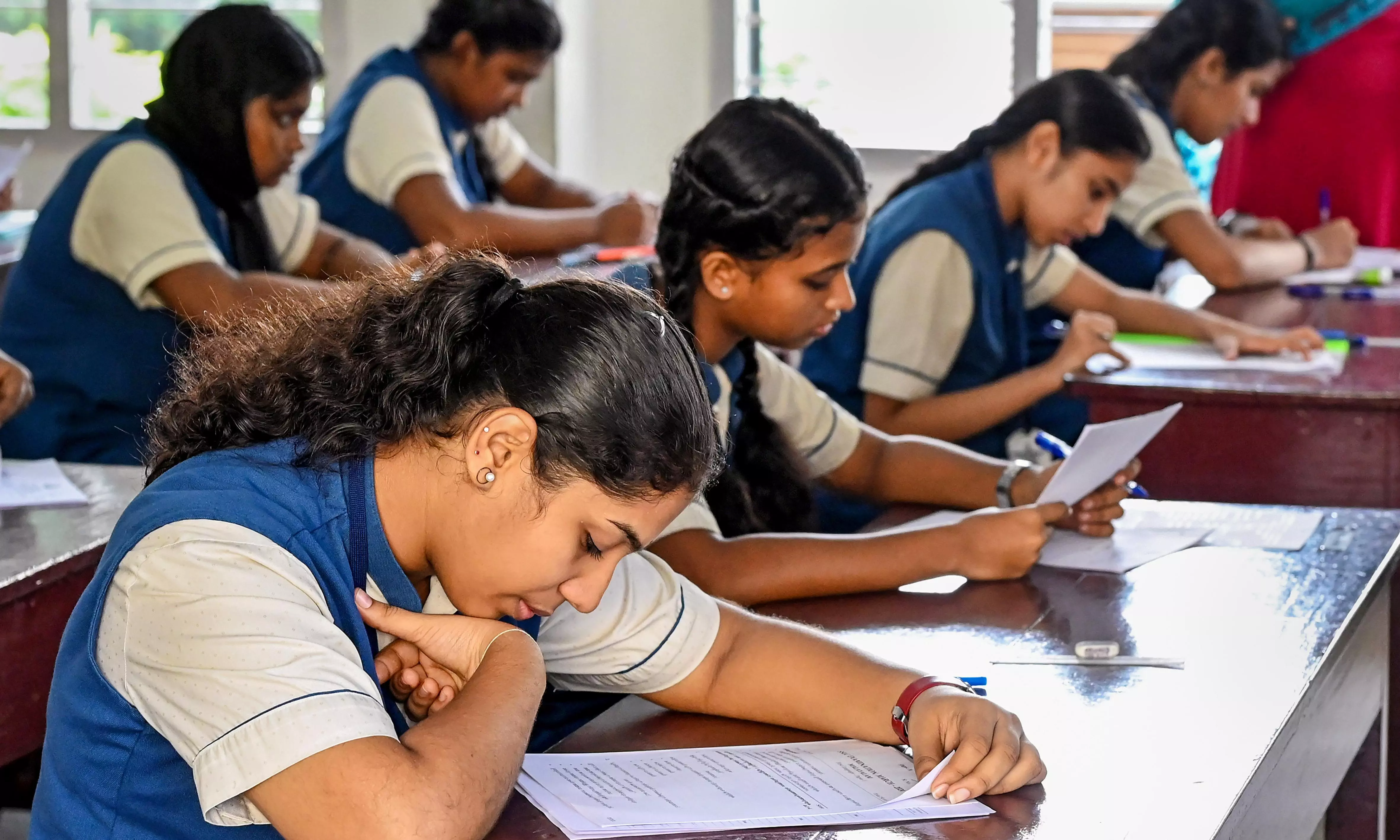
New Delhi: Only 55 per cent of Class 3 students can arrange numbers up to 99 in ascending or descending order while only 53 per cent in Class 6 know tables up to 10, a ministry of education (MoE) survey has found.
Students scored the lowest in mathematics (46 per cent), while in language they averaged 57 per cent and in ‘The World Around Us’ scored 49 per cent nationally.
The Performance Assessment, Review and Analysis of Knowledge for Holistic Development (Parakh) Rashtriya Sarvekshan, formerly known as the National Achievement Survey (NAS), was conducted on December 4 last year, covering 21,15,022 students from government and private schools in Classes 3, 6 and 9 across 74,229 schools in 781 districts.
There were certain trends that the survey threw up. In Class 3, Central government schools recorded the lowest performance in mathematics. In Class 6, government-aided and state government schools showed weaker performance, especially in mathematics.
By Class 9, students from the Central schools performed the best across all subjects, with a clear lead in language. Private schools followed in science and social science but showed lower scores in mathematics.
The survey said 1,15,022 children from the three grades were assessed and 2,70,424 teachers and school leaders responded through questionnaires, PTI reported.
According to the report, only 55 per cent of students in Class 3 can arrange numbers up to 99 in ascending or descending order while 58 per cent of the students can perform addition and subtraction of two-digit numbers.
In Class 6, only 53 per cent of students understand and visualise arithmetic operations and the relationships among them, know addition and multiplication tables at least up to 10 and apply the four basic operations on whole numbers to solve daily life problems.
In Class 6, an additional subject 'The World Around Us', which covers environment and society, was introduced alongside Language and Mathematics.
According to MoE officials, instances where less than 50 per cent of students were able to answer correctly indicate learning gaps.
“These learning gaps highlight the need for focused interventions to strengthen students' skills, refine instructional strategies, and provide additional learning support. Addressing these areas effectively will help improve overall student learning outcomes in the nation,” an official said.
State government and government-aided schools recorded similar outcomes, with the lowest performance observed in mathematics. Language was the highest-scoring subject for all school types, while Mathematics consistently remained the weakest.
A significant rural-urban divide was also observed. While Class 3 students in the rural areas performed better in both mathematics and language, children of Classes 6 and 9 in the urban areas outperformed their rural counterparts across all subjects.
“Moving beyond the assessment itself, the next phase of this initiative is focused on enabling systemic action. To facilitate this, a comprehensive multi-level strategy has been planned to translate the findings of the Parakh Rashtriya Sarvekshan 2024 into meaningful actions,” school education secretary Sanjay Kumar said in the report.
“This includes a phased dissemination of data through workshops at the national, regional, state, and district levels. These workshops will focus not only on understanding the survey results but also on preparing district-specific roadmaps, where roles and responsibilities are clearly defined,” he added.
In language, girls performed slightly higher than boys in Class 3. Both achieved the same score of 60 per cent in mathematics.
Comparison of Grade 6 and 9 scores with Grade 5 and 8 scores from previous rounds of NAS is likely to result in spurious conclusions due to a change in the structure of the large-scale assessment.
While the national average in 2024 lags slightly behind 2017 levels, many states and UTs have surpassed their past performances with an all-time high in 2024, demonstrating strong recovery and successful learning interventions. These include Punjab, Himachal Pradesh, Kerala, Uttar Pradesh and Madhya Pradesh.
