Over 2.4 Lakh Security Personnel Deployed in Bengal As 152 Seats Vote; All of Tamil Nadu Hits the Polls

In Tamil Nadu, nearly 5.67 crore voters will go the polls across all 234 constituencies.
New Delhi: After weeks of intense campaigning and sharp political rhetoric, the electoral battle shifts to the ground on Thursday. Polling in West Bengal will cover 152 of the state’s 294 constituencies in the first phase, while all 234 Assembly seats in Tamil Nadu will vote in a single phase. As West Bengal witnesses a high-stakes do-or-die contest between the ruling Trinamul Congress and the BJP, Tamil Nadu gears up for a showdown between the DMK-led front and the AIADMK-BJP combine. A new entrant, actor-turned-politician Vijay, is attempting to break the two-party dominance with his Tamilaga Vettri Kazhagam (TVK).
In Tamil Nadu, nearly 5.67 crore voters will go the polls across all 234 constituencies. In West Bengal, 3.6 crore voters will cast their ballots in 152 constituencies in the first phase of a two-part election. The final phase will be on April 29.
As for West Bengal, the TMC led by chief minister Mamata Banerjee still holds a structural edge. However, the BJP led by Prime Minister Narendra Modi and home minister Amit Shah is mounting an aggressive push to claw its way back into the race, mainly by unleashing a muscular nationalist pitch laced with Hindutva. Besides fusing its core Hindutva plank with a sharp focus on alleged illegal infiltration from Bangladesh, the BJP has also been hammering the TMC over a string of corruption charges. The BJP’s message in West Bengal is blunt and clear: “misgovernance”, “compromised borders” and “systemic rot”. The BJP has also been trying to woo the rising number of female voters in the state by promising a monthly stipend of Rs 3,000, compared to the Rs 2,000 offered by the TMC. The statistics indicate the state has 37,600,611 female voters now, compared to the last Lok Sabha polls where female voters numbered 37,398,991.
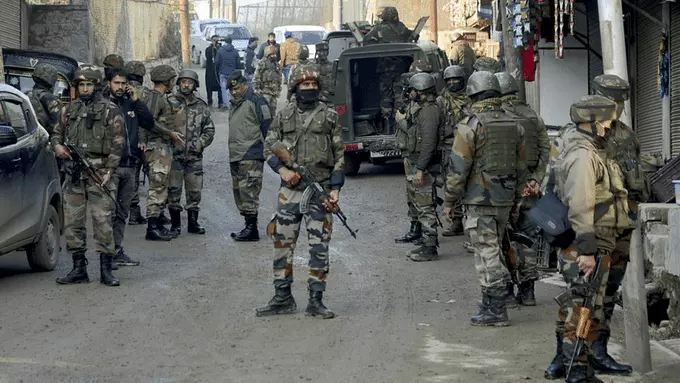
Relying heavily on the deletion of 9.1 lakh names from the electoral rolls under the SIR, the BJP is also leaning on an unprecedented number of security forces across the state. According to reports, the Election Commission has deployed 2,407 companies of the Central armed police forces, totalling over 2.4 lakh personnel.
On the other hand, besides its state organisational strength, booth-level management, strong grassroots network and control of the panchayats, the TMC is banking on welfare schemes like “Lakshmir Bhandar”, “Swasthya Sathi” and “Duare Sarkar”. “We also have the overwhelming support of women, rural poor and minorities”, a senior TMC leader said. He asserted that the consolidation of minority votes would hand the TMC a formidable electoral cushion, effectively securing a “locked” vote base of 25-30 per cent. The TMC has also sharpened its campaign pitch by foregrounding West Bengal's cultural identity, positioning itself as the custodian of regional pride. What could also put the BJP against the wall is the TMC’s move to turn food and eating habits into an electoral issue. The party has invoked Bengal’s non-vegetarian culinary habits against the BJP’s perceived preference for vegetarianism.
Another factor that could hurt the BJP is the Left Front revival. The first phase of polling on Thursday spans North Bengal and Jungle Mahal -- regions that were once bastions of the CPI(M)-led Left Front. Once deeply entrenched in tea garden belts and among working class voters, the Left is now trying to rebuild its eroded base and reclaim lost ground.
The Left Front is looking for a resurgence in areas like Cooch Behar, Alipurduar, Kalimpong, Jalpaiguri and other pockets dominated by young voters. The Left Front, which is contesting 252 of the total 294 Assembly seats has fielded candidates in almost all 54 seats in North Bengal, an area that has emerged as a BJP stronghold over the years. It was pointed out that if the Left “eats into anti-TMC votes, it will directly hurt the BJP”. A BJP functionary said: “This is our biggest concern in tighter constituencies.” Political experts indicated that while the Left was unlikely to win too many seats, it would work mainly as a “vote cutter”, benefiting the TMC. However, if the Left and the Congress manage to impact minority-dominated seats, the TMC could be in trouble.
