Odisha’s Matikhala Becomes Fully Solarised, Sets Benchmark for Rural Energy Transition

Each beneficiary household has been provided with a 1 kW solar unit, enabling them to generate their own electricity, reduce dependence on conventional power sources, and significantly cut monthly energy costs.
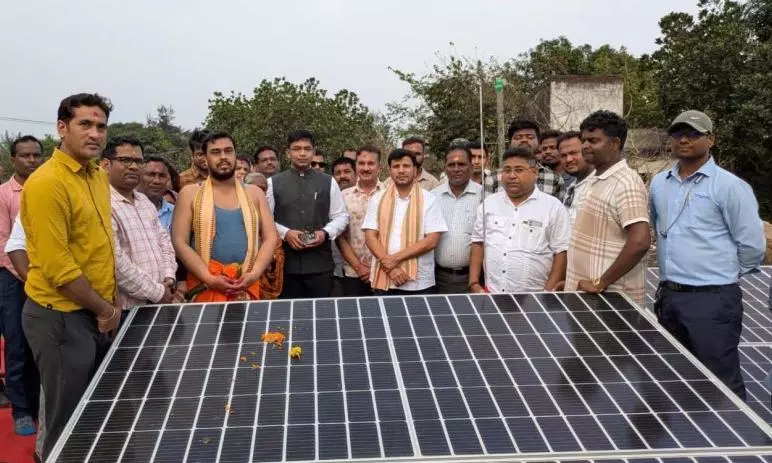
Berhampur: In a significant push towards clean energy adoption, Matikhala village in Odisha’s Ganjam district has emerged as a model for rural solarisation, becoming fully covered under the PM Surya Ghar Muft Bijli Yojana (ULA Model).
Located under Kanamana Panchayat in Chhatrapur block, the village has achieved 100 per cent coverage of eligible households, with around 200 homes equipped with 1 kW rooftop solar systems. The initiative, implemented by TP Southern Odisha Distribution Limited (TPSODL) in coordination with the district administration, is being seen as a scalable model for decentralised renewable energy adoption in rural India.
Each beneficiary household has been provided with a 1 kW solar unit, enabling them to generate their own electricity, reduce dependence on conventional power sources, and significantly cut monthly energy costs. Under the ULA model, beneficiaries contribute Rs 5,622 towards installation, making the scheme affordable while ensuring long-term returns. The solar systems are designed to provide reliable energy for up to 25 years.
Officials said the district administration played a key role in facilitating the project through financial support, planning and outreach. The model is now being expanded across Ganjam, with a target to cover at least 50 households in each Panchayat.
The project was inaugurated by Chhatrapur MLA Krushna Chandra Nayak in the presence of district officials and TPSODL representatives. Ganjam Collector Keerthi Vasan V said the administration is working closely with stakeholders to scale up solar adoption and ensure wider access to clean energy, including among self-help groups.
TPSODL CEO Amit Kumar Garg said the initiative marks a step towards rural energy self-reliance, reducing electricity costs while promoting sustainability.
The Matikhala model aligns with the Centre’s broader push to expand rooftop solar capacity and reduce carbon emissions. By ensuring universal coverage within a village, it demonstrates how coordinated efforts between utilities and local administrations can accelerate the transition to renewable energy.
With its successful implementation, Matikhala is now being seen as a replicable template for other regions aiming to achieve energy self-sufficiency through clean and affordable solar power.
