Odisha Showcases Heritage, Craftsmanship and Economic Ambitions at IITF-2026
Chief Secretary Anu Garg inaugurates state pavilion at Bharat Mandapam Handlooms, tribal art, GI products and rural enterprises take centre stage
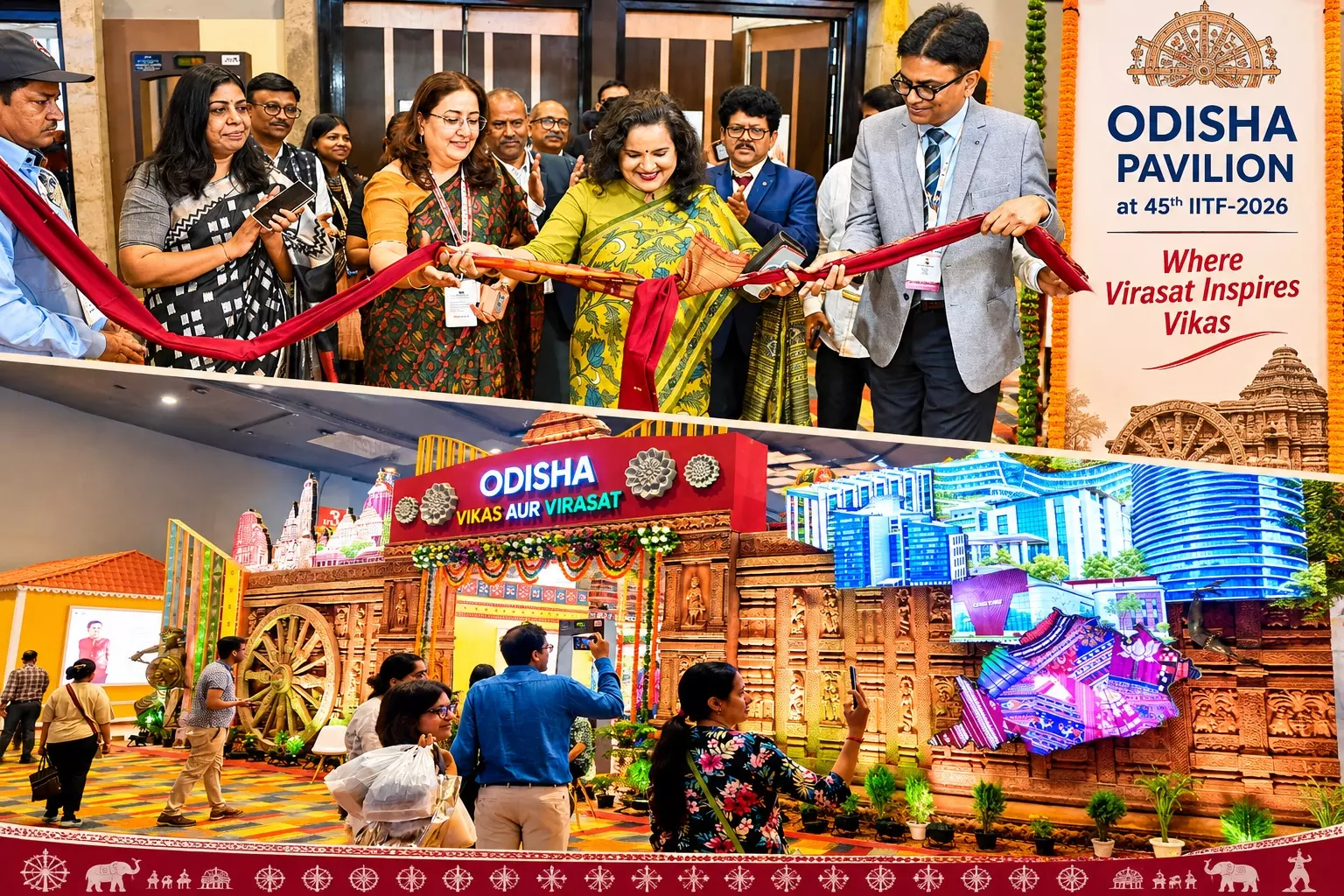
Bhubaneswar: Odisha has put its cultural wealth, traditional craftsmanship and emerging economic potential on the national and international stage with the inauguration of its pavilion at the 45th India International Trade Fair (IITF)-2026 at Bharat Mandapam here on Saturday.
Chief Secretary Anu Garg inaugurated the pavilion at Hall-3, presenting a diverse showcase of the state's handlooms, handicrafts, tribal heritage, agricultural produce, forest-based products, rural enterprises and tourism attractions.
Reflecting the overarching theme of the fair, 'Vikash aur Virasat', the Odisha Pavilion has adopted the theme 'Where Virasat Inspires Vikas', underlining the state's endeavour to leverage its rich cultural legacy as a foundation for economic growth, entrepreneurship and sustainable development.
Addressing the inaugural gathering, Garg said Odisha's traditional skills, indigenous knowledge, cultural identity and abundant natural resources constituted important assets in its development journey. She emphasised the need to create wider market opportunities for local artisans, weavers, farmers, tribal communities, women Self-Help Groups (SHGs) and entrepreneurs by connecting them with national and international markets.
The pavilion brings together an impressive range of Odisha's traditional products, including Sambalpuri textiles, cotton, tussar and silk fabrics, Pattachitra paintings, palm-leaf engravings, silver filigree, Dhokra metal craft, stone and wood carvings and applique work. Live demonstrations of silver filigree, Dhokra casting, stone carving and traditional weaving offer visitors an opportunity to witness the craftsmanship behind these celebrated art forms.
An interesting feature is the presentation of blockchain-enabled handloom weaving, demonstrating how traditional skills can be integrated with contemporary technology to enhance transparency and value in the handloom sector.
The pavilion also highlights the growing contribution of women-led enterprises and rural entrepreneurship. Mission Shakti has showcased products made by women SHGs, ranging from Sabai grass crafts, tribal jewellery and Paper Mache to millet-based food products, handlooms and handicrafts. ORMAS has brought an assortment of rural products, including Golden Grass crafts, spices, pickles, Mahua products, millet-based items and coir crafts.
Odisha's tribal heritage finds prominent representation through Gond and Lanjia Saora paintings, the distinctive Dongaria Kondh shawl, minor forest produce and value-added tribal products. Koraput Coffee, along with millets, Black Rice, traditional rice varieties, cashew, honey and spices, highlights the state's potential in sustainable agriculture and food processing.
OMFED has showcased its dairy products, while organic Kandhamal Haldi adds to the state's distinctive agricultural offerings. Odisha Tourism is presenting the state's spiritual, cultural and natural attractions, including the Konark Sun Temple, Jagannath Dham at Puri and Chilika Lake.
Significantly, dedicated export and business-to-business platforms have been established to facilitate interactions among producers, entrepreneurs, buyers, exporters, investors and industry representatives. The initiative is aimed at strengthening market linkages, encouraging commercial partnerships and expanding the reach of Odisha's products beyond domestic markets.
Special Resident Commissioner Ritu Arora, information and public relations director Sanjay Kumar Biswal and Additional Resident Commissioner Sucharita Sarangi, among other senior officials, attended the inauguration.
The Odisha Pavilion will remain open to visitors from November 14 to 27, offering an opportunity to explore the state's cultural diversity, productive capabilities and emerging business prospects.
Through its participation in IITF-2026, Odisha is seeking to project a development narrative in which its traditional strengths are not merely preserved as cultural legacies but transformed into engines of livelihoods, enterprise and economic growth.
