Not Giving Arrest Grounds Violates Fundamental Rights: SC

The court said failure to provide the grounds of arrest violates the right to life and personal liberty guaranteed under Article 21 of the Constitution.
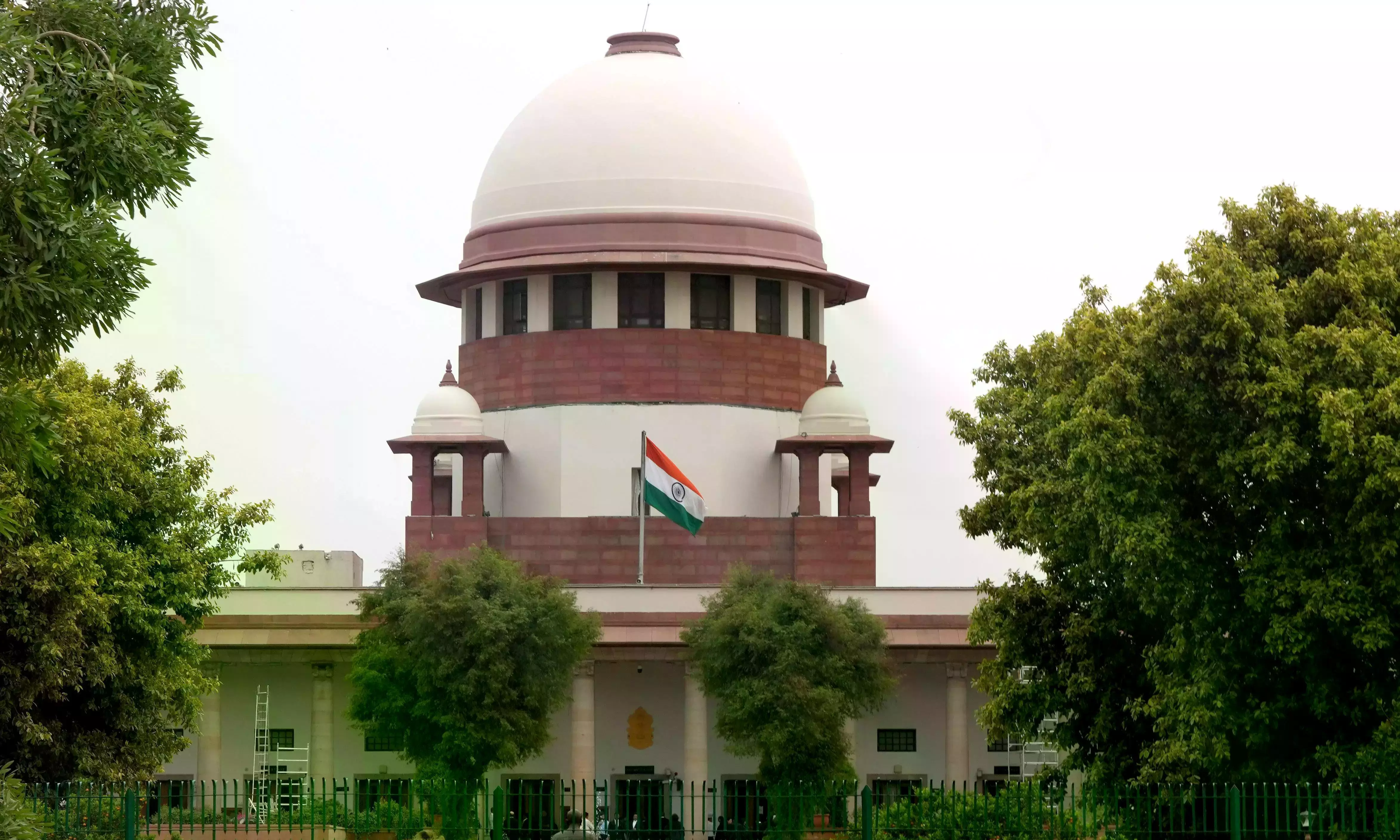
New Dekhi:The Supreme Court on Monday held that failure to inform an accused of the grounds of arrest in writing and in a language understood by him violates his fundamental rights and renders the arrest illegal.
A two-judge bench of Justice Ujjal Bhuyan and Justice A.S. Chandurkar said an accused has a fundamental and statutory right to be informed in writing of the grounds of arrest and a copy must be furnished to the arrested person, without exception, at the earliest.
The court said failure to provide the grounds of arrest violates the right to life and personal liberty guaranteed under Article 21 of the Constitution.
It held that Article 22(1), which safeguards the rights of arrested persons, could not be interpreted restrictively as doing so would defeat its purpose of protecting personal liberty.
The bench said the requirement to inform an arrested person of the grounds of arrest was not a mere formality but a “mandatory, binding constitutional safeguard”.
“Any attempt to encroach upon the fundamental rights guaranteed under Article 22(1) of the Constitution has to be frowned upon by the courts and dealt with strictly. It would vitiate the process of arrest and remand,” the court said.
It added that any breach or non-compliance would require the immediate release of the arrested person as the arrest would be unconstitutional.
The court also held that an investigating agency must approach a magistrate before re-arresting a person who had earlier been released by a court in the same case for failure to furnish the grounds of arrest or for being detained for more than 24 hours.
The bench said the safeguards under Articles 22(1) and 22(2) — requiring communication of the grounds of arrest and production of an arrested person before the nearest magistrate within 24 hours, respectively — could not be diluted.
“We cannot tinker with the most important safeguards provided under Article 22. Subsequent filing of chargesheet and order of cognisance will not validate such an arrest,” Justice Bhuyan said, writing the judgment for the bench.
The court set aside a May 29 order of the Punjab and Haryana High Court dismissing a plea by Jaskaran Jeet Singh Deol, an accused in a POCSO case, challenging his arrest and the magistrate's order.
A magistrate had earlier released Deol from custody after finding non-compliance with Article 22(1), while allowing Punjab Police to arrest him afresh by following due process.
The Supreme Court clarified that the investigating agency could seek an arrest warrant against Deol or seek his re-arrest and custody, but would have to follow the procedure prescribed by law.
