With the increase of the load and with the increase of the number of consumers, we have to upgrade and strengthen the network and that responsibility lies with government discoms. The private companies like Adani, Tata and Goenka are not investing a single penny in the infra and they will be allowed to take the infra
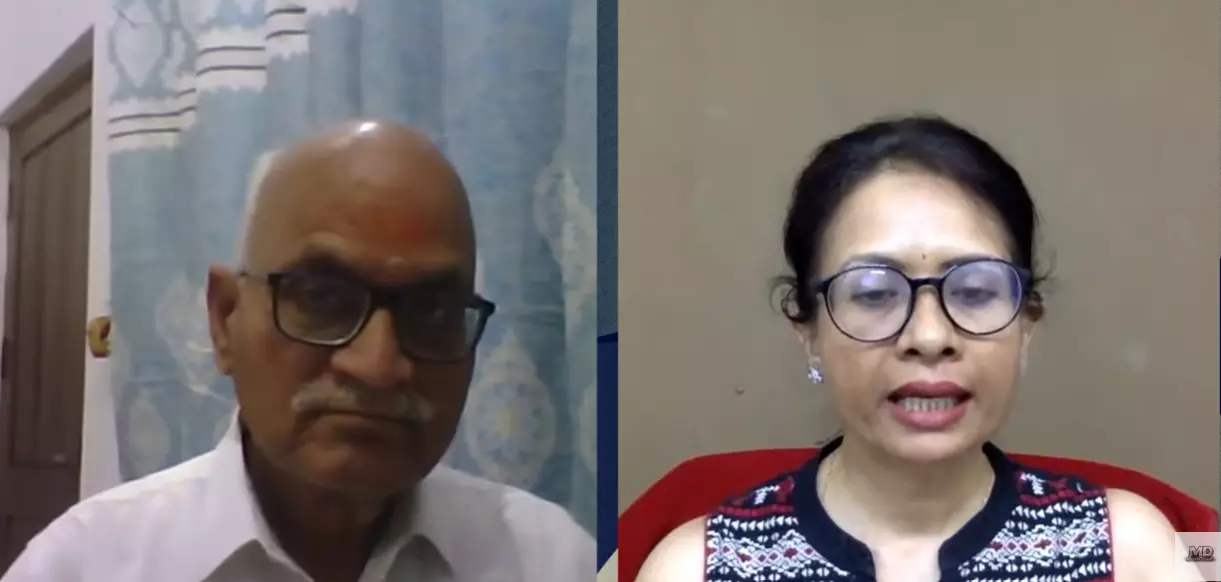
Chennai: Under the proposed Electricity Amendment Bill, 2025, the government is pushing privatisation of the sector. Citing the instances of privatisation in select states and cities, Shailendra Dubey, Chairman, All India Power Engineers Federation says that this will increase the power tariffs for domestic consumers and farmers. The unfair provisions in the Bill will also lead to bankruptcy of state-run discoms.
Q) Why do you think that the Electricity Amendment Bill 2025 is in favour of the private sector and will weaken the public sector discoms?
There are many amendments in the Bill, Clause 14 enables the private companies to use the network of the government discoms. Today Multiple Distribution Licensees should have their own network. Now there is a change. Multiple Distribution Licensees are mainly private companies. They will be allowed to use the network of the government company. That is the most objectionable part. Rather I would say this fundamentally alters the distribution landscape by enabling private companies to use the public infrastructure without development cost of the infrastructure.
With the increase of the load and with the increase of the number of consumers, we have to upgrade and strengthen the network and that responsibility lies with government discoms.
The private companies like Adani, Tata and Goenka are not investing a single penny in the infra and they will be allowed to take the infra. This provision enables the private companies to cherry pick the high paying industrial and commercial consumers while public discoms serve low revenue, rural and domestic consumers.
So, by cherry picking, they snatch away industrial and commercial consumers from us. The government will say that now these discoms have become bankrupt. So, they will also be transferred to the private company.
They will not share the universal supply obligations, and they will not share the cost also of the infra.
Q) How will the power tariffs of household consumers and farmers go up once the Bill comes into force?
Around 25 per cent tariff increase is expected. Domestic and agricultural tariffs could rise by 25 per cent or more without cross subsidy protection because the Amendment Bill says that subsidy and cross subsidy will be eliminated gradually within five years.
If cross-subsidising is eliminated, then these conditions are going to be there for most domestic consumers and farmers. Free electricity is a tool for politics and the same politicians are proposing this amendment which is going to hurt most domestic and rural consumers.
Q) Can you also point out some of the instances where we have seen that the power tariffs have gone up after the private discoms took over?
Chandigarh was privatized one year back on February 1, 2025. Chandigarh government power department was in profit, and the profit was about Rs 174 crores in one year. But it was sold at Rs 761 crore to Goenka Company. In the whole of the northern region, the lowest tariff was in Chandigarh. And in the government department in Chandigarh, for the last six years, there was no tariff hike.
But as soon as Goenka Company took over last year on February 1, within six months, they said that with this tariff we cannot work. And they have submitted a tariff hike to the regulatory commission there. The regulatory commission has not decided. But that tariff is likely to go up.
Private companies are basically working in the cities. The domestic tariff of Mumbai 500 units and above the domestic tariff is Rs 17.61 per unit. It's nowhere else in the country. That is in Mumbai. Both the private companies, Adani Power and Tata Power.
And the Odisha story, I will take only one minute to tell you. In 1998, all the four discoms of Odisha were privatized. Central discom CESCO that was given to AES company of USA. AES is the biggest private sector company in the world. And the AES company took over. And after six months, there was a cyclone in Odisha. In that cyclone, all the infra was damaged. Then the AES company said that we are not here to rebuild the infra. And they fled.
After that, the Regulatory Commission took over that section. And the rest of the three companies were with the Reliance Power Company.
The Odisha Regulatory Commission cancelled all the private licenses of the Reliance company and the charge was that rampant loss, rampant corruption, and total inefficiencies. That is the story of Odisha. Then in 2020, during the COVID, the government gave all the four discoms to Tata Power. And recently in July 2025, Odisha Regulatory Commission suo motu gave notice to all the four discoms of ⁓ Tata Power that not serving the low paid consumer, are not serving the rural areas, you are interested to serve only industrial and commercial and in profit earning areas only. The hearing is going on. And I'm sure that licenses of the Tata Power will also be cancelled in the region.
Q) Now when we come to state-run discoms, we know that they have high levels of debt and they operate with heavy losses. How did the discoms end up with such losses? How did the losses increase even after the implementation of the Uday scheme and during the pandemic?
That is because of the low tariffs. I would say very clearly that in every state, the cost of supply is more and the tariff decided by the Regulatory Commission is low. So, the equation is lost. Further, for free electricity, and subsidized electricity as per the Electricity Act 2003, subsidies should be paid in advance.
Suppose in Uttar Pradesh, if free electricity is being given to the farmers, then subsidy of 2026-27 should be paid on 1st April, 2026. But it's not going on. Not in any state. And the second point is also very alarming. That government departments are not paying the bills. The government departments have more than Rs 1 lakh crore dues.
Q) So how can DISCOMs bring down their losses and reduce their debt? Do you have suggestions to make DISCOMs healthy without making power costlier?
We have given the suggestions. In Punjab, there is one Patiala model. Now the Regulatory Commission has also said that the meters should be installed outside the premises itself so that theft can be checked. The money which is coming under the RDSS scheme previously in the Uday scheme has also resulted in reduction of the AT&C losses.
Q) I hear that the Centre is planning a bailout package for the discoms. What are the issues with this bailout package?
Actually, this is not a bailout package. This is a blackmail package. On October 10, 2025, there was a meeting of the group of ministers. They have laid down three conditions. Number one is that you sell 51% equity of this company. Second alternative is you sell 26% equity. But the management will be of the private company. So it's favouring privatization. So this is not a package. The government is bent upon privatizing. In January 2026, the Ministry of Power formulated the Electricity Policy. Same things are written in that policy document. So the central government, by hook or crook, wants to privatize this power sector.
Q) We are very heavily dependent on coal for our energy needs. Most of the countries are going towards renewable energy. How can renewable energy address the power demands of a growing economy like ours and also keep the power cost lower?
In this Bill, Electricity Amendment Bill 2025, they have imposed the penalty. They say that a certain percentage of renewable power should be used by all the discoms. And if they fail to do this, then they have imposed the penalty. If paying 25 to 45 paisa per kilowatt-hour penalty legally fulfils Renewable Purchase Obligation, no discom will buy Renewable Energy Certificate above that price. REC prices will collapse to a 40 paisa per kilowatt-hour, eliminating incentive for compliance by RE-rich states.
RPO penalty becomes benchmark for carbon cost across sectors, threatening carbon market price elasticity. Low carbon price will destroy long-term price visibility, moving capital to more flexible international markets.
Q) What are the other changes the government is making in the bill?
The Bill there is a question of federal overreach also. You see, the legislative is on the concurrent list of the Constitution. They have suggested in section 166, 1A that there will be one electricity council and the electricity council will be headed by the Union power minister and all the ministers of the state governments will be in that council. This electricity council will frame the policy and will frame the rules also.
Today distribution of electricity is fully in the hands of the state government. So they are intervening in the matters of the state governments. So that is very, very dangerous. It centralizes control over the state's electricity policy, ending constitutional federalism.