Naveen’s Strategic Shift Signals Possible Opposition Realignment Ahead Of 2029

Though no formal alliance has been announced, recent political positioning indicates a potential shift in approach, driven more by electoral arithmetic than ideological convergence: Reports
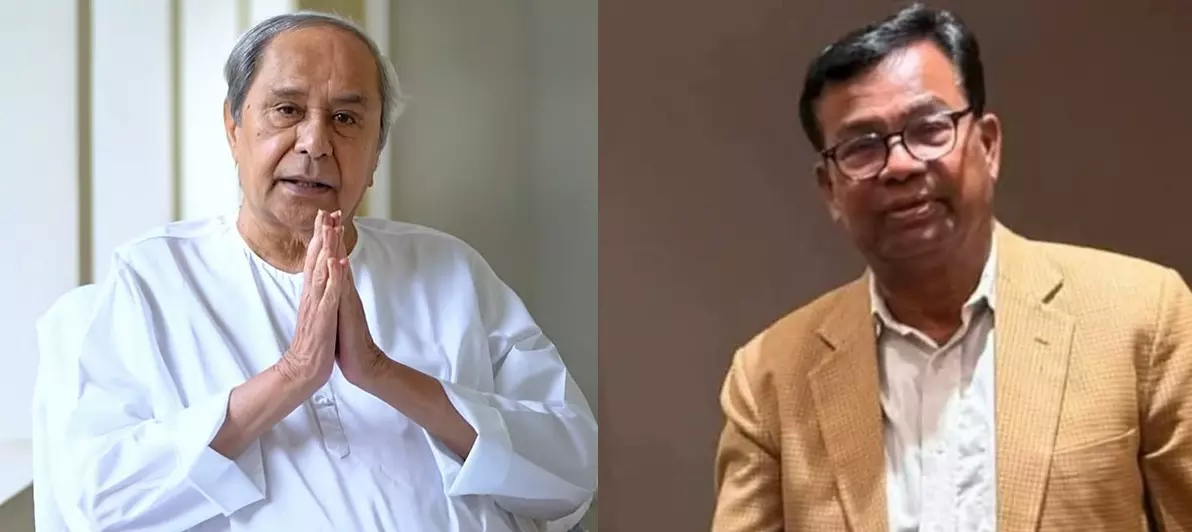
BHUBANESWAR: Biju Janata Dal (BJD) president Naveen Patnaik appears to be recalibrating his political strategy in Odisha, with emerging signals suggesting a growing comfort level with the Indian National Congress ahead of the 2029 Assembly elections.
Though no formal alliance has been announced, recent political positioning indicates a potential shift in approach, driven more by electoral arithmetic than ideological convergence.
Patnaik, who has been a dominant force in Odisha politics since 1997 and served five consecutive terms as Chief Minister, initially built his political base in alliance with the Bharatiya Janata Party (BJP). The BJD-BJP partnership lasted until 2009, after which the two parties became principal rivals in the state. However, the BJD has continued to extend issue-based support to the BJP at the national level over the years.
The 2024 Odisha Assembly elections appear to have triggered a strategic reassessment. While the BJP secured a majority with 78 seats, its vote share stood at 40.07 per cent—slightly lower than the BJD’s 40.22 per cent. In absolute numbers, the BJP polled 37,627 fewer votes than the BJD but converted its support more efficiently into seats.
The Congress, with a 13.26 per cent vote share, won 14 seats and emerged as a secondary player, finishing runner-up in 11 constituencies.
Data from the election highlights that the BJD finished second in 93 seats, compared to the BJP’s 42 and Congress’ 11, underscoring the BJD’s continued competitiveness across the state.
Political observers suggest that a calibrated seat-sharing arrangement between the BJD and Congress could consolidate anti-BJP votes and reduce fragmentation. Such a strategy could involve the BJD leaving Congress-held seats, constituencies where Congress was runner-up, and additional select segments to maximise combined electoral gains.
The approach draws parallels with the 2000 Assembly elections, when a seat-sharing arrangement between the BJD and BJP delivered high strike rates for both parties.
At the same time, the BJD is believed to be factoring in potential anti-incumbency against the BJP government led by Chief Minister Mohan Charan Majhi. While Majhi maintains a relatively clean image, sections of his cabinet are yet to establish strong public connect.
“The Congress continues to retain a residual grassroots presence in parts of rural Odisha, while the BJD is seen as financially and organisationally robust despite its electoral setback,” says political analyst Srirama Dash.
In coastal Odisha, long considered a BJD stronghold, Patnaik’s personal appeal remains a key factor. The BJP’s gains in the region in 2024 are being interpreted by some analysts as a reaction to governance-related issues rather than a structural political shift.
“While the contours of any future alliance remain unclear, Patnaik’s recent moves suggest a long-term strategy aimed at consolidating opposition space and improving vote-to-seat conversion in the next electoral cycle,” adds Dash.
