Murmu To Attend Famed Muria Durbar, Living Legacy Of Bastar’s Indigenous Groups’ Democratic System
Ms. Murmu is coming on a two-day visit to Chhattisgarh on October 22 and is scheduled to attend the Muria Durbar on October 23, chief minister Vishnu Deo Sai said on Friday.
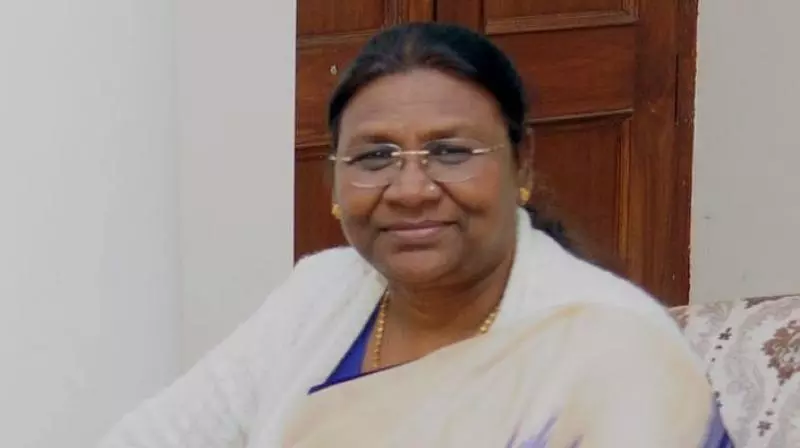
Raipur: President Draupadi Murmu is scheduled to attend the famed ‘Muria Durbar’, a living legacy of the age-old democratic system of indigenous people of Bastar in Chhattisgarh, on October 23.
The event marks the closure of the ongoing 75-day Dussehra, billed as the longest festival in the world, in Jagdalpur, headquarters of Bastar.
Ms. Murmu is coming on a two-day visit to Chhattisgarh on October 22 and is scheduled to attend the Muria Durbar on October 23, chief minister Vishnu Deo Sai said on Friday.
Mr. Sai said that he had earlier invited president Ms. Murmu to attend the Muria Durbar and the latter had given her consent.
Representatives of Manjhi- Chalki (heads of various tribal groups) had also requested her to visit the region during an earlier meeting and she had gracefully accepted their invitation, Mr. Sai said.
The famous Bastar Dussehra festival began on August 21 and will continue till October 23 when the Muria Durbar will be held.
The Muria Durbar will mark the conclusion of the festival.
The president is scheduled to interact directly with the Manjhi- Chalkis on the occasion.
Unlike mainstream Dussehra, Bastar Dussehra centers around Maa Danteshwari, the presiding deity of tribal Bastar, rather than Lord Ram and does not involve burning of Ravan effigy.
Often described as a centuries-old grassroots people’s parliament, Muria Durbar provides an open platform where traditional tribal chiefs (Manjhis and Chalkis) meet directly with state and royal authorities.
Traditionally, the Maharaja of Bastar (scion of the former royal family of Bastar) and state officials sit with tribal chiefs to listen to the local issues, settle the community disputes, and communicate royal decrees.
After 1947, and the integration of the princely state, the assembly transformed into a forum where elected public representatives, ministers and administrative officials listen to local tribal communities.
The legacy still continues, emphasizing collective decision-making, social equality, and the preservation of Bastar’s indigenous heritage.
