President Murmu subtly indicated Sharif of Pakistan's condition during the Operation Sindoor last year
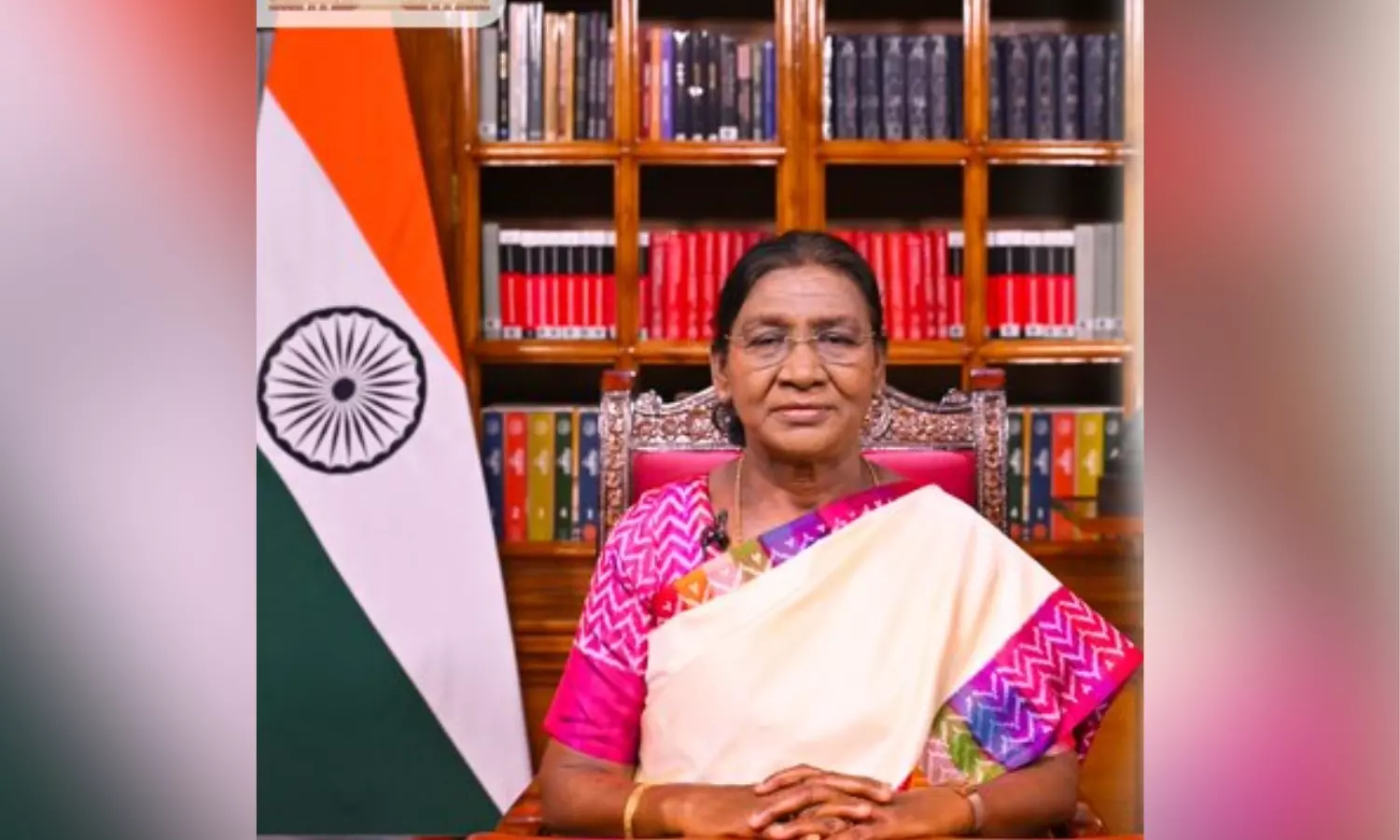
New Delhi: President Droupadi Murmu on Friday said that suspension of the Indus Water Treaty (IWT), “with the country that harbours terrorism” is a decisive step in the interest of the nation, especially the farmers.
Her sharp comments came hours after Pakistani Prime Minister Shehbaz Sharif threatened India on suspension of IWT saying every drop of water under the treaty is a red line for Pakistan and if India does not return to path of righteousness, it will face direct response. Sharif made these comments while addressing the Independence Day gathering in Islamabad on Friday.
Hours later, in her speech on the eve of India’s 80th Independence Day, President Murmu subtly indicated Sharif of Pakistan's condition during the Operation Sindoor last year.
Without naming Pakistan, she said, “We take pride in our tradition of overcoming the forces hostile to humanity, for upholding truth and justice. On the 26th of July, we observed Kargil Vijay Diwas. Earlier, on the 7th of May, we commemorated the completion of one year since the launch of Operation Sindoor. We remembered the unmatched valour of our Armed Forces. That historic operation against terrorism demonstrated the capability of the Indian Armed Forces to act with precision. It sent a clear and firm message to terrorists and those who support them, that no matter where they hide, they will have to face the consequences of their actions,” said the President.
During her speech she also solemnly remembered those lakhs of Indians who lost their lives in the violence resulting from the India-Pakistan partition, or were forced to endure the tragedy of displacement. “Lakhs of people had to become refugees due to communal violence and endure the horrors of partition. Yet, they did not give up their identity,” she said.
Touching the issue of student’s grievances seen during the recent protest on the leak of NEET paper, President Murmu said students are the architects of India's future and just as the government and society must ensure national security, everyone must contribute to safeguard the present and future of the students. “Public examinations become gateways to the opportunities for our students. The government is undertaking comprehensive steps to reform these examinations. The objectives of these reforms are to completely curb the use of unfair means in public examinations, make the examination system more transparent, more secure, and more trustworthy for the youth,” said Ms Murmu while addressing the issue of paper leaks.
Underlining the strides taken by the country in the last decade she said India has witnessed rapid and inclusive development, given priority to harmonising heritage and development, and, removed numerous, decades-old obstacles to development. She mentioned upliftment of the deprived sections of society, women's education, lifting of more than 25 crore people out of poverty, food security, universal healthcare as some of the achievements.
“Our country has seen an unprecedented expansion of modern infrastructure in the form of highways, waterways, railways and airways. This is creating opportunities for new enterprises, generating employment, and boosting investor confidence,” she added.
Our Constitution clearly lays down the responsibilities of the Executive, the Legislature, and the Judiciary. Giving voice to the aspirations of the people is the duty of their representatives in the legislature. The Executive is responsible for implementing policies that serve the interests of the nation and its people. It is the duty of every person associated with the judicial system to ensure that no one is deprived of justice due to lack of resources. All citizens, especially those belonging to deprived sections of the society, should have equal access to timely justice with dignity.
She added that despite warfare and instability prevailing in several parts of the world affecting every country, Indian economy is moving ahead as the fastest growing major economy in the world. She further said that India is also playing a leading role at the global level in protecting the environment and mentioned development of renewable energy.
She said national interest is the foundation of India’s foreign policy having peace, cooperation, dialogue, and the ideal of Vasudhaiva Kutumbakam as its pillars. “We have entered into Free Trade Agreements with many countries to enhance economic cooperation and strengthen mutual relations. We are playing a leading role among the countries of the Global South. Our country has grown in stature on the global stage. We believe in a rules based international order. Our endeavour is to ensure that the global community receives appropriate representation in the United Nations and other multilateral organizations. This endeavour of our country has been getting strong support from many countries,” said Ms Murmu

